Crafting a letter of recommendation can be a little daunting, especially when the person you’re writing it for is counting on you to crack that dream university or job!
These official recommendation letters can be a bit of a trouble to whip up, particularly when you want to create something personalized, well-written, and that truly does justice to the person you are writing it for. But, luckily, there’s a basic format you can use to write a recommendation letter that is both effective and professional.
So, no stressing anymore! We will help you with this journey of writing the perfect letter of recommendation with all the necessary components and steps. But first, let’s learn what a Letter of Recommendation actually is.
What is a Letter of Recommendation (LOR)? (Meaning)
A letter of recommendation, often called an LOR, is a formal letter written by someone who knows you well in an academic or professional setting. LOR is commonly required for students who are applying to undergraduate or postgraduate programs, scholarships, or internships, as well as for working professionals seeking new job opportunities.
The person writing the LOR acts as a reference and shares their genuine experience of working or studying with you. They highlight your skills, achievements, work ethic, and character to help others understand your strengths beyond grades or resumes.
As a result, a strong and positive LOR can greatly improve your chances of getting selected. It adds credibility to your application and can play a key role in admissions, job opportunities, and awards.
With this in mind, let’s take a closer look at why a Letter of Recommendation holds such importance in academic and professional applications.
Importance of a Letter of Recommendation (LOR)
A Letter of Recommendation plays a meaningful role in shaping how your application is viewed. While grades, test scores, and resumes show what you have achieved, a LOR explains how you achieved it. It adds a human perspective by sharing real experiences, observations, and examples that numbers alone cannot convey.
An LOR also builds trust. When a respected teacher, professor, or employer speaks positively about your abilities and character, it reassures the decision-makers that you are reliable, capable, and ready for the next step. This outside validation often carries significant weight, especially when applicants have similar academic or professional backgrounds.
Most importantly, a well-written LOR helps you stand out. It highlights your strengths, work ethic, and attitude in a personal way, which in turn makes your application more memorable. So, no matter whether it’s for university admissions, scholarships, or job opportunities, a strong LOR can quietly but powerfully influence the final decision.
Now that we know why a Letter of Recommendation is so important, the next step is learning how to write a letter of recommendation that truly reflects the candidate’s strengths and leaves a lasting impression.
How to Format a Letter of Recommendation (LOR)?
Now that we know why a letter of recommendation is important and the components it should have, let’s dive into the content structure of a letter to make it an engaging read. These six basic steps will ensure that the letter hits every point needed for it to be strong and compelling.
Step 1. Letterhead and Contact Information
The first step in writing a Letter of Recommendation is setting up the letterhead and contact details. Ideally, the letter should start with your name, title, and address at the top. If you don’t have a formal letterhead, begin with the current date, then include the recommender’s name, title, organization or school, and address. This makes the letter look professional and provides the reader with all the necessary information to contact the recommender if needed.
Step 2. Salutation
Like any other letter, the first line should address the person or body of people you are writing to with the name and title. Try avoiding vague salutations such as “To Whom It May Concern” until there is no other option available.
Step 3. Introduction: Relationship between you and the applicant
Begin by presenting your sincere recommendation of the applicant, explain who you are, your relations with the person you are recommending, and start answering these pointers-
- Who are you recommending?
- What are you recommending them for?
- How long have you known the individual?
- What have you worked together on?
Step 4. The Academic, Personal, or Professional Achievements and Characteristics of the Applicant
This section outlines the relevant academic or professional strengths of the recommended. Add 1-2 specific and detailed examples that showcase that the applicant truly does possess these strengths. Include personality traits like the applicant’s optimistic personality and potential to grasp things, with examples that clearly showcase them.
Step 5. Conclusion: Call-to-action or summary
Summarize your wholehearted recommendation of the applicant and encourage the reader to contact you with any questions as and when needed.
Step 6. Signatures
Don’t forget to include your signature, printed name, title, email address, and phone number to make it authentic and believable.
With all the steps in place, it can be helpful to see what a complete Letter of Recommendation looks like. Here’s a sample you can use as a reference:
Sample Letter of Recommendation (LOR)
[Your Name]
[Your Title]
[Organization/School Name]
[Address]
[City, State, ZIP Code]
[Email Address]
[Phone Number]
[Date]
To Whom It May Concern,
I’m happy to recommend Emma Johnson for the Marketing Fellowship at Bright Future University. I’ve worked with Emma for about two years at Sunrise Media, and I’ve always been impressed by how thoughtful and reliable she is.
Emma is someone who doesn’t just get the work done—she makes it better. Last summer, she ran our social media campaign, and not only did it perform amazingly well, she also kept the team motivated and organized the whole time. She’s creative, hardworking, and genuinely a pleasure to work with.
I’m confident she’ll do great in this fellowship and bring real value wherever she goes. If you want to know more about her work, feel free to reach me at emma.smith@___.com
or (555) 123-XX.
Sincerely,
[Signature]
[Printed Name]
[Title]
[Email Address]
[Phone Number]
Now, if you want to write a professional Letter of Recommendation almost effortlessly, you can utilize the best document platform, Bit.ai. With Bit.ai, you can see your letter take shape in real time, format it perfectly, and share it instantly, making the whole process of creating a LOR smooth and stress-free.
Create a Letter of Recommendation (LOR) the Right Way with Bit.ai
After learning about all the key steps to include in your recommendation letter, we know you are excited to get on with creating one. However, what is the purpose of knowledge if you don’t have the means to deploy it? That’s why we would like to introduce you to Bit.ai, an AI-powered docs, wikis, and knowledge management platform to help you create the perfect letter of recommendation.
Bit.ai is an AI-powered docs, wikis, and knowledge management platform that helps teams to collaborate, share, track, and manage all information in one place. It’s the perfect tool to create, store, and share a letter of recommendation (LOR). Apart from letters, students and employees can create everyday documents like ebooks, case studies, onboarding docs, fact sheets, sales decks, project proposals, media kits, and many more.
Bit has an amazing UI that’s easy to understand for a new user, making onboarding easier. The user experience is phenomenal, too, as things flow from documents to workspaces swiftly.
Still not sure how Bit.ai can help you write an impressive letter of recommendation to woo all those universities and company heads? Let’s see some more of Bit’s awesome capabilities!:
- Collaborate in real-time– Multiple people can simultaneously collaborate on a Bit smart document in real-time. Suggest edits, work collectively, and ask questions with real-time mentions and comments.
- Interlink letters of recommendation and other documents– Now, you can interlink your LORs with other important documents like student mark sheets, an employee’s curriculum, and more on the web or inside the platform.
- Minimalistic design– Bit’s editor allows you to focus on writing and the work you’re implementing, without any distractions. The platform interface is easy to understand, making it easy for new visitors to get on board quickly.
- Create a fully interactive document– Make your letter more engaging and interactive by adding recommended power links and files, letters of recommendation, like- Web links, PDFs, PowerPoint in Google Drive/OneDrive, etc.
- Track engagement on shared letters of recommendation with students, instructors, etc.– Imagine if you were able to track the time spent by employers on your letter of recommendation, how frequently they were viewed, and if they were viewed at all. Well, Bit allows you to track your documents and gain amazing insights, helping you create an even better version of your documents.
- Create a letter of recommendation in minutes with AI Doc Builder- You can create an amazing letter of recommendation with the help of AI Doc Builder in just a few minutes. Fill out a quick form by answering 2-3 questions, and you’re done.
- Multiple ways to share- Bit.ai Documents can be shared in a live state, meaning that all changes that you make to the document will update in real-time. If you are sharing your documents with clients, they will always get your most up-to-date changes. You can even embed Bit documents on any website or blog. Since Bit documents render and are responsive, any changes made to these documents will reflect live on the site! Moreover, features like document tracking, password protection, file access restrictions, etc., help keep your LOR and other workplace documents safe.
Now that you have learned everything about a letter of recommendation and how to write one, feel free to check out Bit’s amazing letter of recommendation template that can be used for both professional and academic purposes.
Letter Of Recommendation Template
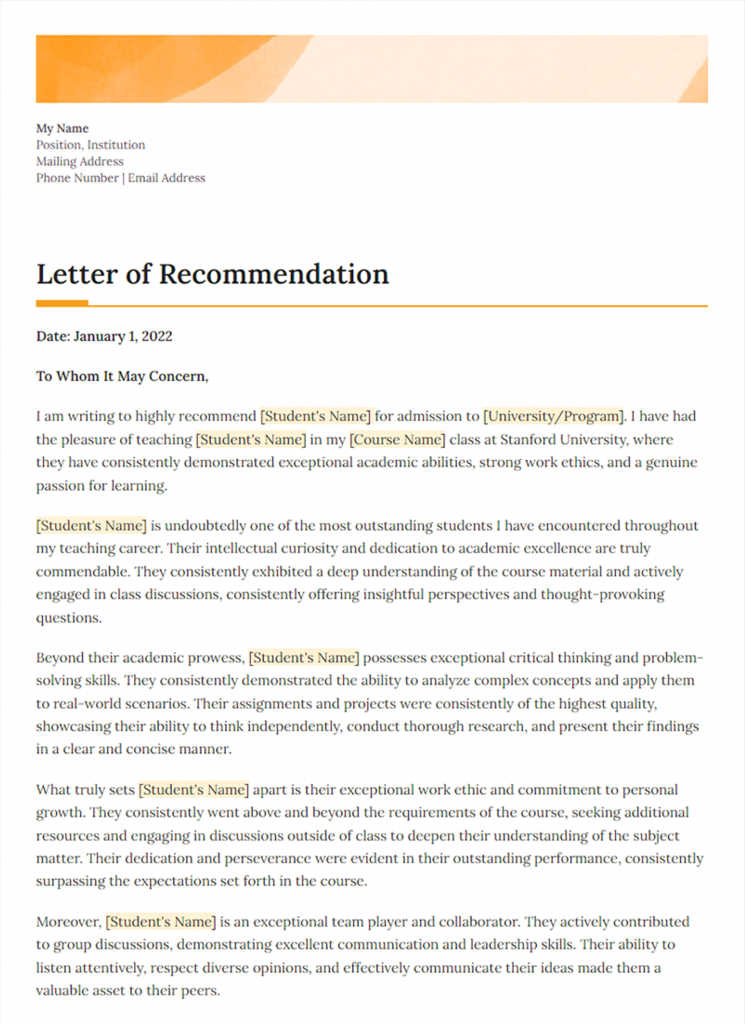
To make the process of crafting a Letter of recommendation even easier for you, we have created a ready-made template of a letter of recommendation for you! Check it out below:
FREE TEMPLATE
The Letter of Recommendation Template That Saves Time
Includes candidate strengths, accomplishments, endorsements, and professional recommendations.
✔ Pre-filled sections
✔ Edit once. Reuse forever.
✔ Schools, Businesses & Organizations
Takes under 1 minute • Trusted by teams at startups & enterprises
Here’s a simple guide on how to use the Letter of Recommendation (LOR) Template with Bit.ai to save time and create polished letters effortlessly.
How to use the Letter of Recommendation (LOR) Template with Bit.ai?
The process of creating a letter of recommendation document on Bit is insanely easy! Just follow these four simple steps to create a letter of recommendation document quickly:
Step 1: Create a Bit.ai Account
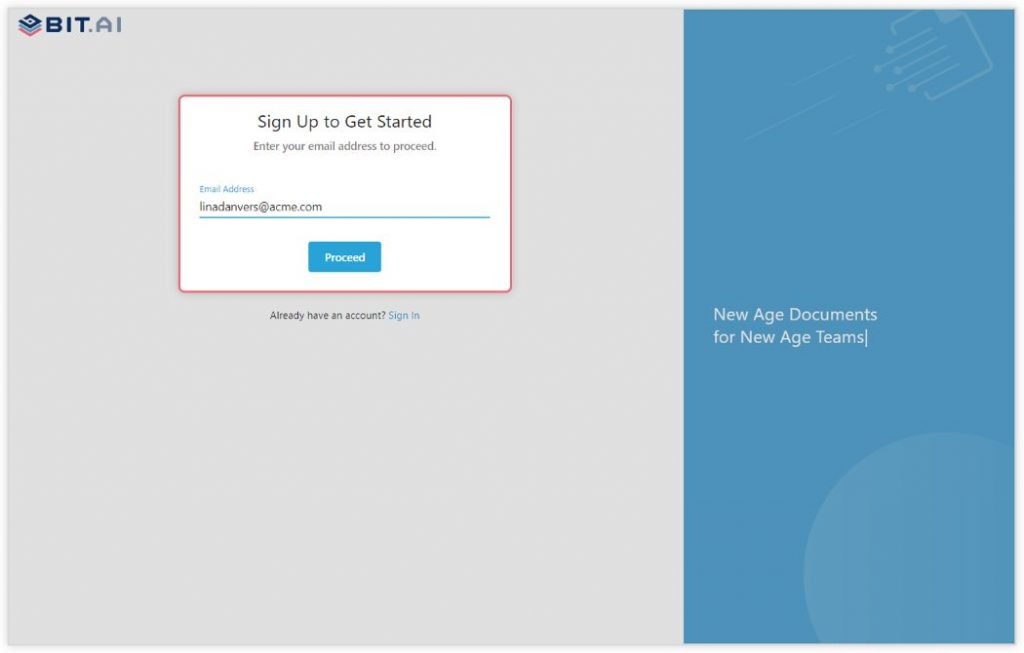
Go to the home page of Bit.ai and click on Get Started for Free or Sign Up to get started. Enter your email address to sign up. Once in, you can create your personal profile.
Step 2: Create a Workspace
Workspaces are where the work gets done. Click on the ‘Create Workspace’ button on the right. A pop-up will show up prompting you to add a name for your new workspace.
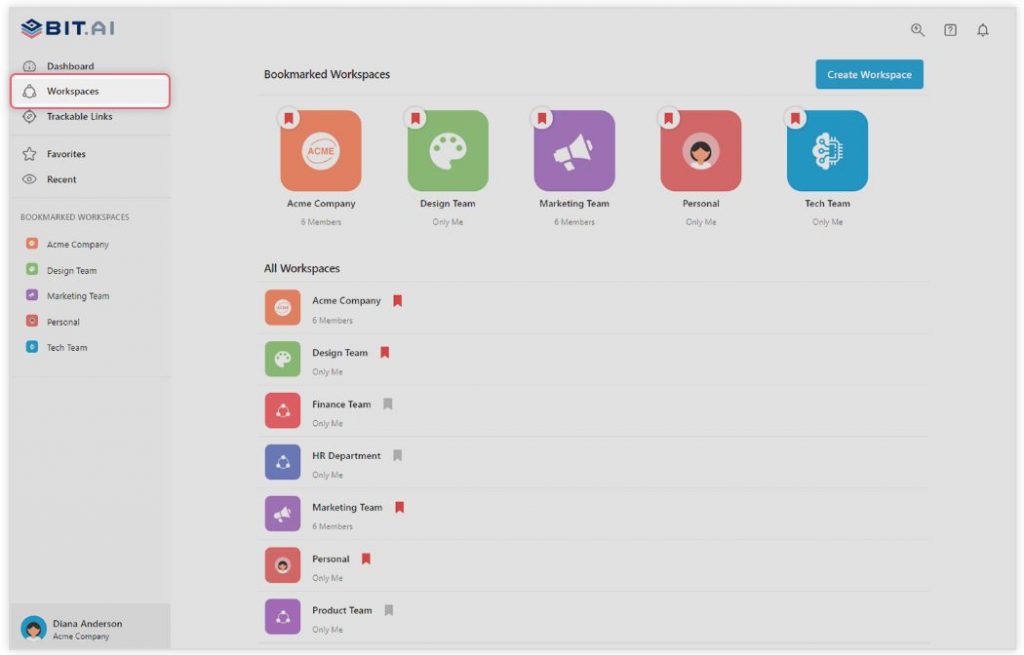
You can create a workspace around a team, department, large project, client, partner, etc. Inside each workspace, you can create an unlimited number of Bit documents and access your content library (storage area for all of your digital assets – web links, files, cloud files, rich embeds, etc.).
Step 3: Add Team Members
Bit allows your team members to collaborate in real-time and get work done. Collaboration starts at the workspace level.
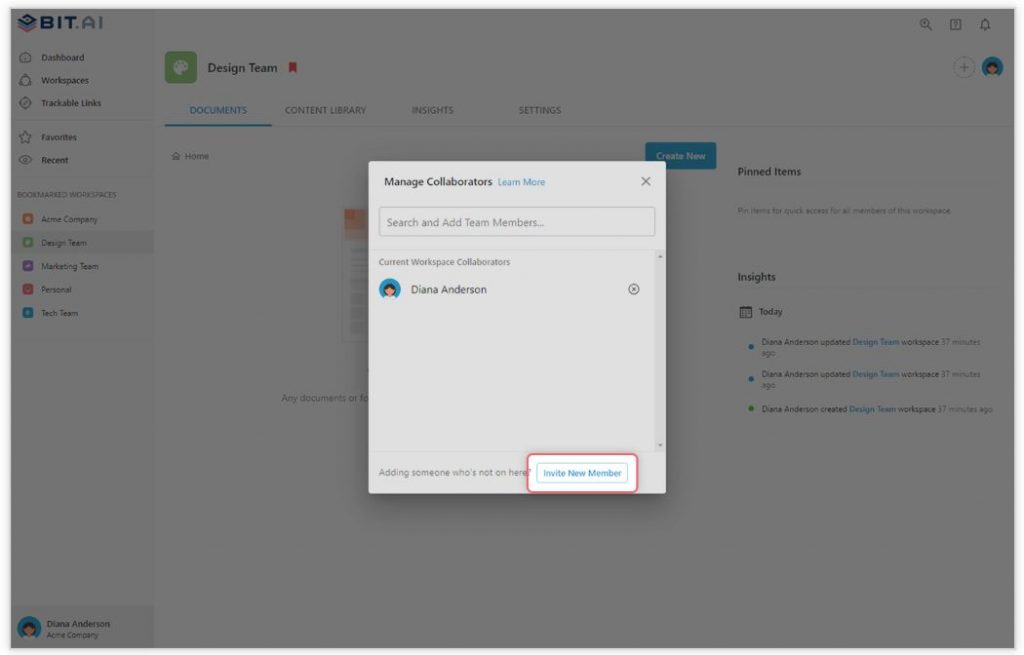
You create private workspaces by default. However, you can invite others to join you inside of a workspace and collaborate together with the knowledge, projects, documents and content inside of the workspace.
Step 4: Create Your Desired Document
Once you are in the workspace, click on the ‘Create New’ button. Select ‘From Template’ in the dropdown. A pop-up will display, allowing you to select a template from the gallery.
In the search box on the top left corner, you can search for “letter of recommendation template”. Once your desired template pops up, click on it and click on the “Use Template” button on the bottom right corner.
That’s it! Your letter of recommendation document is ready for use!
Watch this video to learn more
Now that you know how to use the template, it’s important to make your letter truly stand out. The following tips will help you craft a strong, effective Letter of Recommendation that leaves a lasting impression.
Tips for Writing a Letter of Recommendation
A good letter of recommendation must be well thought out, honest, and straightforward. This aims at providing the reader with a real image of who the person is, their work ethics and how well they would fit the opportunity that they want. It can provide actual value to an application when written in an intelligent way. Here are a few tips to keep in mind while writing a strong letter of recommendation:
1. Clearly Introduce Your Professional or Academic Relationship
Begin the letter by explaining how you know the individual and in what professional or academic capacity. Mention your role and how long you have worked with them. Such a background would make the reader realize your point of view and would make your suggestion have some weight. Where there is a clear relationship between you and the person you are referring to, then the reader is in a position of judging the relevance and reliability of your observations.
2. Focus on the Candidate’s Key Professional Strengths
Emphasize the person’s strongest attributes. Clearly connect these strengths to their academic, professional, or personal performance, such as teamwork, leadership or creativity in problem-solving. Choose strengths you have personally observed and briefly explain how they were demonstrated, so the reader fully understands why these qualities matter.
3. Support Your Recommendation with Specific Examples
Make your letter strong by providing good and clear examples of your experience with the candidate. Briefly describe situations where they demonstrated important skills or qualities, such as handling responsibility, solving problems, or contributing to a team. Certain examples would also make your suggestion sound more persuasive and would allow the reader to see how the abilities of the candidate can be applied into practice.
4. Maintain a Positive and Professional Tone Throughout
Write in a respectful, balanced, and professional manner. Keep the focus on the candidate’s strengths while remaining honest. Be careful with language and be careful with exaggeration in a letter of recommendation, as the tone throught recommedation letter should be professional and confident.
5. Align the Recommendation with the Role or Opportunity
Make the content of the letter Job-specific, program-specific, or opportunity-specific to the job, program or opportunity the candidate is seeking. Highlight skills, experiences, and attributes that best fit that job. The recommendation is more focused, meaningful and effective when it explicitly links the strengths of the candidate with the expectations of the opportunity.
7. Ensure the Letter Is Clear and Well-Structured
Follow a professional format to write a letter of recommendation. In each section of the letter, focus on a specific aspect of the candidate’s profile to help the reader understand what you are you trying to say without having to think too much about it.. A professionally organised letter is a sign of professionalism and regard of time on the part of the reader.
8. End with a strong closing
Conclude the letter by clearly stating your recommendation and your faith in the candidate and his or her abilities. Encourage the reason why you think they would be an excellent fit in the position or the opportunity. A powerful conclusion is a good final impression and guarantees the reader that you are sincere in your recommendation and that you have thought about it.
A well-written letter of recommendation should feel honest and purposeful, giving the reader clear reasons to trust both the candidate and the recommendation itself.
Conclusion
Always remember to keep the tone and content factual in the recommendation letter, specific throughout. The ending should offer a brief about why the applicant is being recommended for an academic program or specific job.
Keep the statement simple and direct. Highlight the qualities that make the candidate a strong fit, so the reader finishes with a clear understanding of their potential and suitability.
FAQs
Q1. Where do I put the date in a recommendation letter?
The date is to be inserted at the beginning of the top of the letter after your address or before your letterhead and before the greeting.
Q2. Is a letter of recommendation the same as a reference letter?
Although they are similar, a reference letter is usually rather general, much less formal. It can be applied to a character reference or a general job application, and a LOR is more articulated and issue-focused.
Q3. Which is an example of an LOR?
Under “Letter of Recommendation Example”, I have given an example of a LOR. It shows how to present the candidate, denote his/her strong points, and make the recommendation at the end.
Q4. What does a letter of recommendation look like?
Apply the 6-step structure as provided in this guide, which includes letterhead, salutation, introduction, strengths and examples, conclusion, and contact.
Q5. What to do to conclude a letter of recommendation?
Conclude with a recommendation statement and offer to furnish more information. Finally, include your contact information together with your signature.