Welcome to the World of Meetings!
Ah, meetings, love them or dread them, they are an unavoidable part of work life. And if you’re new to the workplace, you might be wondering: Is it okay to speak up? Should I keep my camera on during virtual calls? What if I accidentally interrupt someone?
Breathe. This is a scenario that everyone can relate to since virtual meetings are now a part of everyday work life for any worker, especially those who are new. While technology is generally simple to navigate, the unwritten rules that dictate how virtual meetings are conducted can be somewhat ambiguous and difficult to follow.
So, this guide breaks down 10 practical virtual meeting etiquette rules that will help you feel comfortable on screen, communicate better, and make a great impression, without stress or overthinking. Let’s begin with the basics.
What is Virtual Meeting Etiquette?
Virtual meetings are a gift of modern work culture, allowing teams across the globe to connect effortlessly. But just because you’re sitting in your comfy pajamas (no judgment) doesn’t mean meeting etiquette goes out the window.
Virtual meeting etiquette is about how you show up online as a professional. It includes how you speak, listen, dress, respond, and respect others during a video call. In essence, it’s everything you’d do in an in-person meeting, just with the added twist of WiFi and video calls.
Now that you know what virtual meeting etiquette really means, the next question is obvious: why does it matter so much in the first place?

Pro Tip for Meetings:
Share Positive Teamwork Quotes to Inspire & Motivate your Team during Meetings.
Why is Virtual Meeting Etiquette Important?
In virtual meetings, first impressions are made quicker than you think. Even when communicating via video, your performance matters. For example, people pay attention to how well you articulate your thoughts and ideas, when you unmute yourself, whether you listen attentively and without interrupting, and whether you appear focused or distracted.
Following the best practices of virtual meeting etiquette assists you with:
- Share your ideas without talking over others or causing confusion
- Respect everyone’s time and opinions
- Build confidence and credibility, especially when you’re just starting out
- Avoid awkward moments that pull attention away from the actual discussion
It is even more important for maintaining a smooth flow during a meeting. If a set of rules is observed, it makes a discussion easier to conduct. Additionally, it contributes to a successful teamwork process, regardless of the distance between the individuals.
In today’s digital workplace, how you show up on a video call often leaves a stronger impression than you realize, sometimes even more than what’s written on your resume.
So how do you actually make the right impression every time you join a virtual meeting? Want to learn? Read on!
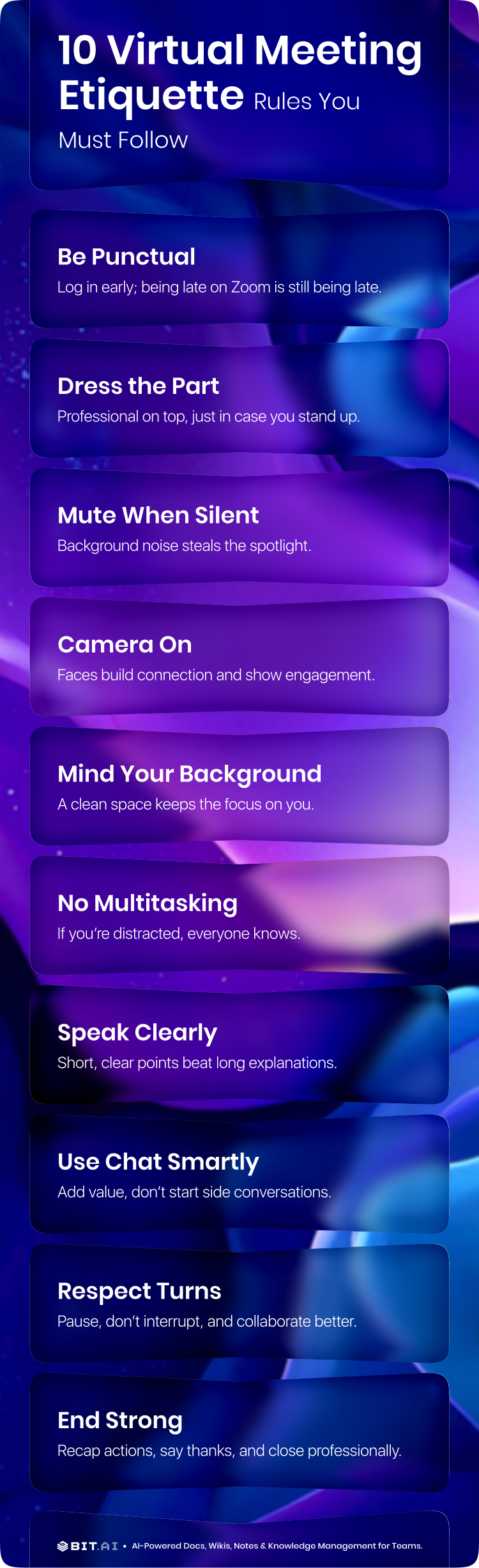
10 Virtual Meeting Etiquette Rules You Must Follow
Here are ten virtual meeting etiquette tips that can instantly improve how you show up in virtual meetings.
1. Be Punctual (Seriously)
Being late to a virtual meeting might feel less obvious than walking into a room mid-discussion, but please note: even if you’re in a virtual setting, everyone has noticed that you joined the meeting after it started. When you join late, and the speaker pauses, all eyes are glued to your name on the screen, which creates an awkward moment for everyone involved.
Yeah, let’s avoid that. Log in a few minutes early to test your internet, camera, and microphone. You never know when a last-minute software update or a slow connection might delay you.
Bonus:
Even a few spare minutes can make a difference. Open your meeting notes template and start noting important points so you’re ready to jump in confidently.
2. Dress Professionally (At Least from the Waist Up!)
Sure, remote work means comfort, but showing up in your wrinkled sleepwear? Not a good look. You don’t have to be in full corporate attire, but at least wear something presentable- it signals respect for your team.
A polished appearance can also boost your confidence and help you feel more professional. And let’s be real: if you stand up during the meeting to grab something, do you want your colleagues to see your pajama shorts? Always dress as if you might unexpectedly have to turn your camera on.
3. Mute Yourself When You’re Not Speaking
Small sounds become very loud in virtual meetings. A barking dog, typing on your keyboard, or even someone talking in the background can pull everyone out of the conversation. When you’re not speaking, keep your mic muted. It helps the meeting stay calm and lets the person talking be heard clearly.
Because even if you think your space is quiet, unexpected noises- like a sudden cough or a door slamming- can disrupt the flow of the meeting. A good rule of thumb? Keep your microphone off until it’s your turn to talk, then unmute and speak clearly.
Master mute shortcuts to stay efficient!
- Zoom: Alt + A
- Google Meet (browser): Ctrl + D
- Microsoft Teams: Ctrl + Shift + M
4. Camera On, Unless Told Otherwise
We get it- turning your camera on can feel a little awkward, especially if you’re working from home in a less-than-ideal setup. But in most workplace meetings, keeping your video on is the norm. It makes communication more personal and engaging, allowing for better nonverbal cues and connection with your colleagues.
Plus, it reassures your team that you’re actively listening (instead of, say, browsing social media). Unless your team has a “cameras off” policy, keep that video on and make eye contact with the screen.
5. Be Mindful of Your Background
What’s behind you matters. The clutter and distractions in the background will pull attention away from your message and make meetings harder to focus on. If you don’t have a dedicated workspace, sit in front of a clean, simple background or use a professional virtual one.
Also, check your lighting – sitting in the dark or having a bright window behind you can make it difficult for people to see your face. Your background should be as professional as you are!
PRO TIP
Platforms like Zoom and Google Meet let you blur your background or swap it for a more professional one.
6. No Multitasking (Yes, People Can Tell)
You may believe that you are being clever by quickly reviewing emails or replying to messages when someone is talking; however, we can assure you that both your distracted appearance and your slow response times indicate otherwise. Listening attentively is one of the most significant components of being courteous and polite in meetings.
When you multitask, you risk missing important details, asking redundant questions, or worse – getting called on when you’re not paying attention. Stay engaged, take notes, and give your full focus to the meeting. Your colleagues will appreciate it, and you’ll gain more value from the discussion.

DID YOU KNOW?
About 92% of the employees spend their time multitasking during virtual meetings.
7. Speak Clearly and Concisely
In a virtual setting, clarity is king. Unlike in-person meetings, where body language fills in the gaps, online communication relies heavily on the words and tone you use. Therefore, it is imperative that we rely upon what we say and how we say it (the wording and tone). Be sure to speak clearly and articulate your message in a slow, controlled manner, and to the extent possible, limit your discussion to only what is necessary.
Long-winded explanations can lead to confusion (or worse, people zoning out). If what you’re saying requires explanation, take it one step at a time and break it down into smaller pieces instead of speaking for 10 or 15 minutes about something, and allow people to ask questions or think through what you just said before you continue on with what you’re saying.
8. Use the Chat Wisely
The chat box may prove to be a great tool to make some remarks or share links, or provide valuable insights without interrupting the speaker. However, like all other good things in life, moderation is the key to using the chat box feature to great effect.
The best use of the chat is summarizing key points, posing questions, or agreeing with a colleague about another person’s statement with a “Great point, Alex! That’s the same strategy we’re going to implement for Q3.” Remember, chatbox is all about being relevant and professional, an extension of your own voice, not a separate conversation in itself.

If this was useful, read this…
9. Respect Speaking Turns
Virtual meetings don’t have the same flow as in-person conversations, which makes talking over someone much easier than you think. Even a small interruption can break someone’s train of thought or derail the discussion.
Before jumping in, pause for a moment to make sure the other person has finished. Use features like “raise hand” or the chat box if the meeting is crowded.
If you do accidentally break in while someone is speaking (which happens to everyone at least sometimes), just simply apologize and then tell them to keep going with what they were saying. If you allow everyone the opportunity to speak uninterrupted, it creates an environment that is much more respectful, makes the meeting clearer to everyone, reduces the risk of chaos, and allows for true collaboration between those present at the meeting.
10. End on a Strong Note
A meeting isn’t just about showing up – it’s about contributing and ensuring there’s clarity moving forward. Rather than abruptly logging off of the call or leaving the meeting when the host says, “Thanks everyone, see you next time,” while that may seem appropriate, it really isn’t. Take a moment and offer a professional closing.
You may want to take a moment to recap your main takeaway points from the meeting, recognize that you have any actions assigned to you, and thank everyone for participating in the meeting. For example, if someone says, “Great discussion today, looking forward to next steps!” and thanks everyone for being there and contributing, this encourages further participation.
……..When you follow these guidelines for Meeting Etiquette, you can reduce the likelihood of making embarrassing mistakes during virtual meetings and show others you are a polished and courteous professional.
And if you’re looking for a way to streamline meeting notes, collaborate more efficiently, and keep your team aligned, read on to learn about the smartest tool, Bit.ai, as the perfect solution!

Turn Meetings Into Clear, Actionable Minutes—Instantly
Create professional, structured meeting minutes in minutes with Bit.ai. Collaborate, organize, and share updates effortlessly—all in one smart document.
Free to start • Set up in minutes
How Bit.ai Can Help Ace Your Meetings
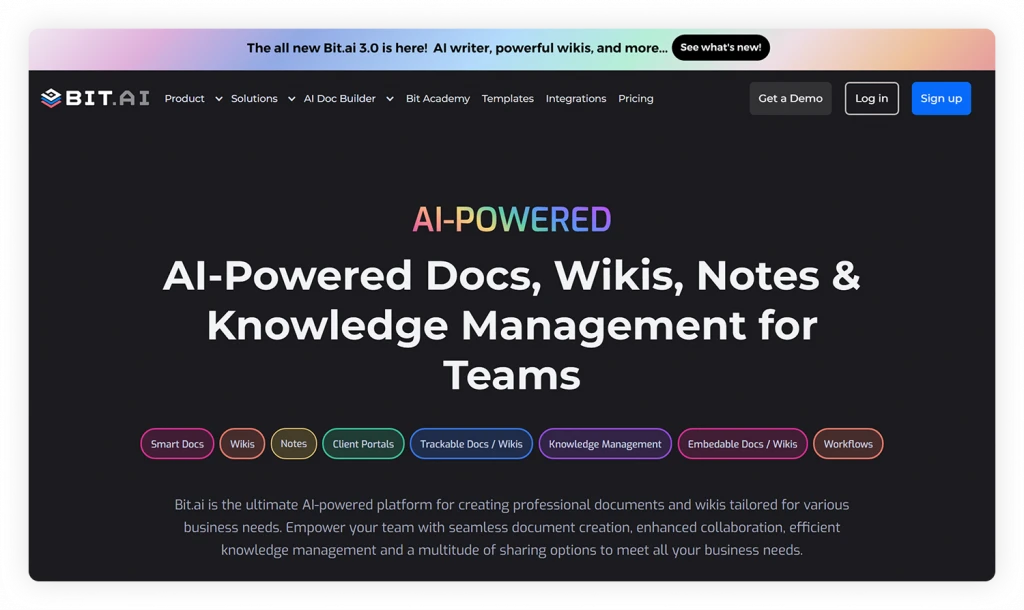
Bit.ai is an AI-powered docs, wikis, and knowledge management platform. It works like a single place where all your meeting-related work comes together. You can plan your agenda, jot down notes during the call, and update action items right after, without switching between apps.
It also makes teamwork easier. Everyone can share information, comment on things they see, and see live updates on changes as they are made. This helps eliminate any confusion, missed follow-ups, and those “what did we decide?” moments that occur after meetings. When everything is written and made available to everyone, meetings will be clearer and won’t seem as tiring.
Here’s how Bit.ai brings real value to your meeting workflow:
1. Summarize Meeting Takeaways Quickly
Have you ever left a meeting and thought, “Hey, what were the takeaways?” But no more this saying with Bit.ai. With Bit’s AI Genius 300+ Content Generation Tools, summarizing meetings and taking action items will no longer be a chore. With the capability to present a detailed analysis at your fingertips, missing any important piece of information will be the last thing on your mind.
2. Smart Docs with Rich Embedding
What truly sets Bit.ai apart is its rich embedding capability. You can embed spreadsheets, presentations, videos, forms, PDFs, and live links directly into your meeting documents.
3. Collaborate in Real-Time
Team members can edit documents together at the same time, leave comments, and @mention one another directly in the doc. This ensures everyone is on the same page, whether you’re drafting a follow-up plan or reviewing agenda points.
4. Organize Everything in One Place
Bit.ai lets you set up organized collaborative workspaces, think of them as digital folders for projects, teams, or clients. All your meeting notes, agendas, and related documents live in one spot, so you never waste time searching through folders.
5. Smart Templates to Save Time
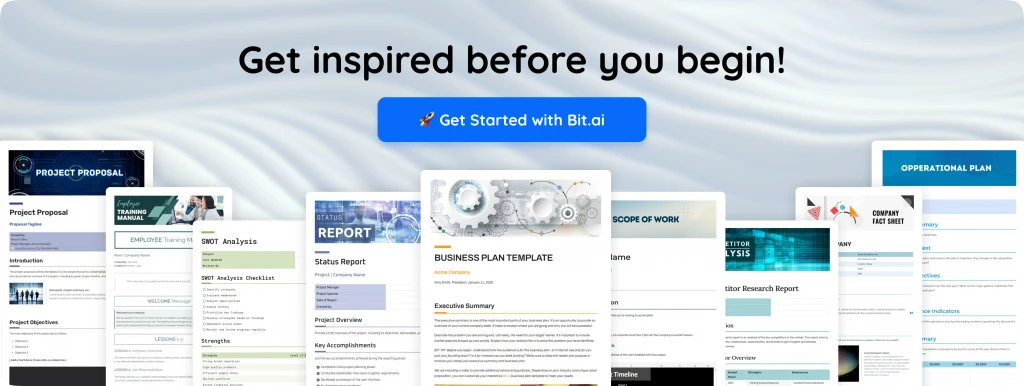
Creating a meeting agenda or follow-up document from scratch can be tedious. That’s why Bit.ai offers a collection of more than 100+ smart templates for agendas, follow-ups, action plans, and more. Just pick a template, customize it, and you’re ready to go!
6. Share Smoothly with Others
After you have prepared your meeting summary/notes, you will be able to distribute them through many different means, including: a simple link, a tracked document that shows who’s viewed it, or even embed them into websites, export to PDF, and more.
In short, Bit.ai helps you prepare better, collaborate during meetings, and follow up with clarity, so your meetings feel more productive and less chaotic.
Now that you’ve got your agenda ready and your notes organized with Bit.ai, it’s time to make your meeting engaging from the start. Ice breaker questions are a simple yet effective way to set a friendly tone, get participants talking, and build connection, even in a virtual setting.
Virtual Meeting Etiquette: Ice Breaker Questions
The beginning of most virtual meetings is the same – everybody joins, their microphones are muted, then there is an awkward period of silence as nobody knows who will talk first. One way to fill this gap in a more natural manner is by using icebreaker questions to open the meeting up to everyone.
Even one quick question can help people loosen up and feel more comfortable before the real discussion begins. The key is to keep it light and optional, so no one feels put on the spot.
Here are a few easy icebreaker questions that usually work well in virtual meetings:
- How’s your day been so far?
- What are you sipping during this call?
- Are you more productive in the morning or later in the day?
- What was the one thing that went your way today?
- If you weren’t working right now, what would you rather be doing?
Used in a natural way, these small questions can make meetings feel more like conversations and less like formal calls, which honestly makes a big difference for everyone involved.
Use these lines in real time – or store them in your Bit.ai meeting doc as a go-to script.
Get More Ideas here:
Wrapping Up
Although many people view meetings as boring and a lot of work, if you prepare yourself in advance and communicate things clearly and use the common courtesy rules for online meetings, you will be able to put together a great environment for an enjoyable and productive meeting.
With the help of tools like Bit.ai, it becomes possible to effectively communicate your thoughts, collaborate with others, and follow up afterward on any unanswered questions without experiencing confusion.
By following these tips below, you can walk away from each meeting feeling accomplished instead of exhausted.
FAQs
- What should I do if my internet connection drops during a virtual meeting?
So, if your internet access gets interrupted, do not worry. Try reconnecting as soon as possible and, if the connectivity is restored, type an update in the online meeting chat box regarding the issue.
- Is it okay to eat during a virtual meeting?
One should refrain from eating while conducting a meeting, whether it’s a group meeting or a client meeting. However, having water is acceptable, but eating could be distracting. But if it’s just a casual meeting, having some snacks is not a problem.
- How can I politely exit a meeting if it’s running over time?
You can say something like, “I’m sorry, I have another commitment coming up, so I’ll need to step out. I’ll catch up on the remaining points later.”
- What if I accidentally talk over someone in a meeting?
When you interrupt someone, just briefly apologize, and then allow the other person to carry on with what they were saying. A quick “Sorry, please continue” will allow the conversation to flow more easily, as well as show that you respect your coworker.
- Should I follow up after a meeting?
Yes, following up is always a good idea. You can summarize key points, action items, or next steps in a short message or email. It keeps everyone on the same page and shows you’re organized and professional