Have you ever had a feeling that working within a document has become a game of digital tug-of-war? One user makes modifications to the file, the other leaves comments, one copies the file, and all of a sudden, you have five versions of the same document.
These days, with remote teams and fast deadlines, smooth document collaboration is not an option anymore but a necessity. It can kill productivity, no matter whether you are brainstorming a pitch, co-writing a proposal, or putting together a knowledge base; the manner in which your group collaborates on documents will break it or make it.
The good news is? Teamwork does not always need to be messy; it can be sorted sometimes.
Smooth cooperation is not at all difficult with the appropriate tools and a proper approach. This blog represents a must-have resource to learn how to use document collaboration like a boss. We are getting into the what, the why, and, most importantly, the how with 8 document collaboration tips, a review of the best tools, and the answers to the questions everyone is wondering about.
Ready to dive in? Let’s get started.
What is Document Collaboration?
Simply, what document collaboration refers to is collaborating with others on a single document, arguably via writing, editing, reviewing, and commenting, at times even in real-time.
Consider it to be any kind of digital collaboration. Everyone is working on the same piece of content, and no messy email chains are going back and forth, or files named something like “Notes_6-3-25.docx”. In this example, the date mentioned is confusing (can’t identify if it’s June 3rd or March 6th).
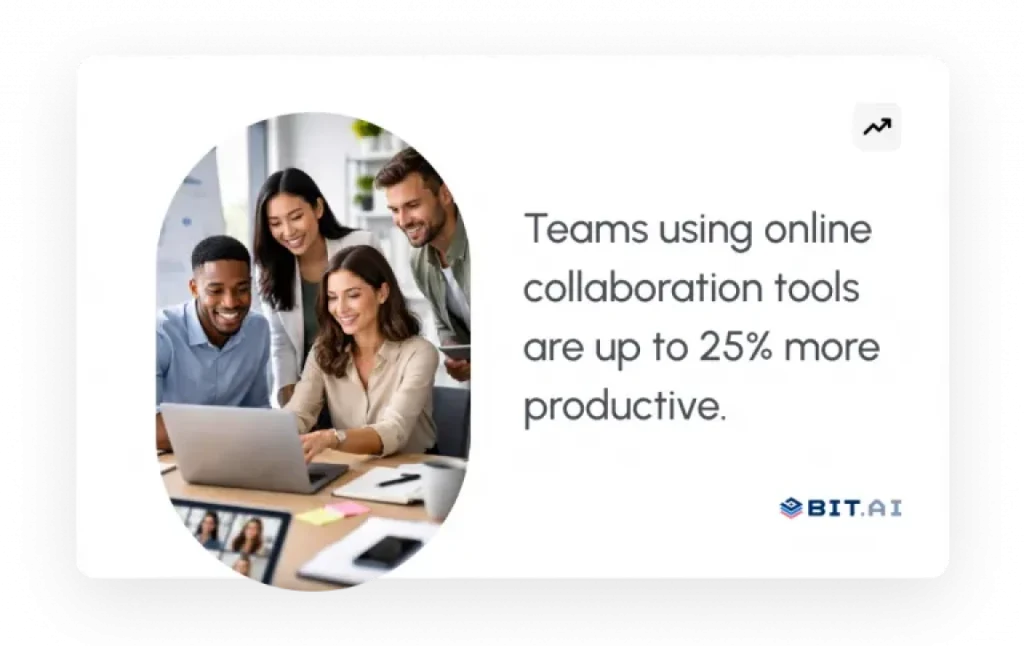
And it is not that someone is copy-pasting something into the same doc. It is about sharing, alignment, avoidance of duplication, visibility, and accessibility by everyone on the team. Now that you have understood what document collaboration means, let’s see why it matters in today’s digital era.
Why Document Collaboration Matters More Than Ever
With remote work, rapidly changing projects, and seamless collaboration across teams, document collaboration has become a fundamental way of working. The important thing is that document collaboration is more than just working in the same document; it is about being able to share ideas, collect feedback, and keep everybody aligned without getting lost in back-and-forth communication. When done properly, document collaboration allows us to save time, create clarity, and allow everyone to keep moving in the same direction.
Why Document Collaboration Matters More Than Ever
With remote work, rapidly changing projects, and seamless collaboration across teams, document collaboration has become a fundamental way of working. The important thing is that document collaboration is more than just working in the same document; it is about being able to share ideas, collect feedback, and keep everybody aligned without getting lost in back-and-forth communication. When done properly, document collaboration allows us to save time, create clarity, and allow everyone to keep moving in the same direction. You know how quickly things can go off track when there is no defined process of collaboration. That is why it is essential to do this right:
- Saves Time- No more hopping between emails, Slack, and version control mess. The real-time collaboration eliminates downtimes and synchronizes all the participants.
- Improved Accuracy- Sources of truth are reduced when everybody collaborates from the same source. The cooperation helps to make sure that everybody is on the same page, literally.
- Faster Decision-Making- Since everyone can contribute and comment in real-time, the decisions are made faster. That implies that projects are delivered faster.
- Better Team Communication- Collaboration of documents also promotes effective communication, which means less miscommunication, better feedback, and common objectives.

You might also like
- Enhanced Creativity- When more minds work in shared workplaces, there are greater and better ideas. Brainstorming does not occur only during the meeting; it can be found within your documents as well.
Now that we know why it matters, here are 8 practical document collaboration tips to take your document collaboration to the next level.
8 Pro Tips on Upgrading Your Document Collaboration
Effective document collaboration doesn’t just happen; it is developed through good habits, the best tools, and explicit communication. Whether your team is working remotely or you simply want to decrease the mayhem of edits and feedback, these 8 easy suggestions will help you collaborate on documents more effectively, stay organized, and actually have fun while collaborating. Whether you are new to using shared docs or you simply want to streamline your process a bit, you will be able to stay headache-free when working with colleagues on shared docs with the help of these tips.
1. Picking the Most Suitable Document Collaboration Software
The tool your team uses makes a big difference. A good collaboration tool lets people edit together, leave comments, track changes, and control who can access the document.
When everyone works in one shared space, you avoid sending files back and forth through email. This reduces confusion and helps teams stay on the same version of the document. Many modern teams use tools like Bit.ai because they combine live editing, clean formatting, and organized workspaces in one place.
If this was useful, read this…
Top Real-Time Document Collaboration Software for Team Productivity! →
2. Establish Clear Roles from the Beginning
Not everyone needs to edit a document. Some people may only need to review or comment.
Assign roles at the beginning, e.g., owner, editor, commenter, or viewer. That way, you avoid making changes by mistake and maintain a clear flow of work. If everyone’s role is known, the teamwork is less complicated, and the decisions are made more quickly.
3. Build a Centralized Workspace
Scattered files slow teams down. When documents live in emails or different folders, people waste time searching for the right version.
A shared workspace keeps all documents in one place. Team members can quickly find what they need and continue working without confusion. Over time, this also builds a shared knowledge base your team can reuse.
4. Do Not Underestimate Version History
Perhaps one person accidentally deletes some text or changes it.
The version history feature will allow you to quickly get your work back to the way it was.
Most online collaboration tools feature automatic change saving. You can look at older versions and restore content if needed. This gives teams confidence to edit freely without worrying about losing work.

BONUS TIP
With Bit.ai, you can track more than just edits, such as you can follow the full history of decisions and conversations behind the content. It’s like having a built-in timeline for your collaboration.
5. Promote Live Feedback, Not Post-thoughts
Waiting until the end to give feedback often creates extra work. Large changes become harder once a document is finished.
Instead, get your team members to make their comments and suggestions while the document is being written. Writers receive real-time feedback, which allows them to make adjustments at an early stage and keeps everyone aligned from the beginning.
6. Include Communications Tools
Documents should not exist alone. Teams often discuss work in chat apps or project tools, and those conversations should stay connected to the document.
Integrating online collaboration tools with platforms like project management apps or design tools helps keep discussions and work in sync. This way, important context is never lost.
7. Keep Your Docs Clean and Organized
Well-organized documents are easier for everyone to use. Add headings, clear labels, and simple formatting so readers can quickly understand the content.
A clean document also helps new team members get up to speed faster. Think of your document like a shared workspace. When it is organized, people feel more comfortable contributing.
8. Do Regular Audits
Over time, shared folders fill up with old drafts and unused files. This makes it harder to find important documents.
Set a habit of reviewing your workspace and archiving outdated files. Clean collaborative workspaces helps teams stay focused on current work and prevents confusion later.
Now that you have learned the document collaboration tips, let’s explore some of the tools that enhance your document collaboration process.
Best Tools for Streamlining Document Collaboration
The tool you choose will determine how well your team collaborates on a document. The best platforms do not simply function as a writing space together, but are able to manage feedback and keep everything organized, while ensuring there is no lapse. Although there are many solutions available, the following platforms stand out for making team document collaboration easier:
1. Bit.ai

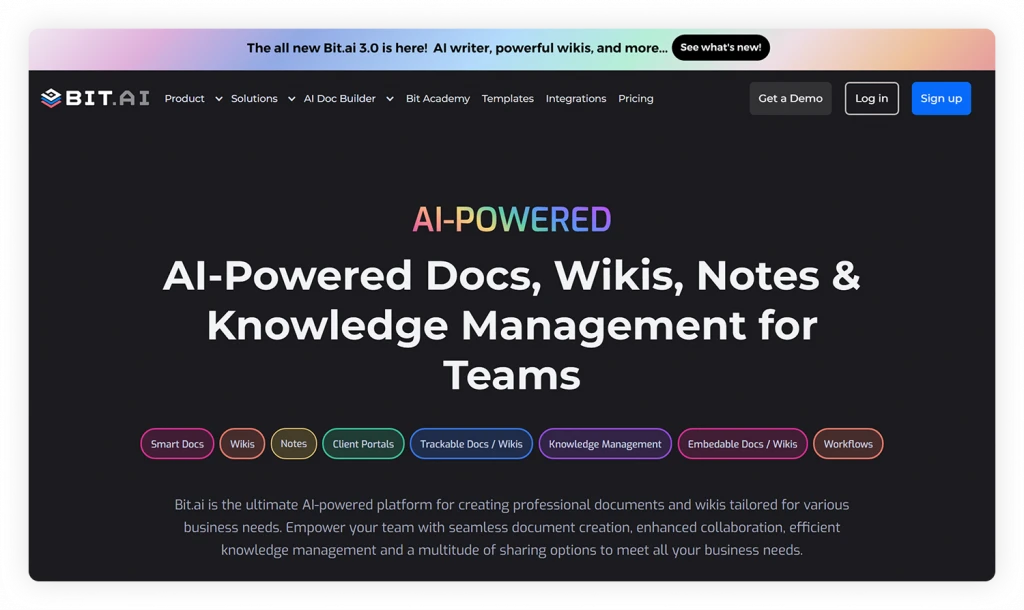
Bit.ai is a knowledge management and document collaboration software powered by artificial intelligence that allows for seamless team collaboration. Whether it be meeting notes, internal wikis, client portals or knowledge hubs to share information, Bit allows everything to be organized in one place.
With real-time collaborative document editing, intuitive formatting, and AI-powered smart features, it helps teams boost productivity, streamline knowledge sharing, and collaborate effortlessly.
Key Features:
Smarter living documents/wikis
Make dead documents come to life, making them a living and interactive place to collaborate. Smart Docs in Bit.ai enable you to embed any kind of rich media, such as videos, surveys, spreadsheets, and code blocks, and to organize documents into structured wikis with subpages and hierarchy.
Real-time Collaboration, Comments/@ mentions, comment inline
Work in real time with several users and visitors. You can use highlight text with inline comments, @mention teammates, and push notifications. All changes are logged, and having a complete version history rollback is easy, and transparency is maintained in line with the changes made.
Smart Search
The Smart Search on Bit.ai enables the user to search through workspaces, folders, documents, and embedded content immediately.
More than 100+ Rich Media Embedding integrations
Select more than 100+ integrations such as Figma, Google Drive, Airtable, Typeform, GitHub, and Tableau to embed live content. These in-text elements have auto-update so that your documents remain up to date with external data.
High-Level Sharing Controls & Portals
Distribute documents and wikis through live link, trackable link, and embeddable versions where full branding control can be achieved. You may also create a secure invite-only link and guest access with additional features such as password protection and lead capture forms.
AI Genius Writer
AI Genius Writer helps you create, structure, and refine documents using built-in AI assistance. In addition to generating and rewriting content using readymade AI prompts, it supports AI-assisted document building by helping you organize ideas, create outlines, and shape drafts into clearly structured documents.
You get advanced options to customize your prompt queries based on tone, writing style, or audience, and translate documents into different languages when collaborating with teams across regions.
Pricing
- Free Plan – Ideal for individuals and small teams getting started
- Pro Plan – Starts at $8 per user/month
- Business Plan – Starts at $15 per user/month
2. Google Docs
Google Docs, or documents, which is part of Google Workspace, is a cloud-based online cooperative document that is most suits quick and real time collaboration.It is broadly applied in collaboration sharing, co-authorship, and document administration across the office, easy to integrate in Gmail, Google Meet, Google Drive, Google Docs, etc.
Key Features:
- Real-time editing: Multiple users can modify a document at the same time without getting versions of the document mixed up. It is also possible for any of the users to see the changes made, leave comments, and reply instantly.
- Robust version history: Easily track every edit, view past versions, and roll back to earlier drafts when needed.
- Built-in writing help: Grammar and spell check come standard, and AI tools like Smart Compose offer suggestions to help write faster and more clearly.
- Global collaboration made simple: Whether your team is remote or in the same room, Google Workspace makes it easy to stay in sync.
- Seamless integration: Docs, Sheets, Slides, Gmail, Meet, and Drive all work together, so your team can brainstorm, edit, meet, and share- all in one flow.
Pricing
- Business Standard: Starts $16.80/user/month.
- Free Plan: Free plan available
- Business Starter: Starts at $14/user/month.
If this was useful, read this…
3. Coda
Have you ever wanted your documents to do much more than just store text? With Coda, you can create an interactive living workspace where your writing, tables, and workflows coexist in the same location. Teams can create dynamic pages that allow them to have all of their tasks, data, and content seamlessly integrated into one place instead of creating static documents.
This makes it easier to plan projects, organize information, and collaborate in real time, all without jumping between multiple tools.
Key Features:
- All-in-one collaborative workspace: Prepare documents that integrate writing, tables, checklists, and workflows in a single spot, thus making it easier for teams to share information and jointly handle projects.
- Interactive tables and databases: You can transform a simple table into a powerful tool that is capable of tracking tasks, organizing data, and automating workflows right inside the documents.
- Customizable pages and layouts: Build pages using text, images, embeds, buttons, and modular sections, allowing teams to design documents that match their workflow.
- Real-time collaboration: Multiple users can edit, comment, and work together simultaneously, helping teams stay aligned without version confusion.
- Automation and integrations: Automatically run your repetitive tasks and connect Coda to your other workplace applications such as Slack, Google Drive, Jira, and others. This will enable you to keep your workflow seamless.
Pricing
- Free Plan: Free plan available
- Pro Plan: Starts around $10–$12 per user/month.
4. Confluence

Confluence by Atlassian is a powerful collaborative environment for forming disciplined internal documentation. Teams can collaborate in co-authoring, commenting, controlling permissions, automating processes, and integrating closely with Jira and other tools.
Key Features:
- Structured collaboration: Ideal for teams writing documentation with co-authoring, inline comments, and file sharing built in.
- Granular access control: Specify who are allowed to see, edit, and comment on the content so that only authorized personnel can access and make changes to the documents.
- Analytics and audit trails: Track document engagement, view history, and monitor changes over time.
- Seamless with Jira: Works smoothly with Jira and the rest of the Atlassian suite, thus it is a natural fit for tech teams.
- Custom rule automation: Set up automation like content archiving or task reminders to keep everything tidy and on track without manual effort.
Pricing
- Free Plan: Free plan available
- Standard Plan: Starts at $5.16/user/month.
- Premium Plan: Starts at $9.73/user/month.
If this was useful, read this…
Common Document Collaboration Mistakes to Avoid
Even with the best tools out there, document collaboration can go south if you aren’t careful. For example, teams often run into issues with version confusion, unclear roles and responsibilities, starting with messy formatting or poor communication. While these might seem like small mistakes, a little mistake here or there can have a huge effect on productivity. Remember, even the well-equipped teams can trip up sometimes. Here’s what you should not do:
No clear instructions: Confusion and uneven results are the product of ambiguity. Whenever reviewing documents, it is always advisable to give clear guidelines for the document being reviewed
Weak version control: There will be no single source of truth, which means all those corrections and feedback will cost you time to balance. Rely on version history and do not send files by email back and forth.
Making it too complicated: It is tempting to use more tools that can limit collaboration. Minimize your online collaboration environment so that they don’t feel complicated.
Not listening to feedback or responding to feedback: Two-way traffic needs to be honored. Feedback on ideas should always be appreciated, and the feedback loop should also be closed.
Failure to document changes: You should have a record of changes, comments, and other decisions that can be accessed in the future.
With those common pitfalls out of the way, you’re in a much better spot to collaborate smoothly. Let’s tie everything together and look at what all this means going forward.

Collaborate Smarter. Work Faster. Stay Aligned.
Bring your team, ideas, and documents together in one place with Bit.ai. Create, edit, and share in real time.
Free to start • Set up in minutes
Wrapping Up
Collaborating on the documents should not be a nightmare. Combined with the correct approach, tools, and a handful of proven document collaboration tips, any team will become a smart team. It is all about turning teamwork smooth, communication straightforward, and sharing knowledge easy.
Therefore, regardless of whether you work in a startup, an agency, or a remote team split across time zones, incorporate the document collaboration tips and choose your tools carefully, then begin creating documents that truly unite people. We hope that when you open a doc next time and invite your teammates, the magic happens.
FAQs
What is some good advice for collaborating through documents?
The right tool, the right team (Bit.ai is a fantastic jack of all trades)
- Define roles and expectations
- Promote in-the-minute feedback
- Make your workplace tidy
- Considerably less is it a good idea to check frequently and clean up old files
What are the best collaboration tools for documents?
- Bit.ai
- Google Docs
- Confluence
As each of them has different requirements, select them according to the working preferences of your team.
What is the way to work on a document in real time?
Work with tools that enable real-time collaboration, such as Bit.ai or Google Docs. These enable writing, comments, and editing to be done by more than one individual. The most important thing is to ensure that everyone knows what to do and to use comments or suggestion mode so you would not be treading on the toes of others.
What does a collaborative workspace mean?
A collaborative workspace refers to a virtual workplace in which people in a team can co-create, edit, and manage documents. It is a virtual office of documents that are organized, that can be searched, and that every team member can see.
Do you want your team to work as a team? To begin with, give a go at something such as Bit.ai – it may very well revolutionize your way of collaboration.
A smarter way to make better documents, one collaboration at a time.