Imagine getting a blank sheet of paper and being told to build a project plan! Where do you even begin?
Most people freeze at this moment! And this never happens because people lack skills. It happens because they have zero examples of project plans to look at.
That is exactly why this helpful guide exists!
In this guide, you will find 9 project plan examples from various industries. Each project management plan example shows what the project aims to achieve, how it is planned and key risks involved with the plan.
Project Plan Template
A project plan helps you organize tasks, timelines, resources and responsibilities. Here are the basic parts of a project plan:
- Project Name: The title of your project.
- Objective: The main goal you want to achieve with your project.
- Scope: The work that is part of your project and what is not.
- Timeline: dates, milestones and the overall project schedule.
- Tasks: The activities you need to do to complete your project.
- Owner: The person or team in charge of managing and completing the work.
- Dependencies: Tasks that need other tasks to be finished first.
- Risks: problems that could affect your project timeline, budget or results.
- KPIs: The metrics that show how well your project is doing. If it’s successful.
Now that you know the parts of a project plan lets see how they work in real projects. The examples below show how industries plan based on their goals, timelines and needs.

Want to learn how to create a project plan from scratch?
Project Plan Examples by Industry: At a Glance
To understand how project management works in practice, let’s look at real-world examples from different industries. These examples show how organizations plan projects based on their goals, resources, timelines, and risks.
Project Plan Examples at a Glance
| Project Type | Primary Goal |
| Software Development | Launch a mobile banking app |
| Marketing Campaign | Generate 10,000 leads |
| Product Launch | Release a new consumer product |
| Event Management | Organize a corporate conference |
| Research Project | Complete an 18-month research study |
| Construction Project | Build a four-story commercial building |
| Healthcare Project | Implement an EHR system |
| Education Project | Launch an online learning platform |
| Manufacturing Project | Deploy an automated production line |
Ready to set your project up for success from the start?
Create a clear foundation with this Project Charter Template →
Software Development Project Plan Example
The software project involves making changes along the way, gathering user feedback, and meeting business needs. Many teams use project plans to deliver work on time and check progress often.
Project Goal
The goal is to launch a mobile banking app. A version should be ready in four months. After that, features will be added and improvements made. Decisions about what to add will be based on user feedback and business needs.
Project Scope
This project includes the design, development, testing, and deployment of the initial version of a mobile banking app. Key features include secure user authentication, account management, transaction tracking, fund transfers, and bill payments.
The project also covers quality assurance testing to ensure a secure and reliable user experience.
Looking for a structured way to document the scope and deliverables of your project?
Planning Structure
The project is divided into periods. Each period is two weeks long. These periods are called sprints. In each sprint, the focus is on a feature. Something that works and can be reviewed and tested is created. Then changes can be made before moving on.
| Sprint Block | Focus | Deliverable |
| Sprints 1–2 | Core architecture and login | Secure authentication |
| Sprints 3–4 | Account dashboard | Balance and transaction view |
| Sprints 5–6 | Payments and transfers | Transaction functionality |
| Sprints 7–8 | Testing and refinement | Launch-ready MVP |
Risks and KPIs
| Risks | KPIs |
| Additional requirements may increase project scope. | Sprint completion rate. |
| Technical debt may affect future development. | Number of critical defects identified before launch. |
| Third-party banking API integration issues may delay delivery. | Percentage of planned features completed. |
| Changes in business priorities may affect timelines. | User acceptance testing success rate. |
This example shows how software teams use short development cycles, regular reviews, and phased delivery to manage changing requirements while working toward a planned release.
Every successful project starts with clear authorization and direction
Marketing Campaign Project Plan Example
A marketing project involves tight deadlines and working with teams across content, advertising, social media, and email.
So, a project plan is really helpful. It helps organize what needs to be done, who is responsible for each task and how well the campaign is doing.
Project Goal
The main goal is to run a six-week campaign to raise awareness of the product. The target is to get 10,000 leads during these six weeks.
Project Scope
This project includes creating content, paying for ads, promoting on media, sending emails, monitoring the campaign’s performance, and reporting its performance. Things that happen outside the campaign period are not included after the campaign ends.
Planning Structure
The project is broken down into workstreams that run in parallel. Each team is responsible for its tasks.
| Workstream | Deliverables | Owner |
| Content | SEO content, landing pages | Content Team |
| Paid Ads | Search and social advertising campaigns | Performance Marketer |
| Social Media | Organic content and influencer partnerships | Social Media Executive |
| Email Marketing | Automated email sequences | Email Specialist |
Risks and KPIs
| Risks | KPIs |
| Missed deadlines may affect campaign performance. | Number of qualified leads generated. |
| Advertising project’s costs may exceed the planned budget. | Cost per lead (CPL). |
| Lower-than-expected conversion rates may reduce lead volume. | Landing page conversion rate. |
| Inconsistent messaging across channels may create confusion. | Email open and click-through rates. |
This example shows how marketing projects coordinate multiple channels and teams to achieve a shared campaign objective within a fixed timeframe.
Product Launch Project Plan Example
Launching a product is a task. It involves working with teams such as manufacturing, logistics, marketing, sales, and customer support. A project plan helps ensure everyone is on the same page, with a clear schedule and defined responsibilities, before the launch date.
Project Goal
The goal is to launch a consumer electronics product in retail stores and online on the planned release date. The product launch is the focus.
Project Scope
The project covers key areas:
- Production planning for the product
- Inventory preparation to meet demand
- Distribution to get the product to stores and customers
- Marketing activities to promote the product
- Sales readiness to handle customer inquiries
- Customer support preparation to fix any issues
Future product updates and enhancements are not part of this project.
Planning Structure
Product launches rely on a series of tasks being completed in order. If one team is delayed, it can impact the launch schedule. Delays in manufacturing can affect logistics, marketing and sales. A product launch project plan helps manage these dependencies.
| Department | Critical Dependency |
| Manufacturing | Production must be completed before distribution begins. |
| Logistics | Inventory must reach warehouses and retail locations before launch. |
| Marketing | Promotional activities should be completed before launch announcements. |
| Sales | Product training should be completed before customer availability. |
Risks and KPIs
| Risks | KPIs |
| Manufacturing delays may affect the launch schedule. | On-time completion of launch milestones. |
| Inventory shortages may limit product availability. | Product availability at launch locations. |
| Logistics disruptions may delay distribution. | Percentage of inventory delivered as planned. |
| Competitor activity may reduce market visibility. | Pre-orders, sales volume, or launch-day revenue. |
This example shows how product launches rely on coordination between departments, dependency management, and schedule tracking to support a successful release.
Event Project Plan Example
Event projects operate around fixed deadlines. Once the event date is confirmed, planning activities must be completed according to schedule to ensure all operational requirements are in place before the event begins.
Project Goal
The goal is to organize and deliver a corporate conference for 500 attendees. The event must remain within budget and be completed without major operational or technical disruptions.
Project Scope
The project includes venue selection, speaker coordination, registration management, vendor management, catering, logistics planning, event-day operations, and post-event reporting. Activities unrelated to the conference are excluded from the project scope.
Planning Structure
Event projects are typically organized around milestones leading up to the event date.
| Timeframe | Key Tasks |
| 3 Months Before | Venue selection, speaker confirmation, sponsor coordination |
| 1 Month Before | Registration management, catering, logistics planning |
| 1 Week Before | Rehearsals, final attendee count, vendor confirmations |
| Event Day | Event execution and run-of-show management |
Milestones help teams track preparation activities and confirm that key requirements have been completed before the event.
Risks and KPIs
| Risks | KPIs |
| Vendor availability issues may affect event operations. | Number of registered attendees. |
| Technical failures may disrupt presentations or sessions. | Attendance rate on event day. |
| Lower-than-expected attendance may affect event objectives. | Budget variance against planned costs. |
| Speaker cancellations may require schedule adjustments. | Participant satisfaction score. |
This example shows how event projects rely on milestone-based planning, coordination across vendors and stakeholders, and close monitoring of deadlines leading up to the event date.
Research Project Plan Example
When research projects are conducted, the outcome is not always certain. This is because the time it takes to finish the project and the information needed can change along the way. So a plan is created to help stay on track and be ready for any surprises.
Project Goal
The goal is to complete a study over the next 18 months on how people buy things and identify what makes them decide to purchase.
Project Scope
The research project will include reading what others have written about this topic, designing the study, collecting information, analysing the information collected, preparing the report, and sharing the findings. Anything that is not part of the defined research project scope will not be included.
Planning Structure
Research projects are usually broken down into steps that are completed one after the other. Time is also taken to review completed work before moving on to the main part of the project.
| Phase | Key Activities |
| Literature Review | Review existing studies and published research |
| Research Design | Define methodology, sample selection, and data collection approach |
| Data Collection | Gather survey, interview, or observational data |
| Data Analysis | Analyze findings and identify patterns |
| Reporting & Publication | Prepare reports and publish results |
Buffer periods may be included between phases to accommodate approval processes, participant recruitment, or data collection delays.
Risks and KPIs
| Risks | KPIs |
| Research findings may be inconclusive. | Completion of research phases according to schedule. |
| Funding limitations may affect project activities. | Participant recruitment targets achieved. |
| Approval processes may take longer than expected. | Data collection completion rate. |
| Participant dropout may reduce sample size. | Report submission and publication milestones achieved. |
This example shows how research projects combine structured planning with flexible timelines to manage uncertainty throughout the study.
Construction Project Plan Example
Construction projects have many parts, and there are rules to follow. Things have to be done in order. So, when planning takes place, schedules, responsibilities, ensuring things are done right, and keeping track of progress are all considered.
Project Goal
The goal is to build a four-story building in a year and a half. The project should stay on budget, keep people safe, and ensure the building is of high quality.
Project Scope
This project includes preparing the site, completing foundation work, building the structure, installing systems, conducting inspections, and finally handing over the building. If someone wants to make changes after the plan has already been agreed on, that is not part of this project.
Planning Structure
Construction projects are usually done one step at a time. This is because many things depend on things being done first. One thing has to be finished before the next thing can start. The construction project plan helps teams manage schedules, dependencies, budgets, and project milestones.
| Phase | Key Deliverables | Duration |
| Pre-construction | Permits, blueprints, budget approval | 2 months |
| Site Preparation | Excavation, foundation | 3 months |
| Structural Work | Framing, concrete, roofing | 6 months |
| Interior & Systems | Electrical, plumbing, HVAC | 5 months |
| Finishing & Handover | Inspections, final walkthrough | 2 months |
Each phase includes milestones used to monitor progress and confirm readiness for the next stage.
Risks and KPIs
| Risks | KPIs |
| Adverse weather conditions may delay outdoor activities. | Completion of project phases according to schedule. |
| Material price fluctuations may increase overall costs. | Variance between planned and actual budget. |
| Permit and approval delays may affect timelines. | Percentage of inspections passed on the first attempt. |
| Skilled labor shortages may impact productivity. | Number of safety incidents recorded during the project. |
This example shows how construction projects rely on clear phases, defined scope, milestone tracking, and risk management to maintain control over schedule, cost, and quality.
Healthcare Project Plan Example
Healthcare projects need to be planned. They involve information, rules and regulations, and daily hospital operations. A good project plan helps reduce problems when introducing systems and processes.
Project Goal
The main goal is to implement a health record (EHR) system across a hospital network. This system must help doctors and nurses with their work. It must also keep the setup going smoothly.
Project Scope
This project will include:
- Checking how things work now
- Setting up the system
- Moving data to the system
- Training staff
- Testing the system in a group
- Deploying the system across the hospital
Future software updates and other IT projects are not part of this project.
Planning Structure
Healthcare IT projects are usually done in stages. This helps reduce risks and check how well things are working before deployment.
| Phase | Focus |
| Assessment | Workflow analysis, compliance review |
| Pilot | Limited department rollout |
| Training | Staff onboarding and system training |
| Full Deployment | Organization-wide implementation |
During the rollout, both legacy and new systems may operate simultaneously to support continuity of care and verify data accuracy.
Risks and KPIs
| Risks | KPIs |
| Data migration errors may affect patient records. | Percentage of records migrated successfully. |
| Regulatory non-compliance may create operational issues. | Compliance audit completion rate. |
| Staff adoption challenges may delay implementation. | Staff training completion rate. |
| System downtime may affect clinical operations. | System availability during rollout. |
This example shows how healthcare projects balance regulatory requirements, technology implementation, and operational continuity during large-scale system changes.
Looking for a better way to organize project knowledge?
Learn how Project Documentation helps teams stay on the same page →
Education Project Plan Example
An education project usually involves many things. These include creating a curriculum, using technology in classrooms, training teachers and planning the school schedule. A project plan for education is often made to align with the school semester, student enrollment periods, and class schedules.
Project Goal
The main goal of this project is to create and launch a platform for courses before the next school semester starts.
This platform should let students and teachers access the course materials, resources and tools they need.
Project Scope
The project will cover creating course content, setting up the platform, testing it, training teachers and preparing for launch. The project will not include changes to the platform or the addition of new courses.
Planning Structure
To ensure everything is ready on time, several teams may work on different parts of the project simultaneously. This includes preparing the platform and educational content.
| Workstream | Focus |
| Content Development | Course creation and instructional materials |
| Platform Development | Learning platform features and functionality |
| Testing & Quality Review | Content and system validation |
| Training & Launch Preparation | Instructor onboarding and launch readiness |
Progress reviews are scheduled throughout the project to confirm readiness before launch.
Risks and KPIs
| Risks | KPIs |
| Project delays may affect academic schedules. | Completion of workstreams according to schedule. |
| Low user adoption may reduce platform usage. | Student and instructor adoption rate. |
| Content quality issues may affect learning outcomes. | Percentage of courses completed before launch. |
| Insufficient training may affect platform utilization. | Training completion rate for instructors. |
This example shows how education projects coordinate content development, technology implementation, and training activities within fixed academic timelines.
Manufacturing Project Plan Example
When we are working on manufacturing projects, we have to consider many things. We have to do engineering, procurement, installation, testing, and get everything to operate. The reason we have to plan everything is that when equipment arrives and the facility is ready, many of the things we have to do change. So we have to make a detailed schedule.
Project Goal
Our goal with this project is to get an automated production line up and running within 12 months. This means that all of our equipment, systems and the way we do things have to be ready to go before we start producing anything. We need to make sure that everything is in place and working properly before we begin.
Project Scope
This project will include many things. We will plan the facility, buy equipment, install it, test the systems, train our staff, and get everything ready for production. However, we are not going to worry about what might happen in the future, like expanding our production or upgrading our capacity. Those things are not part of this manufacturing project.
Planning Structure
Manufacturing projects usually follow an order. This is because we have to install things, test them and get them working before we can move on to the next step. We have to do things in order because each step depends on the one that comes before it. This is how manufacturing projects work.
| Phase | Focus |
| Planning & Design | Production requirements and facility planning |
| Procurement | Equipment sourcing and supplier coordination |
| Installation | Equipment delivery and setup |
| Testing & Commissioning | System validation and performance testing |
| Production Readiness | Staff training and operational preparation |
Project schedules also track procurement lead times, equipment deliveries, and installation milestones to support timely completion.
Risks and KPIs
| Risks | KPIs |
| Equipment delivery delays may affect installation schedules. | Completion of project phases according to schedule. |
| Supply chain disruptions may impact procurement activities. | Percentage of equipment delivered on time. |
| Safety compliance issues may delay operational approval. | Number of safety incidents during implementation. |
| System integration challenges may affect production readiness. | Production line performance during commissioning. |
This example shows how manufacturing projects coordinate procurement, installation, testing, and operational preparation while managing dependencies across multiple project phases.
Want to keep your project on track financially?
Common Patterns Found Across Successful Project Plans
We can see that, even though project plans differ across industries, they all have some things in common. These things help people working on the project to stay organized and manage problems that might come up. They also help people track the projectis progress from start to finish.
| Pattern | What It Means |
| Clear Goal | A defined project objective that guides decision-making and priorities. |
| Defined Scope | Clear boundaries that identify what is included and excluded from the project. |
| Milestones | Key checkpoints used to measure progress and review project status. |
| Dependencies | Tasks that must be completed before related activities can begin. |
| Assigned Owners | Clearly defined responsibility for tasks, deliverables, and decisions. |
| Risk Planning | Identifying potential issues early and preparing appropriate responses. |
These elements appeared across construction, software development, marketing, healthcare, education, manufacturing, and other project examples discussed in this guide.
While project methods, timelines, and deliverables may differ across industries, the underlying principles of planning remain largely the same. Reviewing the basics of project management first can make it easier to see why these underlying principles hold up across such different industries.
Clear objectives, defined responsibilities, realistic schedules, and proactive risk management remain important components of successful project execution.
Now, we’re going to introduce you with onesmart tool, Bit.ai lto manage all your projects from one place. Read on!
Have the project plan ready?
Get everyone aligned before execution with our project kickoff template →
Manage Project Plans More Effectively With Bit.ai
When you are managing a project, it is really helpful to look at examples of project plans. But it is not about looking at these plans; it is also about how you create them, share them with your team, and keep them updated. Teams need a place to keep all their project documents, collaborate with project stakeholders, and ensure everyone has the latest information.
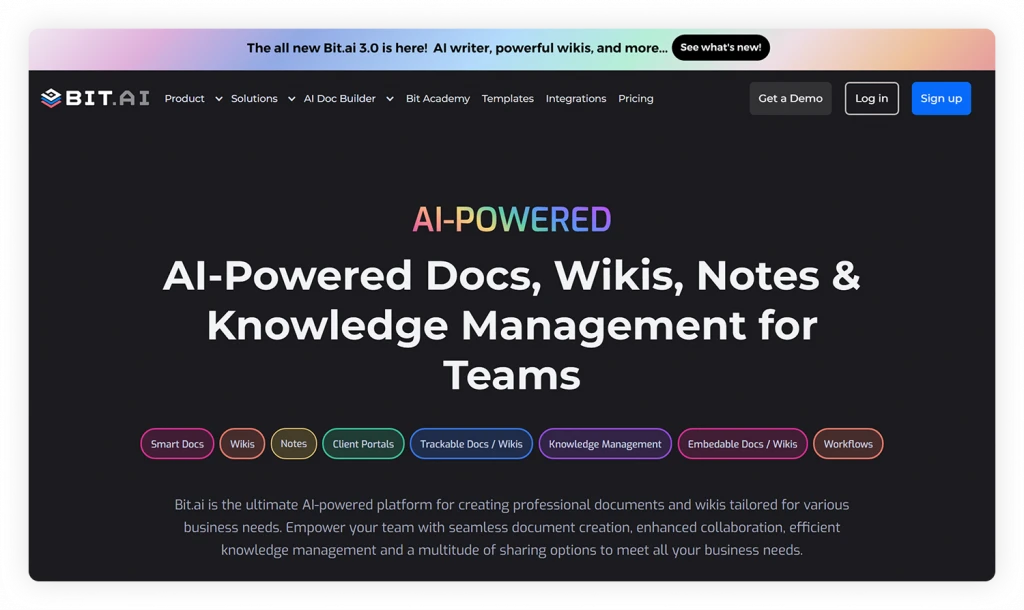
Bit.ai is an AI-powered documentation tool that helps teams create, organize, share, and manage project plans from a single workspace. Whether you’re managing a small team project or a complex enterprise initiative, Bit.ai assists you in planning your project smarter and executing more effectively.
Here are some powerful features of Bit.ai that make project plan management more efficient, organized, and collaborative:
AI-Powered Document Creation
Bit.ai’s AI writer helps teams create project plans, take notes during meetings, and produce other documents. This means teams do not have to start from scratch when creating documents, saving a lot of time.
Rich Interactive Documents
You can add all sorts of rich media to your documents, such as videos, charts, and files. This means all the information about your project can be kept in one place.
Smart Workspaces
Teams can keep all their project plans, documents and other resources in one collaborative workspace. This makes it easy to find the information you need when you need it.
Real-Time Collaboration
Many people can work on the same document at the same time, leave comments and make changes. This helps everyone work together better and avoids confusion because everyone is using the same version of the document.
Multiple Sharing Option
Share documents through live links, trackable links, guest access, or embed them on websites and blogs. With features like password protection and permission controls, you can securely share content while maintaining complete control over access.
No matter what kind of project you are working on, whether it is building something, launching a product or starting a marketing campaign, having a good system for documents and working together can make planning your project a lot easier and more organized.

Plan, Collaborate & Execute Projects in One Workspace
Bring timelines, goals, resources, and project documentation together in one place so your team can plan and execute with confidence.
Free to start • Set up in minutes
Final Thoughts
Project plans may look different across industries, but many of the core planning principles remain the same. Whether you are managing a construction project, software launch, marketing campaign, or research study, successful plans typically include clear goals, defined responsibilities, realistic timelines, and risk management strategies.
The examples in this guide demonstrate how project planning can be adapted to different industries and project requirements. Rather than copying a template exactly, focus on understanding the planning structure behind each example and applying those principles to your own projects.
As projects become more complex, having the right processes and tools in place can make planning, collaboration, and execution easier. The key is to create a plan that provides enough structure to guide the project while remaining practical for the team responsible for delivering it.
Key Takeaways
- Project plans provide a structured approach for organizing work, timelines, resources, and responsibilities.
- Successful plans typically include clear goals, defined scope, milestones, task ownership, and risk management.
- Different industries use different planning methods, but many core project management principles remain consistent.
- Reviewing real-world examples can help teams understand how to apply project planning concepts in practice.
- Collaboration and documentation tools can help teams manage project information more effectively.
Want to turn your project plan into a clear schedule?
Frequently Asked Questions
What is a project plan example?
A project plan example shows how to develop a project plan. This plan example includes tasks, timelines, resources, and risks. Who is responsible for what? All these things are organized so that we can reach our project objective.
Why is a project plan important?
A project management plan is important because it helps our team know what we want to do. It helps us work together and deal with problems that come up. We can also see how we are doing throughout the project.
What are the common phases of a project plan?
The phases of a project plan are not always the same. A lot of project plans include planning and execution, monitoring, and project closure.
Which digital tool is best for project planning?
The best digital tool for project planning is the one that works best for our project. You have to think about what your project needs, how many people are on your team and how you like to work. Many teams use project management and collaboration platforms like ClickUp and Bit.ai because they can put all their plans, documents and conversations in one place.
About Our Editorial Team
Our Editorial Team researches, writes, and reviews every article to help ensure it is accurate, practical, and up to date. To learn more about our editorial standards, content review process, and official social media profiles, visit our Editorial Team page.
Why Trust This Article?
The information in this article is based on reputable and authoritative sources. We review our content periodically to keep it accurate and up to date.
Keep Reading & Learning: