
List of Top 20 Event Management Document Formats and Templates
1. Event Proposal Template
Template:
|
Section
|
Description
|
|
Event Title
|
Clearly state the name of your event.
|
|
Event Summary
|
Briefly describe the event’s purpose, target audience, and key takeaways.
|
|
Event Background
|
Explain the rationale behind the event and any relevant context.
|
|
Event Objectives
|
Define the specific goals you aim to achieve with the event.
|
|
Target Audience
|
Describe your ideal attendee profile, including demographics and interests.
|
|
Event Format
|
Outline the event’s structure, including activities, speakers, and program flow.
|
|
Event Schedule
|
Provide a preliminary timeline for the event, including key milestones and deadlines.
|
|
Logistics & Venue
|
Specify the proposed location, set-up requirements, and any audio/visual needs.
|
|
Marketing & Promotion
|
Describe your strategy for promoting the event and attracting attendees.
|
|
Budget
|
Outline the estimated costs associated with different aspects of the event.
|
|
Sponsorship Opportunities
|
(Optional) Detail sponsorship packages and benefits for potential sponsors.
|
|
Team & Qualifications
|
Introduce your team members and highlight their relevant experience.
|
|
Call to Action
|
Clearly state your desired outcome, whether it’s seeking approval, budget allocation, or partnership.
|
|
Appendix
|
Include any additional supporting documents, like speaker biographies or venue floorplans.
|
2. Budget Planning Sheet
-
Allocate resources effectively
-
Identify potential cost overruns early on
-
Secure sponsorships or additional funding (if needed)
-
Demonstrate financial responsibility to stakeholders
Template:
|
Category
|
Description
|
Estimated Cost
|
Actual Cost
|
Notes
|
|
Venue
|
Rental fee, security deposit, utilities
|
|
|
Include breakdown for different areas if applicable
|
|
Catering
|
Food and beverage costs, staffing, equipment rentals
|
|
|
|
|
Personnel
|
Salaries, wages, overtime, contractor fees
|
|
|
Include any benefits or travel expenses
|
|
Marketing & Promotion
|
Printing, advertising, social media marketing
|
|
|
|
|
Technology & Audio/Visual
|
AV equipment rental, internet access, software licenses
|
|
|
|
|
Decorations & Rentals
|
Tables, chairs, linens, stage rentals, floral arrangements
|
|
|
|
|
Entertainment
|
Speakers, performers, musicians, talent fees
|
|
|
|
|
Travel & Accommodation
|
Transportation, hotel stays for speakers or staff (if applicable)
|
|
|
|
|
Permits & Insurance
|
Event permits, liability insurance
|
|
|
|
|
Miscellaneous
|
Office supplies, gratuities, first aid kit, unexpected expenses
|
|
Allocate a buffer for unforeseen costs
|
|
|
Income
|
Ticket sales, sponsorships, vendor fees (if applicable)
|
|
|
3. Vendor Agreement Form
|
Section
|
Description
|
|
Agreement Parties
|
Names and contact information of the event planner and the vendor.
|
|
Event Details
|
Event name, date, location, and a brief description.
|
|
Services Provided
|
A detailed description of the services the vendor will be providing for the event. This could include specific deliverables, labor hours, materials used, etc.
|
|
Fees and Payment Schedule
|
The total cost of the vendor’s services, payment schedule (including deposits and deadlines), and accepted payment methods.
|
|
Delivery and Setup
|
Timeline for delivery of any materials or equipment, setup instructions, and who is responsible for setup and breakdown.
|
|
Insurance and Liability
|
Requirements for both parties to hold adequate insurance coverage.
|
|
Cancellation Policy
|
Terms for cancellation by either party, including any associated fees.
|
|
Force Majeure
|
A clause outlining how unforeseen circumstances (e.g., natural disasters) will be handled.
|
|
Confidentiality
|
Agreement to keep sensitive event information confidential.
|
|
Dispute Resolution
|
How disagreements will be addressed (e.g., mediation, arbitration).
|
|
Signatures and Date
|
Space for both parties to sign and date the agreement.
|
4. Guest List Template
Template:
|
Field
|
Description
|
|
Guest Name
|
Full name of the invited guest
|
|
Email Address
|
Email address for communication and sending invitations
|
|
Phone Number
|
Contact phone number in case of last-minute changes
|
|
Affiliation
|
Company, organization, or relation to the guest of honor (if applicable)
|
|
Invitation Status
|
Attending, Not Attending, Maybe (depending on RSVP options)
|
|
Dietary Restrictions
|
Any specific dietary needs or allergies the guest has
|
|
Plus Ones
|
Are they allowed to bring a guest? (Yes/No)
|
|
Table Assignment
|
Assigned table number for seated events (optional)
|
|
Special Notes
|
Any additional information relevant to the guest (optional)
|
Read more: Top 9 Event Management Software You Should Know About!
5. Event Itinerary

Template:
|
Time
|
Activity
|
Location
|
Point Person
|
Notes
|
|
8:00 AM – 8:30 AM
|
Registration & Welcome Breakfast
|
Foyer
|
Registration Staff
|
|
|
8:30 AM – 9:00 AM
|
Opening Remarks
|
Main Hall
|
Event Host
|
Brief welcome address and event overview
|
|
9:00 AM – 10:00 AM
|
Keynote Speaker
|
Main Hall
|
Speaker Name & Topic
|
|
|
10:00 AM – 10:15 AM
|
Coffee Break
|
Foyer
|
Refreshments available
|
|
|
10:15 AM – 11:15 AM
|
Panel Discussion
|
Main Hall
|
Moderator
|
Topic and Panelists listed
|
|
11:15 AM – 11:30 AM
|
Q&A Session
|
Main Hall
|
Moderator
|
|
|
11:30 AM – 1:00 PM
|
Lunch Break
|
Banquet Hall
|
|
Catered lunch
|
|
1:00 PM – 2:00 PM
|
Breakout Sessions (Choose 1)
|
Room A & Room B
|
Session Leaders
|
Topics listed for each room
|
|
2:00 PM – 2:15 PM
|
Networking Break
|
Foyer
|
|
Light refreshments
|
|
2:15 PM – 3:15 PM
|
Workshop
|
Main Hall
|
Workshop Leader
|
Topic and materials required mentioned
|
|
3:15 PM – 3:30 PM
|
Closing Remarks & Awards Ceremony (if applicable)
|
Main Hall
|
Event Host
|
|
|
3:30 PM – 4:00 PM
|
Optional Networking Event
|
Foyer
|
|
|
6. Sponsorship Agreement
Template:
|
Clause
|
Description
|
|
Parties
|
Identifies the event organizer and the sponsor.
|
|
Event Details
|
Specifies the name, date, location, and brief description of the event.
|
|
Sponsorship Level
|
Defines the specific sponsorship package chosen by the sponsor, outlining the financial contribution amount.
|
|
Sponsor Benefits
|
Lists the benefits the sponsor receives in return for their contribution, such as logo placement on marketing materials, branding opportunities at the event, access to attendees, or speaking engagements.
|
|
Sponsor Obligations
|
Details the expected actions and deliverables from the sponsor, such as providing promotional materials, attending designated events, or participating in social media campaigns.
|
|
Term and Termination
|
Defines the duration of the agreement and outlines the conditions under which the agreement can be terminated by either party.
|
|
Confidentiality
|
Protects any sensitive information shared between the organizer and the sponsor.
|
|
Dispute Resolution
|
Specifies the process for resolving any disagreements arising from the agreement.
|
|
Signatures
|
Includes designated signature lines for both the event organizer and the sponsor, along with the date of signing.
|
7. Event Marketing Plan

|
Section
|
Description
|
|
Event Details
|
Event name, date, time, location (physical/virtual/hybrid)
|
|
Target Audience
|
Who are you trying to reach? Define demographics, interests, and online behavior
|
|
Marketing Objectives
|
What do you want to achieve? Increase brand awareness, generate leads, boost sales, etc.
|
|
Marketing Budget
|
Allocate funds for different marketing channels
|
|
Marketing Channels
|
List the channels you’ll use to reach your audience (e.g., social media, email marketing, influencer outreach, etc.)
|
|
Marketing Timeline
|
Develop a schedule for each marketing activity leading up to the event
|
|
Metrics & Tracking
|
Define how you’ll measure the success of your marketing efforts (e.g., website traffic, social media engagement, registrations)
|
|
Contingency Plan
|
Outline alternative strategies in case of unforeseen circumstances
|
8. Risk Assessment Form
Template:
|
Section
|
Description
|
|
Event Details
|
Event Name, Date, Location
|
|
Risk Identification
|
List all potential hazards associated with the event (e.g., weather, fire, crowd control, foodborne illness, power outage)
|
|
Likelihood
|
Rate the likelihood of each risk occurring (e.g., High, Medium, Low)
|
|
Impact
|
Rate the potential impact of each risk if it occurs (e.g., Severe, Moderate, Minor)
|
|
Risk Score
|
Multiply the likelihood and impact ratings to get a risk score (e.g., High-risk scores require immediate mitigation strategies)
|
|
Mitigation Strategies
|
Develop specific actions to prevent or minimize the impact of each risk (e.g., having backup generators for power outages, hiring security for crowd control)
|
|
Responsible Person
|
Assign a responsible person for implementing each mitigation strategy
|
|
Monitoring & Review
|
Plan how you’ll monitor the effectiveness of mitigation strategies and revise the plan as needed throughout the event
|
9. Event Check-In Sheet
Template:
|
Column 1
|
Column 2
|
Column 3 (Optional)
|
|
Name
|
Have attendees print their names clearly.
|
|
|
Company (if applicable)
|
Useful for business events or conferences.
|
|
|
Email Address
|
Can be used for post-event communication or surveys.
|
|
|
Registration Code (if applicable)
|
For events with unique registration codes.
|
|
|
Ticket Type
|
If different ticket types offer different access (e.g., VIP).
|
|
|
Signature
|
It can be used for gated events or to verify identity.
|
|
|
Notes
|
Add any relevant information like dietary restrictions or special requests.
|
|
10. Speaker Agreement
Template:
|
Clause
|
Description
|
|
Speaker Information
|
Name, contact information, title, affiliation (if applicable)
|
|
Event Information
|
Event name, date, time, location
|
|
Topic
|
The specific subject the speaker will be addressing
|
|
Presentation Format
|
Keynote speech, panel discussion, workshop, etc.
|
|
Honorarium or Payment
|
Details of any payment or compensation offered to the speaker
|
|
Travel and Accommodation
|
Whether the organizer will cover travel and accommodation expenses
|
|
Audio/Visual Equipment
|
Who is responsible for providing any necessary audio/visual equipment
|
|
Approval of Presentation Materials
|
If the organizer requires approval of the speaker’s presentation materials beforehand
|
|
Cancellation Policy
|
Outlines the terms for cancellation by either party
|
|
Liability and Insurance
|
Specifies who is liable for any damages or injuries arising from the speaker’s presentation
|
11. Volunteer Sign-Up Form

Template:
|
Field
|
Description
|
|
Name
|
Full name of the volunteer
|
|
Contact Information
|
Email address and phone number
|
|
Availability
|
Dates and times the volunteer is available to work
|
|
Preferred Areas
|
Specific areas of the event the volunteer prefers to help in (e.g., registration, setup, teardown)
|
|
Skills and Experience
|
Any relevant skills or experience the volunteer possesses
|
|
Emergency Contact
|
Name and phone number of the volunteer’s emergency contact
|
|
Additional Information
|
Any other relevant details the volunteer wants to share
|
12. Venue Booking Agreement
Template:
|
Element
|
Description
|
|
Event Details |
|
|
Venue Details |
|
|
Fees and Payment |
|
|
Term and Conditions
|
|
|
Signatures
|
|
13. Event Feedback Survey
Template:
|
Question Type
|
Question
|
|
Multiple Choice
|
How satisfied were you overall with the event?
(Very Satisfied, Satisfied, Neutral, Dissatisfied, Very Dissatisfied)
|
|
Multiple Choice
|
How likely are you to recommend this event to a friend or colleague? (Extremely Likely, Likely, Neutral, Unlikely, Extremely Unlikely)
|
|
Likert Scale (1-5)
|
Rate the quality of the event content (1 = Poor, 5 = Excellent).
|
|
Likert Scale (1-5)
|
Rate the helpfulness and friendliness of the event staff
(1 = Poor, 5 = Excellent).
|
|
Open Ended
|
What was your favorite part of the event?
|
|
Open Ended
|
What could we have done to improve your experience?
|
|
Open Ended
|
What topics would you like to see covered at future events?
|
14. Post-Event Report
Template:
|
Section
|
Description
|
|
Event Details
|
Event name, date, location, type of event
|
|
Event Goals
|
Clearly defined goals and objectives of the event
|
|
Target Audience
|
Who was the event intended for?
|
|
Event Activities
|
List all activities, presentations, workshops, etc. conducted
|
|
Attendance
|
Number of attendees, including breakdown by registration category (if applicable)
|
|
Budget
|
Total event budget compared to actual expenditure
|
|
Feedback
|
Summarize feedback received from attendees (surveys, comments)
|
|
Metrics
|
Key performance indicators (KPIs) to measure success (e.g., registrations, website traffic, social media engagement)
|
|
Challenges Faced
|
Highlight any unforeseen issues encountered during the event
|
|
Lessons Learned
|
Identify key takeaways and areas for improvement
|
|
Recommendations
|
Actionable suggestions for future events based on the report’s findings
|
|
Appendices
|
Include additional materials like surveys, photos, or receipts (optional)
|
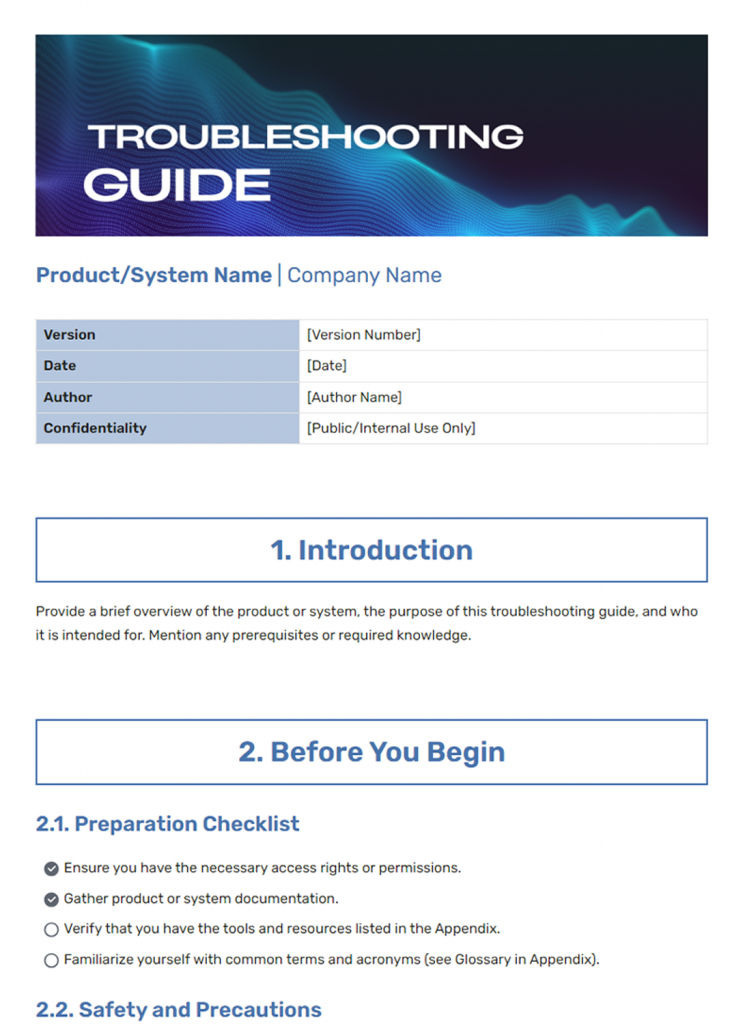
15. Troubleshooting Guide

Template:
|
Issue
|
Potential Causes
|
Troubleshooting Steps
|
|
Audio/Visual Issues
|
Faulty equipment, incorrect connections, power outage
|
Check cables and connections, ensure equipment is powered on and set to correct input/output channels, verify power source and troubleshoot with venue staff if necessary.
|
|
Presentation Delays
|
Speaker not prepared, technical difficulties, late arrivals
|
Have a backup presentation ready, identify a tech-savvy staff member to assist with technical glitches, have a designated greeter to manage late arrivals and adjust the schedule if needed.
|
|
Catering Problems
|
Incorrect order, missing items, food safety concerns
|
Double-check order details with caterer, identify substitutions if necessary, maintain clear communication with caterer, prioritize guest safety and follow food handling protocols.
|
|
Registration Issues
|
System malfunction, attendee data errors, long wait times
|
Have a backup registration system (paper forms) in place, verify attendee data beforehand, have additional staff on standby to manage registration flow.
|
|
Security Concerns
|
Unruly guests, unauthorized access, medical emergencies
|
Train staff on de-escalation techniques, have clear security protocols for access control, have a designated point of contact for medical emergencies and collaborate with venue security personnel.
|
16. Attendee Registration Form
Template:
|
Field
|
Description
|
Optional
|
|
First Name
|
|
No
|
|
Last Name
|
|
No
|
|
Email Address
|
Used for confirmation and potential future communication
|
No
|
|
Phone Number (optional)
|
|
Yes
|
|
Title/Company (optional)
|
|
Yes
|
|
Dietary Restrictions (optional)
|
Useful for catering purposes
|
Yes
|
|
Accessibility Needs (optional)
|
Ensures an inclusive event experience
|
Yes
|
|
How Did You Hear About Us? (optional)
|
Helps gauge marketing effectiveness
|
Yes
|
|
Ticket Selection (if applicable)
|
Choose from different ticket options (e.g., VIP)
|
No (if selling tickets)
|
|
Promo Code (optional)
|
For applying discounts
|
Yes
|
|
Additional Information (optional)
|
Capture any specific details relevant to your event
|
Yes
|
17. Event Planner Checklist
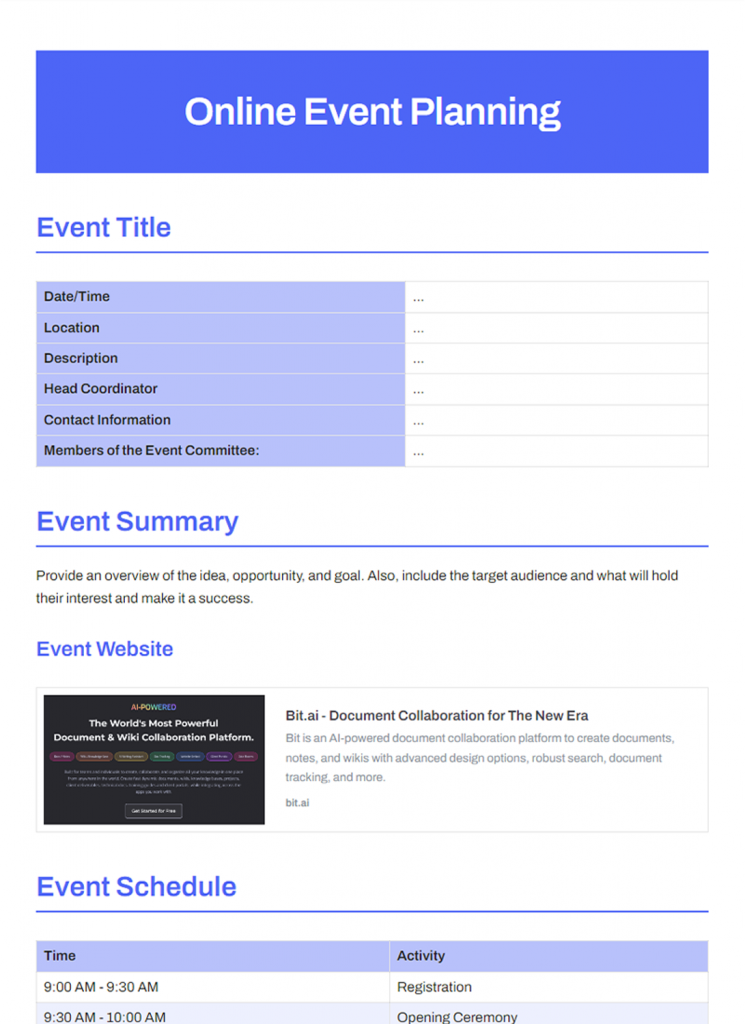
Template:
|
Stage
|
Task
|
Due Date
|
Owner
|
Status
|
|
Pre-Planning
|
Define event goals and objectives
|
|
|
|
|
Pre-Planning
|
Set a budget
|
|
|
|
|
Pre-Planning
|
Select event date and location
|
|
|
|
|
Venue Booking
|
Secure venue
|
|
|
|
|
Marketing & Promotion
|
Develop marketing strategy
|
|
|
|
|
Marketing & Promotion
|
Design and distribute event invitations
|
|
|
|
|
Logistics
|
Book catering services
|
|
|
|
|
Logistics
|
Arrange audio/visual equipment
|
|
|
|
|
Speaker Management
|
Confirm speakers and finalize presentations
|
|
|
|
|
Guest Management
|
Create and manage guest list
|
|
|
|
|
On-site Management
|
Develop event schedule and run-of-show
|
|
|
|
|
On-site Management
|
Arrange transportation and parking
|
|
|
|
|
On-site Management
|
Prepare signage and décor
|
|
|
|
|
On-site Management
|
Coordinate with vendors and staff
|
|
|
|
|
Post-Event
|
Collect feedback from attendees
|
|
|
|
|
Post-Event
|
Evaluate event success and create post-event report
|
|
|
|
18. Emergency Plan Template
Template:
|
Section
|
Description
|
|
Event Details
|
Event name, date, location, expected attendance
|
|
Potential Risks
|
Identify foreseeable emergencies (fire, medical, security threats, etc.)
|
|
Emergency Response Team
|
List key personnel and their contact information (event staff, security, medical professionals)
|
|
Communication Plan
|
Define communication protocols for emergencies (internal alerts, public announcements)
|
|
Evacuation Procedures
|
Outline clear evacuation routes and assembly points
|
|
Shelter-in-Place Procedures
|
Detail instructions for sheltering attendees in case of hazardous materials or weather events
|
|
First Aid Procedures
|
Basic guidelines for handling minor injuries until medical professionals arrive
|
|
Vendor Contact Information
|
List contact details for key vendors (security, medical, utilities)
|
|
Post-Incident Procedures
|
Outline steps for assessing damage, contacting authorities, and ensuring attendee well-being
|
19. Press Release Template
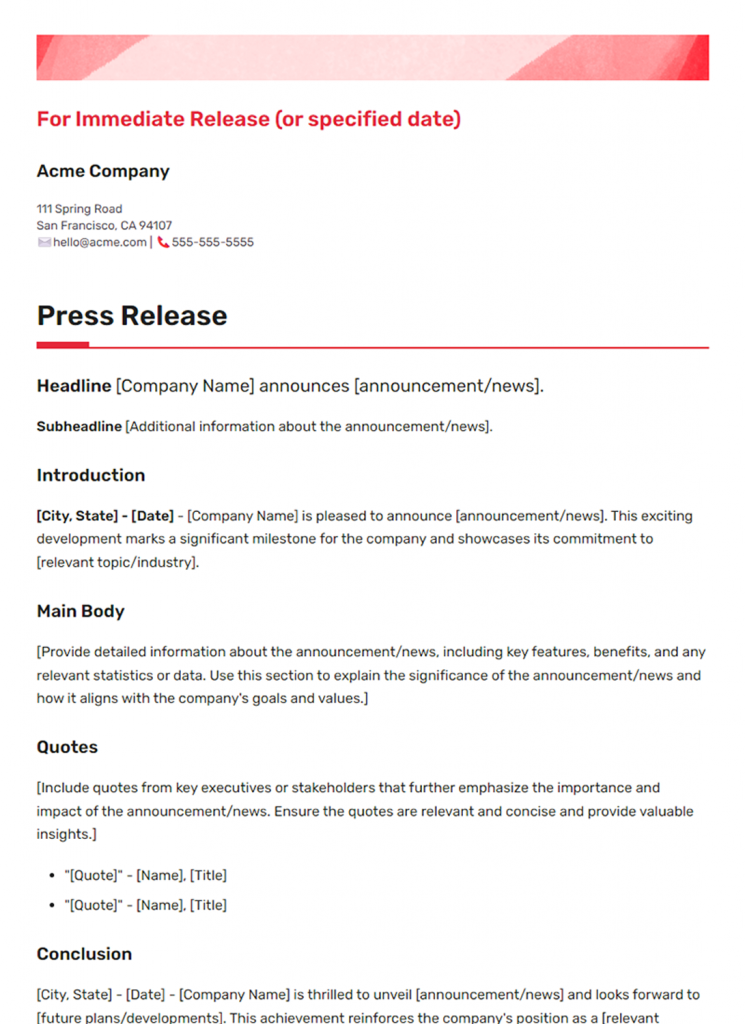
Template:
Subheading: (Optional: Briefly elaborate on the headline)
-
First Paragraph: Briefly introduce your event, including its purpose, target audience, and key highlights.
-
Second Paragraph: Elaborate on the details like speakers, activities, and unique aspects of the event. Mention any special guests or sponsors (if applicable).
-
Third Paragraph: Include a call to action. Instruct readers on how to register, learn more, or purchase tickets (if applicable).
-
Boilerplate: (A short paragraph at the end introducing your organization and its mission)
-
Name: (Your Name/Public Relations Contact)
-
Title: (Your Title/Public Relations Contact Title)
-
Email: (Your Email Address)
-
Phone: (Your Phone Number)
20. Event Signage Plan
Template:
|
Signage Type
|
Location
|
Size
|
Content
|
|
Banners
|
Main Entrance, Registration Area
|
(e.g., 8ft x 3ft)
|
Event Name, Logo, Sponsors
|
|
Directional Signs
|
Throughout Venue
|
(e.g., Arrows with text)
|
Point to restrooms, stages, specific rooms
|
|
Informational Signs
|
Registration Area, Food Court
|
(e.g., A4 size)
|
Event Schedule, Wi-Fi details, Emergency exits
|
|
Room Signs
|
Meeting Rooms, Session Halls
|
(e.g., Door signs)
|
Room Name, Session Topic, Speaker Name
|
|
Table Tents
|
Exhibitor Booths, Registration Desks
|
(e.g., Tri-fold brochure)
|
Company Logo, Contact Information, Brief Description
|
Final Thoughts
As the industry continues to evolve, these templates will remain invaluable, helping professionals navigate the complexities of event management with confidence and precision. Good Luck!
Further Reads: