Did a new feature flop? Are buyers quietly leaving after their very first month? Customers already hold the exact answers, but they will never share those secrets unless someone asks them directly. That is exactly what customer feedback questions are meant to uncover.
Sadly, most businesses ask these questions the completely wrong way. They send super long, vague surveys at the worst possible moments. This huge mistake results in low response rates and zero real improvement.
📋 Quick Summary
Customer feedback questions help uncover what buyers actually want, rather than just guessing.
The right questions at the perfect time directly improve products and marketing.
Structured surveys reduce guesswork and help teams make faster decisions.
Acting on feedback consistently brings stronger retention and better growth.
Customer feedback remains the clearest path to understanding exactly what needs to change. This guide shares the most effective questions for every situation and the exact timing that makes them work. Discover exactly when to ask them below.
When Should You Conduct Customer Feedback?
Collecting customer feedback acts exactly like taking a quick health check for a business. It reveals how buyers actually feel, instead of just hoping they are happy. But knowing exactly when to ask matters just as much as what to ask.
The ultimate golden rule is simple: only ask for opinions when there is actual room to take action. Sending a survey when the calendar is fully locked will only frustrate customers who expect to see real changes.
Here is the exact timing breakdown for every situation:
- New Setups & Software: If a product takes effort to learn, always ask within the first 48 hours. The memory of the very first use remains totally fresh, meaning buyers can point out exactly what felt confusing.
- Ongoing Subscriptions: The 6-month mark is the absolute best time for deep surveys. The novelty has faded, so customers will share highly honest and useful details about their daily routine.
- Service Contracts: Never wait until the end to fix things! For multi-year deals, check in exactly halfway. For single-year agreements, 3 months is the perfect sweet spot.
- Quick Transactions: After a simple purchase or support call, always follow up within 24 hours. Waiting longer means the exact memory of that experience simply fades fast.
- Overall Brand Trust: Run general relationship surveys at least twice a year. This captures broad feelings and tracks how sentiment shifts over time.
The easiest secret to remember: the best time to ask is as close to the real experience as possible. Every single day of delay loses emotional accuracy and ruins the chance to save a quietly disappointed customer.
With the perfect timing framework locked in place, let us look at the exact questions that work best after launching something brand new.
Customer Feedback Questions After a Product Launch
Something completely new that is being launched gives one a thrill-like feeling. The real truth lies with the buyers who use it every day. Asking exactly these questions shows the level of signals most brightly.
- “Does the price feel fair for what this [feature/product] delivers?” Forget asking confusing, open pricing questions. This gets honest answers about perceived value instantly.
- “Did the [new feature/product] do what you expected it to do?” Unmet expectations easily ruin new launches. This shows if the marketing matched the reality perfectly.
- “What’s the one thing you like most about the [new feature/product]?” Asking for just one single thing forces total clarity. Those exact words often become the sharpest marketing copy.
- “Was it easy to start using the [new feature/product] on your own?” If buyers need a long tutorial for a simple tool, this quickly uncovers that hidden gap.
- “Have you told anyone about the [new feature/product]? What did you say?” This captures the exact, unfiltered language happy customers use to sell the product to their friends.
- “How does this compare to how you were solving this problem before?” Most tools compete against old habits. This proves if the new solution genuinely wins.
- “Did you know this [feature/product] was coming before the launch?” If nobody knew it was coming, the launch announcement strategy needs a major upgrade.
- “What would you want us to build or improve next?” Fresh users feel super engaged. This gives brilliant roadmap ideas that internal teams usually miss completely.
Looping buyers into these choices guarantees building things people actually want to buy. Up next, discover the questions that can easily improve existing products.
Customer Feedback Questions To Improve Your Product or Service
These questions help us understand how people really use our product every day. They show us what works and what doesn’t, and give us clues about what people like and dislike.
1. “How often do you use our product or service?” If people use it a lot, it means it fits into their routine. If not, it might mean they’re about to stop using it.
2. “Are there any features you tried once and never used again?” Asking about what people do is better than asking what they think about the product/service. It helps us see what gets ignored.
3. “If you could change one thing about our product, what would it be?” Asking for one thing helps us prioritize. This way, we get information instead of a long list of wishes.
4. “What problem does our product solve better than anything you’ve tried?” This question helps us understand what makes our product special. Often, people tell us things our marketing team didn’t know.
5. “What’s the frustrating part of using our product?” Asking about frustration gets answers. People who are frustrated want to complain. This question lets them.
6. “What do you find valuable about our product?” When people tell us what they like, it shows us what to keep and highlight.
7. “Does our product actually help you accomplish what you set out to do?” This is the important question. If many people say no, it means we’re not doing what we promised.
8. “On a scale of 0–10, how likely are you to recommend us to someone like you?” This question is a way to measure loyalty. Always ask “why” afterwards to get the story.
Using these questions consistently makes every future decision much smarter. Fixing just two or three things every quarter can lead to massive growth over time. With the product covered, it is time to fix the digital front door: the website.

If this was useful, read this…
Customer Success (CS): Meaning, Importance, and Key Functions! →
Customer Feedback Questions To Improve Business Website
A website is usually the very first real interaction a potential buyer has with a brand. If things feel confusing or simply do not work, visitors just leave quietly without ever saying why. These specific questions bring all that hidden, silent feedback straight to the surface.
1. “Have you visited our website recently? What brought you there?” Understanding the exact reason someone visited shows if traffic sources actually match real customer intent.
2. “How easy was it to find what you were looking for?” If visitors constantly struggle to find things, it is almost always a simple navigation issue, not a complex design problem.
3. “Did you find all the information you needed to make a decision?” Many people leave because they lack enough details to feel confident, which shows exactly what new content is needed.
4. “Was there a moment where you almost left the site? What happened?” These “exit-intent” moments are exactly where sales vanish, yet almost nobody ever thinks to ask about them.
5. “What would you change about the website if you could?” Regular visitors easily spot hidden usability problems that internal teams completely miss because they are too close to the product.
6. How easy was it to move between parts of the site? When it is hard to go from a pricing page to an FAQ, tired buyers will just leave without looking around.
7. Did the website answer your question? Did you still have to call us afterwards? If people still need to contact us, the written content is not doing its job.
8. What is one thing our website is missing that would have been really helpful? Asking for one thing helps us prioritize instead of getting a long, useless list.
These simple questions instantly turn normal visitors into top-tier UX consultants. Next, let us explore the most underused area for honest feedback: marketing campaigns.
Customer Feedback Questions To Improve Marketing Campaigns
Most businesses just look at clicks or costs to see if their marketing is working.. The best insights actually come from asking buyers directly. These questions show why people chose one brand over another.
1. “What made you choose us over options?” This question seeks to find out what really gives us an edge over others. The answer can completely change how we position ourselves going forward.
2. “How did you first hear about us. What made you take the next step?” This two-part question reveals which channels work and which message prompts people to take action.
3. “How would you describe our brand to a friend?” Buyers’ own words create marketing copy that’s way better than boring satisfaction scores.
4. “What almost stopped you from choosing us?” Knowing what almost cost us the sale helps us fix problems in our messaging.
5. “Which piece of our content do you remember seeing before you bought?” This shows which content actually helped people make their purchase.
6. “Is there anything about how we communicate that you’d like us to change?” This gives customers a safe way to say what’s not working.
7. “Have you recommended us to someone? What did you tell them?” Hearing customers’ own stories is the key to creating credible marketing materials.
8. “Does our marketing accurately reflect what it’s like to work with us?” Catching promises early can prevent big problems with customer retention.
Fixing marketing creates massive returns everywhere. Finally, let us explore understanding the complete customer experience.
Customer Feedback Questions To Measure Customer Experience
While checking how we communicate, customer experience feedback shows how our relationship with customers really feels. These questions help us understand buyers as people, not just numbers.
1. “How would you describe yourself. What do you do?” Knowing who our customers really are helps us tailor our communication and product plans to them.
2. “What problem were you hoping our product or service would solve for you?” Customers want results, not boring features. This shows if our message is reaching the people.
3. “How would things be different for you if you couldn’t use our product anymore?” This question shows how much customers really rely on us. Their answers are proof of our value.
4. “Walk me through how you use our product on a typical day or week.” How customers really use our product shows us where we can improve in ways that data can’t.
5. “What was the buying or sign-up experience like for you?” If customers have difficulty signing up, they might cancel early. Customers usually don’t tell us about this unless we ask.
6. “Do you feel like our product is worth what you’re paying for it?” The price and value of our product must match for customers to be happy.
7. “What finally convinced you to go with us?” Finding out what made customers choose us helps us do it again with the customer.
8. “Was there anything that almost made you choose someone? “ Finding out what almost lost us a customer helps us fix problems that cost us sales.
Ask the questions, and customers will tell us how to grow. Now find a way to organize all this feedback without losing any ideas.
Ready to Turn Customer Feedback Questions Into a Survey?
Use a ready-to-customize Customer Survey Template to organize your questions, collect responses, and turn customer feedback into actionable insights →
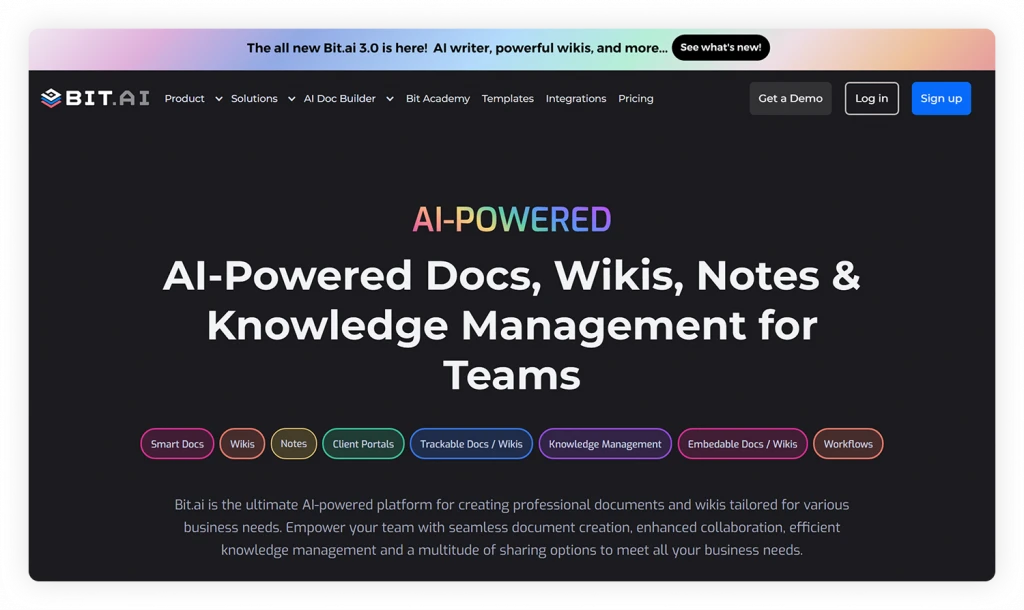
How Bit.ai Helps Collect, Organize, and Act on Customer Feedback
Collecting feedback is half of the work. What happens to the feedback afterwards is where most businesses have a problem. The feedback is spread out across email, spreadsheets, and Slack messages. Important information sits there unread. Teams that should be using customer feedback to make decisions end up making assumptions
One Smart Workspace for Everything
Create a dedicated area where survey results, scores, and interview notes stay perfectly searchable and accessible. This completely puts the lie to the terrible excuse that someone else was tracking the data.
Real-Time Team Collaboration
Different departments can work on the exact same documents simultaneously. The moment a fresh insight pops up, the right people can start discussing fixes right there immediately.
The Ultimate AI Genius Assistant
A built-in AI assistant easily summarizes huge piles of raw feedback into structured action items. It handles the boring analysis work so teams can focus entirely on making smart decisions instead of managing documents.
Smart Living Knowledge Bases
Build smart wikis to document customer histories and patterns over time. This ensures valuable knowledge never disappears, even if a team member leaves. Ultimately, feedback only creates value when it turns into real action, and Bit.ai makes that transformation happen.
Simply put, collecting feedback creates zero value until it actually turns into real action. The perfect workspace is exactly where that profitable transformation happens effortlessly.
Conclusion
To improve, businesses need customer feedback. This is the way to make things better really fast. Good growing companies do not try to figure out what people who buy from them want. They just ask the customers directly and make changes.
You can start with something simple. If you send a survey with just 5 questions at the right time, you will get more information than if you send a long survey with 20 questions that people will not finish. When you ask questions, you get simple answers.
Make each question about one thing. Make sure the people who work with you are ready to make changes right away. This way, customer feedback, like the kind you get from a survey, can really help your business, and it’s very important for businesses.
📋 Key Takeaways
Always ask questions at the perfect moment, because timing matters just as much as the actual words.
Match surveys directly to a specific goal, like fixing a website, marketing, or the overall customer experience.
Asking buyers to name just “one thing” constantly creates clearer, much more actionable answers than open guessing.
Feedback only drives real growth when it stays perfectly organized and gets shared with the right people instantly.
Frequently Asked Questions
Q. When is the best time to ask for customer feedback?
The best time is always as close as possible to the actual experience. Waiting longer makes the exact memory and emotional detail fade away fast.
Q. How many questions should a good feedback survey have?
Keep it incredibly short! A simple five-question survey sent at the correct time easily beats a huge twenty-question survey that buyers abandon.
Q. How do you write the perfect feedback question?
Clear questions get incredibly clear answers. Always trim the question down to exactly one thing to guarantee perfect, actionable feedback.
If this was useful, read this…