What if your campaign management process supported creativity instead of slowing it down?
A campaign usually starts with an excellent idea; however, by the time planning, approvals, asset creation, and deadlines are complete, the idea is lost.
The way of doing things is scattered across various tools; there are strategies saved in some documents that no one remembers, and the updates are getting lost among the chat messages. Instead of focusing on creativity and impact, your team ends up spending energy just trying to stay aligned.
That is precisely why marketing campaign management matters. When done right, it brings structure to your campaign management process, keeps your target audience in focus, and helps your marketing tools work together rather than against each other. And once that foundation is in place, scaling brand awareness campaigns becomes less stressful and far more predictable.
Now that the stage is set, let’s break down what marketing campaign management really means and why it is the backbone of successful marketing teams.
What is Marketing Campaign Management?
Picture this. A campaign brief is approved, creatives are ready, and the launch date is locked in. But as the days pass, questions start popping up. Which version of the copy is final? Where are the approved visuals? Did the strategy document get updated after that last meeting?
Marketing campaign management is what prevents this exact scenario.
It is the structured process of planning, executing, monitoring, and improving marketing campaigns without losing context along the way. Instead of ideas living in isolation, everything can stay connected. Everything from strategy, assets, timelines, target audience details, and the performance to insights is one system that moves together.
When supported by the right tools, execution becomes smoother and brand messaging stays consistent across channels. Your team will be out of the rat race for clarity and will have more time to build campaigns that really work.
With that foundation in place, it becomes easier to see where things usually break down and why campaign management feels so hard for so many teams.
Why Marketing Teams Struggle with Campaign Management
Campaigns rarely fall apart because of bad ideas. They fall apart because of everything that happens around those ideas.
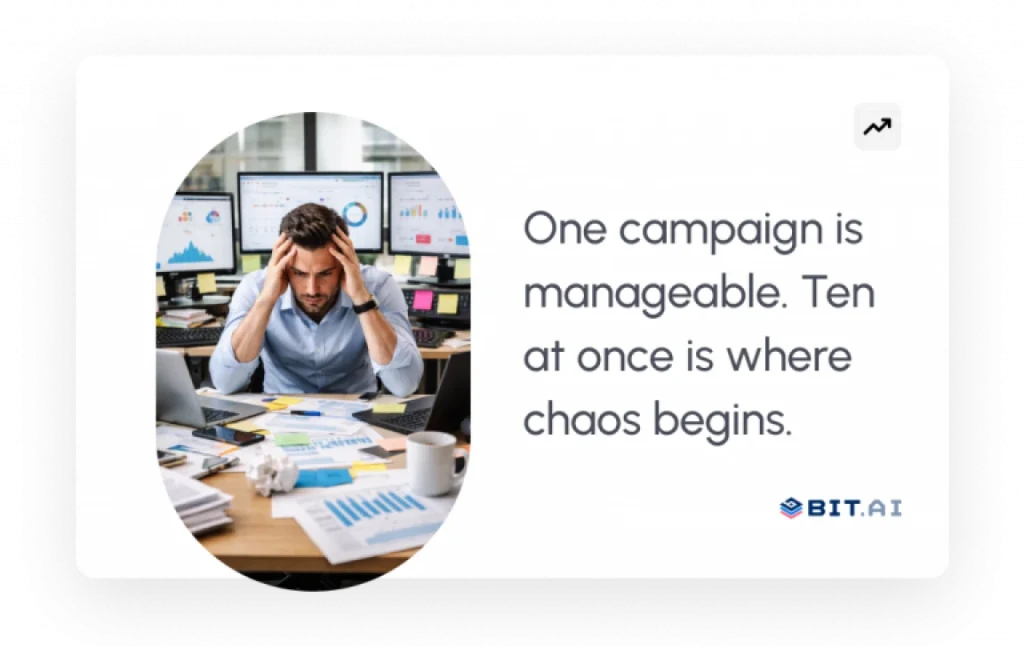
When campaigns expand, their complexity also increases. Strategies are in one place, assets in another, approvals in chat threads, and updates in the meetings that not everyone is attending. If there isn’t a well-defined campaign management process, teams become blind to the latest, to what has been approved, and to what is still going on.
On top of that, marketing teams often rely on too many disconnected tools. Each marketing tool solves one problem, but creates another gap. This results in misalignment, duplicate effort, and delays in launching campaigns. Teams should be building momentum but instead they spend their time fighting fires.
Knowing these difficulties is the first step. Once you have identified the places where campaign management fails, you can begin to create a system that will bring structure, ownership, and flow into every campaign.
Now, let’s understand how we can create the perfect campaign management process.
How to Create an Effective Campaign Management Process: Step by Step Guide
Every smooth campaign you admire has one thing in common. Behind the scenes, a clear process quietly does its job.
Step 1: Get Clear on What Winning Looks Like
Before anything moves forward, pause and define success. Is your advertising campaign geared towards creating brand awareness, increasing the number of sign-ups, or re-engaging with the existing audience?
Once the objective is documented and can be seen, the members of your team stop to assume and instead begin to act deliberately.
Step 2: Lock In Who You Are Really Talking To
When a campaign communicates with the correct people, it seems very goal driven and power. Spend some time writing down your target audience, their difficulties, and what would make them be interested. This understanding that you have influences every message, image, and the next layer of the funnel or channel that you take.
Step 3: Bring the Entire Campaign Into One Place
This is the point where the energy either increases or decreases. If the plans, briefs, timelines, and notes are kept together, it becomes very easy to be in agreement with each other. There is no need anymore to look for the most recent version or to ask where something is. Everything is exactly at the place where the team thinks it should be.
Step 4: Protect Your Brand Story as You Scale
As more people touch the campaign, consistency becomes critical. Document your messaging, tone, and brand guidelines early. This keeps brand awareness moving in the right direction, rather than drifting with every new asset.
Step 5: Let Collaboration Happen in Real Time
Campaigns evolve. Feedback is received. Changes are made. A stable process still has a place for that without disorder. Updates being visible, decisions being traceable, and everyone being in sync without slowing down is the result of real-time collaboration.

PRO TIP
Ensure that the strategy, target audience, and key metrics for success are detailed in a single location before a campaign is launched. When the choices are mapped out at the start, it is much quicker to carry them out and the whole process feels more controlled rather than being a continuous reaction to events.
When these steps come together, campaign management stops feeling reactive. It starts feeling controlled, repeatable, and scalable. And once this foundation is set, the right marketing campaign management software can turn this process into a proper system.
How Marketing Campaign Management Software Simplifies Workflows
Simply put, the software you use is what really separates stress and order once your campaigns are scaled and beyond.
1. Cuts Down Repetitive Coordination
Before the use of software, teams have to depend on a system of reminders, spreadsheets, and constant-follow-ups if they want to keep their campaigns moving. This manual work eats up most of the time and focus.
Thanks to the proper marketing campaign management software, the repetitive coordination is very smooth. All operations, updates, and progress are tracked, thus giving your team the liberty to work on creative execution, which is the real value, instead of being drowned by operational noise.
2. Keeps Every Team Perfectly Aligned
Most of the time, misalignment is a result of lack or missing of context. Someone is still using an outdated brief or a half-shared strategy without realizing it.
By using campaign management software, no one in the team is left out from the information because everyone has access to the same data. When plans, assets, and updates are in one place, there is no need for the team to force communication; they naturally collaborate and cross-team work moves without any friction.
3. Creates a Single Source of Truth for Campaigns
The use of various tools without a plan or a strategy causes confusion. Different versions, unclear approvals, and lost files become the main reasons for the slow pace. In time, teams stop trusting the place where the information is stored.
A centralized platform is the place where teams put their trust in and is also the one place. Strategy, execution details, and campaign knowledge are the three things that stay connected, thus, it becomes very easy to move fast without losing accuracy.
4. Makes Campaigns Easier to Scale
To execute one campaign is within the limits of a person’s power. To do ten at the same time is where things start to fail. What is usually the case is that complexity increases while visibility remains at the same level.
Software provides your team with a structure that can be repeated over and over again. The processes remain the same as the campaigns increase, the brand awareness does not suffer, and the execution is done at a larger scale without the chaos being multiplied.

DID YOU KNOW?
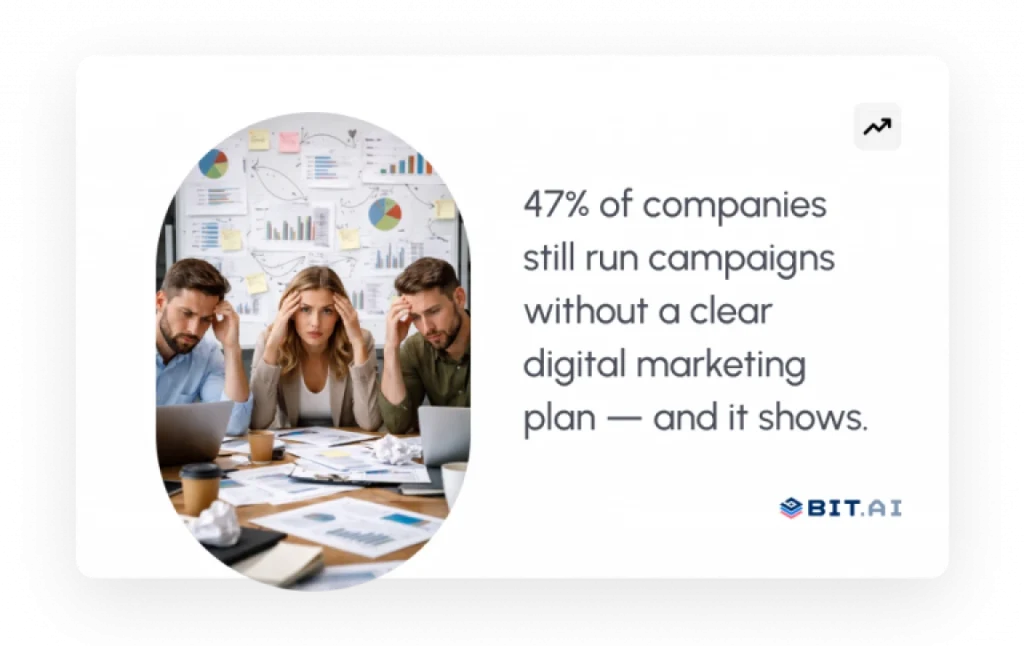
Almost 47% of companies are still without a definite digital marketing plan, which results in fragmented campaigns that are difficult to manage from start to finish.
With these benefits in place, the next question is simple. What exactly should teams be documenting to keep campaigns running smoothly from start to finish?
Essential Documents for Smooth Campaign Management
Behind every well-run campaign is documentation that quietly keeps everything aligned.
1. Campaign Strategy and Planning Documents
The campaign is the main focus here. In order to achieve goals, timetables, and success indicators are clearly outlined so that everyone understands the bigger picture right from the beginning.
When the strategy is written down, your team feels that the decisions are intentional and not reactive. As the reason for every action is already clear, you can operate at a higher speed.
2. Content Calendars and Asset Libraries
Campaigns are usually rapid-paced and the content is piling up even faster. Without a proper system, it becomes difficult to track what is ready, what is scheduled, and what is still in review.
Production becomes a team effort when a documented content calendar is coupled with a shared asset library. Your team always know what is going to be live, where the assets are, and which version has been approved.
3. Creative Briefs and Brand Guidelines
Direction is the main thing that every creative asset needs. Briefs align the designers, writers, and marketers before the work starts, thus reducing the number of revisions and the feeling of being lost.
Brand guidelines assure the same quality standard at every customer interaction point. Awareness of the brand increases in the right way instead of decreasing as more contributors join each campaign, thanks to the guidelines.
4. Performance Tracking and Post-Campaign Reports
Learning does not end at launch. Campaign performance documentation will highlight what was successful, what was unsuccessful, and why.
This information will allow for repeatable successes on future campaign executions. Each report feeds the next strategy, helping teams refine their approach instead of starting from scratch every time.
With the proper documents in place, campaign management becomes far easier to control. Now it is time to see how Bit brings all of this together in one living workspace.
Bit.ai: A Central Workspace for Marketing Campaign Management
Every marketing campaign needs a clear place to live.
Not another tool to switch between. Not more files to track. You need one central area to keep all aspects of your campaign, including planning, notes, and updates together.
AI-powered docs, wikis, and knowledge management platform built for marketing teams that want one clear place to plan, document, and manage campaigns.
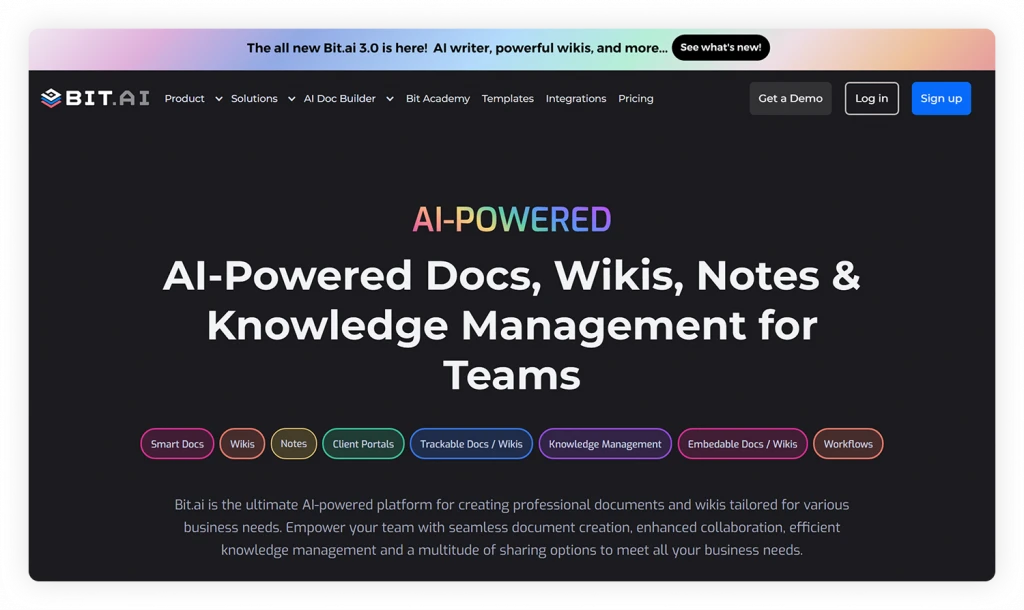
Bit.ai gives you a shared space where your campaign information stays organized and easy to access.
Keeping Campaign Work in One Place
With Bit.ai, you can create documents for campaign planning, briefs, timelines, and results.
All related content stays connected in one workspace. Your team can see the full picture without searching through folders or messages. This helps everyone understand what the campaign is about and where it stands.
Supporting Campaigns From Planning to Review
Bit.ai supports your work across the full campaign process.
You can plan campaigns, store supporting notes, and document results in the same place. Over time, these documents can grow into a shared campaign wiki, helping teams capture learnings, strategies, and decisions in one organized knowledge hub.
This makes it easier to look back, learn from past campaigns, and reuse ideas when planning the next one.
Nothing disappears after the campaign ends.
Working Together Without Confusion
Campaigns involve many people.
In Bit.ai, you can comment, edit, and review campaign documents together. Feedback stays next to the content it relates to, so your team understands changes without long explanations.
This helps decisions happen faster and with less confusion.
When your campaign work lives in one place, planning and collaboration become easier. But Bit.ai does not stop there.
Beyond helping your team stay aligned, Bit.ai also gives you practical features that support how you plan, write, organize, and review campaigns. These features help reduce manual effort, keep information easy to find, and help your team move through campaigns with more clarity.
Here are the key features that make that possible.
Key Features that Support Campaign Work
AI Genius Writer for Campaign Drafts: Using AI Genius Writer makes creating campaign concepts, briefs, and summaries simple. You can use it to rewrite text, simplify language, or expand notes into clearer content. It supports your writing while leaving you with total authority over what message is sent.
Centralized Campaign Documents: All your campaign aims, briefs, schedules, and outcomes are stored in a single location. This helps your team in always having the same information during the campaign and prevents misunderstanding due to scattered files.
Search Across Campaign Content: You can search for keywords across your campaign documents to quickly find past decisions, notes, or assets. This saves time when you need answers fast.
Multiple Ways to Share Campaign Information: Bit.ai lets you share campaign documents in different ways. You can invite teammates to collaborate, share read-only access with leadership, or generate shareable links for external partners. With trackable links and guest access controls, you can easily manage who sees your documents while working securely with clients, partners, and external collaborators.
Access Control for Shared Campaigns: You can control who has access to view or edit your campaign documents. This allows you to work collaboratively and securely with your team while keeping sensitive information secure.
Pricing
- Bit.ai offers a free plan for individuals and small teams to get started.
- Pro plans starts at $8/month and Business plan starts at $15/month.
PRO TIP
Campaigns fall apart when context is separated from execution. Keep assets alongside briefs, timelines, and updates so teams always understand what they’re working on—and why it matters.
Next, let’s bring everything together and wrap up what streamlined marketing campaign management really looks like in practice.
Wrapping Up: Bringing Order to Your Marketing Campaign Management
At the end of the day, managing marketing campaigns is not about using more tools. It is about making things clear so good ideas do not get stuck.
When your campaign process is clear, your team knows where to plan, where to work together, and where to find answers. Everyone follows the same direction. Campaigns stay on track, and your brand message stays steady as you grow.
With a central workspace like Bit.ai and support from AI Genius Writer, your campaign knowledge stays in one place. Each new campaign builds on what you have already learned. Your team spends less time managing work and more time creating campaigns that matter.
Campaign management is not a one time fix. It is a better way of planning, working together, and running every campaign that comes next.
FAQs
Q1. Why do marketing teams struggle with campaign management?
Marketing teams find it difficult to handle campaigns as details are usually spread across different tools. The team members have their strategies, assets, approvals, and updates in various locations, hence the problem of misalignment, version confusion, and delays arises.
Q2. What’s the best way to manage campaign assets?
The best way to manage campaign assets is to store them alongside campaign documentation in a single workspace. When assets live next to briefs, timelines, and strategy documents, teams always know which version is approved and how it fits into the bigger picture.
Q3. What documents are essential for smooth campaign management?
Essential documents are campaign strategy plans, creative briefs, content calendars, brand guidelines, and performance reports. These documents, when combined, help to provide understanding before the start of the work, agreement during the implementation, and insights after the campaign is finished.
Q4. What’s the easiest way to track campaign assets?
By far the easiest method of keeping track of campaign assets is through a central marketing campaign management tool. Such a tool not only offers organized documentation but also provides a storage medium that is searchable and has clearly defined ownership. In this way, the need to make guesses is done away with and the assets remain in a state that is accessible all through the campaign lifecycle.