Have you ever opened a document, stared at the filename, and wondered if this was actually the latest version?
You’re scrolling through folders that are full of names such as final, final-v2, final-updated, and yet your intuition tells you that it is not right. The wrong file has been edited. A change has disappeared. Time was wasted fixing something that should never have broken in the first place.
That frustration is a version control problem.
Document version control is no longer a technical concept meant only for developers. It is a daily reality for teams creating proposals, reports, strategies, and shared knowledge. When version control is weak, collaboration slows down, mistakes creep in, and trust in documents quietly disappears.
Effectively handling document version control is not a matter of imposing more rules or giving files nicer names. The main point is to employ more intelligent systems that eliminate confusion altogether.
In this guide, you will understand what document version control really means, why it breaks down in real workflows, and how modern tools make it effortless. Besides, you will find how platforms such as Bit.ai facilitate the alignment of teams via automatic version history, coordination in real-time, and live documents that are always up to date.
First of all, let’s find out what document version control is and why it is so important.
What is Document Version Control and Why Does it Matter?
Think about how often documents change during real work. A quick edit turns into feedback. Feedback turns into revisions. Revisions turn into approvals. Somewhere along the way, versions multiply, and clarity starts to fade.
Document version control is simply the system that keeps track of those changes so everyone knows what changed, when it changed, and which version is the right one to use.
At its core, version control means tracking every update made to a document over time.
Instead of creating new files for every change, a version control system records edits in the background. It is possible for you to check the earlier versions, get the idea of the document changes, and if something is not working, return to the previous state. There is no losing, and there is no overwriting by mistake.
It replaces guesswork with visibility.

If this was useful, read this…
Make Document Sharing Easy with These Team Collaboration Tools →
Why Teams Need Document Version Control Today
Modern work is collaborative by default. Many people work on the same document at the same time. They may be in different teams, different cities, or even different time zones.
Without document version control, things get messy very quickly. One person edits an old file. Another shares the wrong version. Changes get overwritten, comments are missed, and no one is fully sure which document is correct. These mistakes often show up late, when fixing them takes more time and effort.
Version control solves this problem by keeping track of every change. Teams can see who edited the document, what was changed, and when it happened. Older versions are not lost, so nothing important disappears by accident.
With proper version control, everyone works from the same document and the same context. Teams stop wasting time checking versions or asking for the latest file. Work moves faster, collaboration feels smoother, and decisions are made with confidence because everyone is looking at the most up-to-date information.
Once you understand why version control matters, the next question becomes obvious. If it is so important, why does it still break down so often in real workflows?
Why Document Version Control Breaks Down in Real Workflows
On paper, version control sounds simple. Keep track of changes, avoid overwrites, and make sure everyone works on the latest file. In reality, this is where things start falling apart.
Not because teams are careless, but because the tools and processes they rely on were never designed for how work actually happens today.
Too Many Versions and No Single Source of Truth
Work moves fast, and documents move with it.
One version lives in email. Another sits in a shared drive. A third gets downloaded, edited, and reuploaded. Before long, no one is completely sure which version is the right one. Decisions get made on outdated information, and confidence in the document slowly disappears.
When there is no single source of truth, version control becomes guesswork.
If this was useful, read this…
Manual File Naming and Overwritten Changes
Most teams try to address the issue of version control by using naming conventions.
Final. Final final. Final updated. Approved final.
It works for a while until it suddenly doesn’t. Somebody forgot to rename a file. Someone overwrites a change. Someone edits the wrong version. Manual systems are very much dependent on memory and discipline, and that is the reason why they fail when there is pressure.
Collaboration Without Visibility or Accountability
When multiple people edit documents without clear visibility, changes feel invisible.
You do not know who edited what or why something looks different. Feedback gets lost. Context disappears. Collaboration turns into confusion instead of progress.
Once version control reaches this point, it stops supporting work and starts slowing it down.
And this is where the shift needs to happen. Instead of trying to manage versions manually, you need a simpler way to stay in control without adding complexity. That is exactly what mastering document version control is really about.

PRO TIP
Work with tools that have automatic version history and stop using file names as a way to keep track of changes.
Delayed Feedback and Conflicting Edits
When feedback arrives late or in fragments, version control quietly breaks.
Comments are given via email, chat, or different documents. Edits are made without waiting for the feedback to be fully coordinated. Changes, conflict, and context are lost by the time everything comes together.
This results in unplanned rework. Instead of making progress, teams take time to reconcile edits. Version control fails not because of too many changes, but because those changes were never connected in one place.
How to Master Document Version Control Without Making It Complicated
Mastering document version control does not mean adding more rules or slowing your team down. It means removing the points where confusion usually starts.
Version control is almost invisible when it works properly. The correct version is always available. Changes can be seen. Collaboration is efficient as opposed to being risky.
Here is how to get there without overthinking the process.
Keep Documents Centralized in One Workspace
Version control breaks the moment documents start living in multiple places.
It becomes very hard to manage changes when files are distributed through emails, shared drives, and local folders.
Bringing all documents into one centralized workspace gives a single source of truth. Everyone is on the same document, with the same understanding and expectations. This one shift alone eliminates a huge percentage of version-related issues.
Use Automatic Version History Instead of Manual Saves
Relying on manual saves and file names puts version control on people instead of systems.
Automatic version history records every change quietly in the background. You can see what changed, when it changed, and roll back if needed. Nothing gets lost, and no one has to remember to create a new version.
Version control becomes reliable because it is built in, not enforced.
Collaborate in Real Time to Avoid Conflicts
The majority of disputes arise from people working on the same document at different times.
Collaboration in real time eliminates that risk. Everybody observes changes as they take place. Edits remain visible. Feedback stays connected to the content it refers to.
Instead of merging versions later, teams move forward together.
Share Live Documents That Always Stay Updated
Static files cause version problems immediately after they are shared. Living documents fix this issue by always displaying the most recent version. When you share a link instead of a file, everyone accesses the same document, even as it evolves. Updates happen once and reflect everywhere.
This is how version control becomes effortless rather than something you constantly manage.
Once these principles are in place, the question is no longer how to control versions, but which tool makes all of this easy to apply in real work.
If this was useful, read this…
How Bit.ai Makes Document Version Control Effortless
Once you understand what good version control looks like, the difference between managing it and fighting it becomes clear. The right tool does the heavy lifting quietly, so your team can focus on the work itself.
That is where Bit.ai fits in.
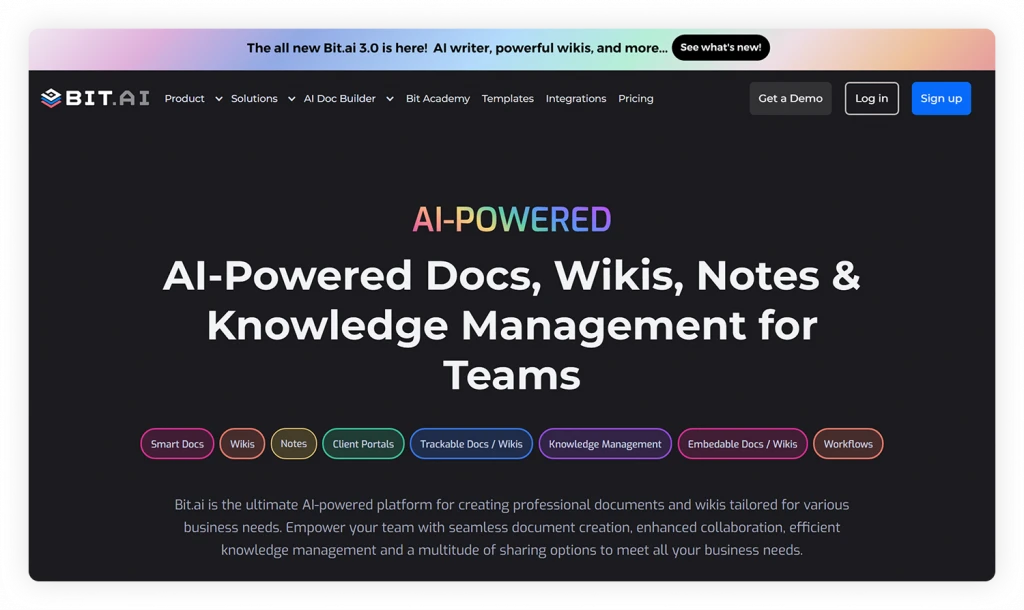
AI-powered docs, wikis, and knowledge management platform built for teams that want clarity instead of confusion, Bit.ai removes the friction that usually surrounds document version control.
Automatic Version History With Full Change Tracking
With Bit.ai, you never have to save versions manually or worry about overwriting changes.
Every change is automatically recorded quietly in the background. It is possible to follow the evolution of a document, look at the earlier versions, and even figure out what has been changed. In case something is not right, you can always return to a previous point safely.
Version history with bit.ai becomes reliable because it is always on.
Real-Time Collaboration Without Overwriting Files
Multiple people can work on the same document at the same time in Bit.ai.
Edits happen in real time, feedback is always linked to the content, and changes don’t cross. This avoids the need to merge versions at a later time or figure out who made which edit. Collaboration remains transparent and manageable, even when teams expand.
Live Shareable Docs that Always Reflect the Latest Version
Sharing documents often creates instant version problems.
Bit.ai offers a solution through live, shareable documents. No need to send files back and forth. You just share a link, and it always opens the latest version. Any update is done once and will be reflected everywhere, whether the document is shared internally or externally.
This provides the means for everyone to be on the same page without the need for constant checking up.

When version control works this smoothly, documents stop being fragile. They become dependable tools your team can build on with confidence.
Now it is time to bring everything together and simplify what mastering document version control really means in practice.

Organize Your Work in One Place
Create workspaces for your team, projects, and documents—so everything stays structured and easy to find.
Free to start • Set up in minutes
Wrapping Up: Mastering Document Version Control the Simple Way
Document version control shouldn’t require a complicated set of rules, manual naming of files, or continual guessing. If the proper system is set up, it is always obvious which is the latest version, the changes are always visible, and the collaboration process is very smooth.
The key is simplicity.
By centralizing documents, relying on automatic version history, and working in live, shared files, teams avoid the mistakes that slow work down and create confusion. Version control stops being something you manage and becomes something that just works in the background.
With Bit.ai, document version control becomes dependable and stress-free. Bit.ai gives you a single source of truth where every major change is tracked, collaboration happens in real time, and documents always stay up to date.
Once version control is effortless, teams can focus on what actually matters: getting work done with confidence.
FAQs
How to manage version control on documents?
The simplest way to manage document version control is to keep documents centralized and use tools that track changes automatically. Instead of creating multiple file versions, work in a single live document where edits are recorded in the background and previous versions are always accessible.
What is the best version control tool?
The best version control tool is one that removes manual work and prevents errors. Look for a platform that offers automatic version history, real-time collaboration, and live documents that always stay updated. Tools like Bit.ai are designed specifically to make document version control effortless for teams.
How do modern tools improve document version control?
Modern tools replace manual file naming with built-in version tracking. They allow multiple people to collaborate at once, keep a complete history of changes, and ensure everyone always works on the latest version of a document.
How does Bit.ai track document changes?
Bit.ai keeps tabs on all changes made to a document automatically. It saves the version history silently, so you can see the changes, know the progress of the document, and go back to previous versions if you want. In this way, it is a system that provides transparency and trust without having to put in any additional work