Have you ever noticed how some companies move like a well-rehearsed orchestra while others appear to battle disorder and mayhem constantly? You see two different teams with basically the same talent and resources, yet one seems to have no trouble growing, whereas the other consistently stumbles over seemingly random obstacles. What causes such disparity?
It often comes down to something most businesses forget to define early: organizational structure.
Not the dry textbook kind, but the invisible system that shapes how people work, communicate, and make decisions every single day.
Here is the good news. Once you understand how organizational structure works and choose the right model for your company, everything becomes lighter. Teams flow better. Goals stop clashing. Projects stop drowning in email chains. Growth feels intentional instead of accidental.
In this guide, you will explore the seven best organizational structures used by high-performing companies worldwide. You will understand how each one works, when to use it, and how to implement it inside your own business with the help of intelligent documentation tools.
Ready to design a structure that can actually support your growth? Let’s begin.
What is Organizational Structure?
Imagine trying to build a city without a map. Roads would clash, buildings would rise wherever someone felt inspired, and traffic would be a daily battle. Your business follows the same rules. Without a structure, teams overlap, responsibilities blur, and no one is quite sure who owns what.
Organizational structure is the blueprint of your business. It shows who does what, how decisions flow, and how every team connects. When it is clear, people know exactly where they fit and what they are accountable for. When it is missing, even simple tasks can feel chaotic.
Think of it like designing a city layout. Without planned roads and zones, everything becomes a traffic jam. With structure, workflows in the right direction, and teams collaborate without stepping on each other.
Every company has some sort of structure, like functional, team-based, or a mix of both, or something completely different. Just pick the one that helps you reach your goals and lets your team do great work.
Why Organizational Structure Matters for Business Growth
Organizational structure shapes how work happens inside a company. It influences how teams communicate, how decisions move, and how quickly a business can respond to change. When the structure is clear, people spend less time figuring out “how” and more time focusing on “what” needs to be done.
Here are the key ways a strong structure supports growth.
Better Communication Across Teams
Clear structure creates clear pathways for information. Teams know who to contact, where updates go, and how decisions move across the company.
Without this clarity, messages get lost, feedback loops slow down, and alignment becomes harder to maintain. Defined structure reduces that friction and supports smoother, more predictable communication.
Faster and More Confident Decision Making
When reporting lines and responsibilities are defined, decisions move faster. Teams are not stuck guessing who should approve something or who has the final say.
This makes people more confident. They’re more likely to take action when they understand their job, what they’re allowed to do, and what’s expected of them.
Stronger Accountability and Ownership
Structure sets clear expectations for every role. When people know what they own, they are more likely to follow through and deliver on time.
It also reduces overlap and confusion, which often creates gaps or duplicated effort. With accountability in place, teams operate with more focus and reliability.
Easier Scaling as the Company Grows
As a company grows, more people, projects, and priorities enter the picture. Structure acts like a guide that helps leaders add new roles, create new teams, and adjust responsibilities without losing clarity.
With the right structure in place, growth feels organized rather than chaotic.
With these benefits in mind, the next step is to look at the seven main types of organizational structures and understand how each one works in practice.
The 7 Best Organizational Structures and How They Work
Each organization has its own vibe when it comes to thinking, working together, and completing work. Org structures are there to back that vibe up. The right setup? It keeps teams in the loop, cuts down on drama, and makes sure goals get done without excessive delays.
1. Functional Organizational Structure
The functional structure is one of the simplest ways to organize a company. Picture a workplace where each team is grouped by what they do best. Marketing sits together, finance works in its own lane, operations runs its rhythm, and HR keeps the people side of things steady. Everyone grows in their specialty because they are surrounded by people who speak the same “work language”.
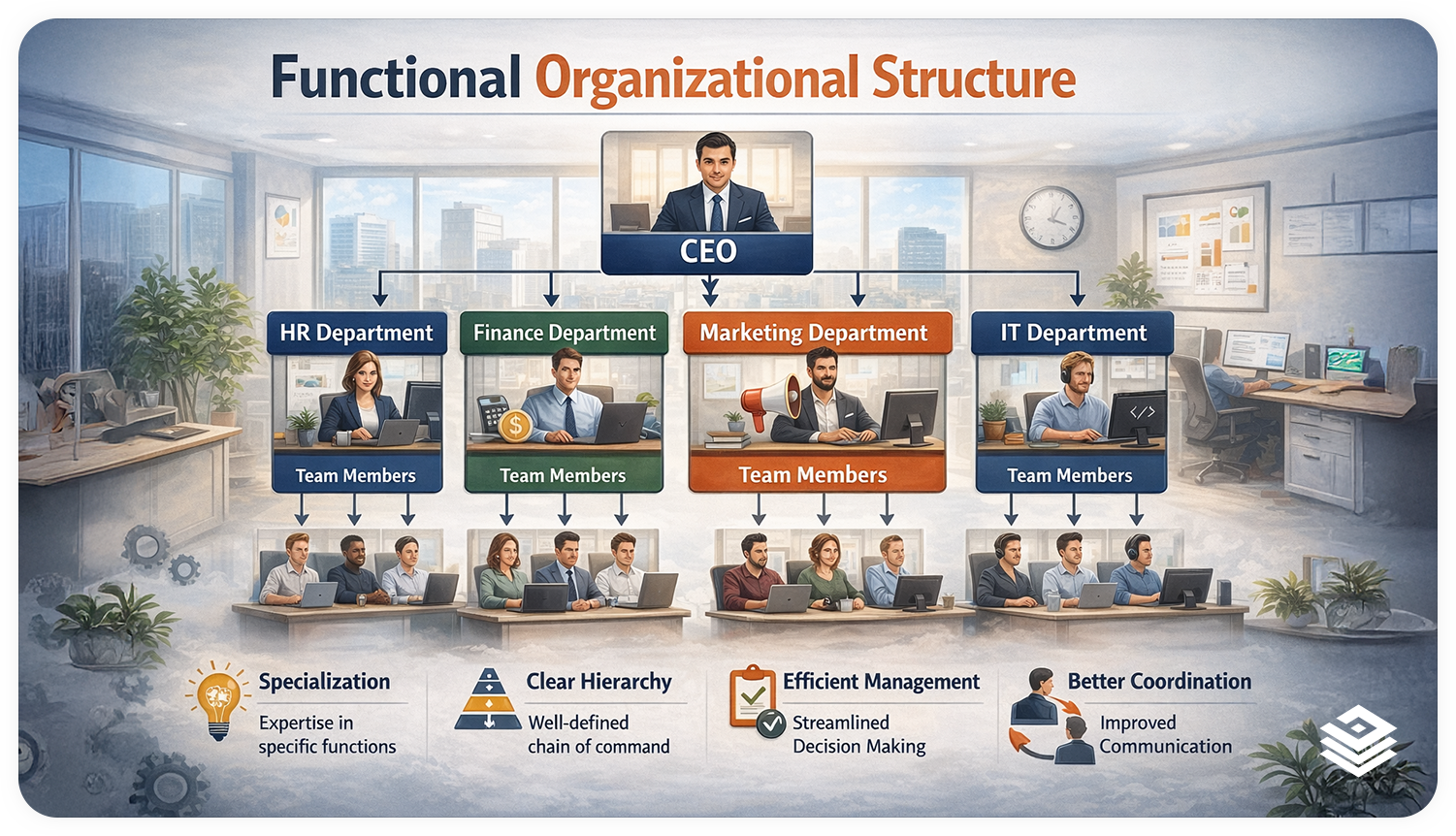
This setup feels comforting for many companies. It brings order, routine, and clear direction. New employees can join and instantly understand how everything fits together because the hierarchy is clean and easy to follow. Everyone knows who to report to, who to ask for help, and how decisions move through the department.
Of course, every structure comes with a few quirks. Teams can become so focused on their own goals that they forget to look sideways. Cross-functional projects sometimes take longer because departments may not naturally sync. With the right communication, though, the functional structure becomes steady and predictable, which is why so many organizations rely on it.
2. Divisional Organizational Structure
The divisional structure feels like creating small, independent worlds inside one company. Instead of grouping people by function, teams are organized around products, markets, or regions, which gives each division its own focus and identity.
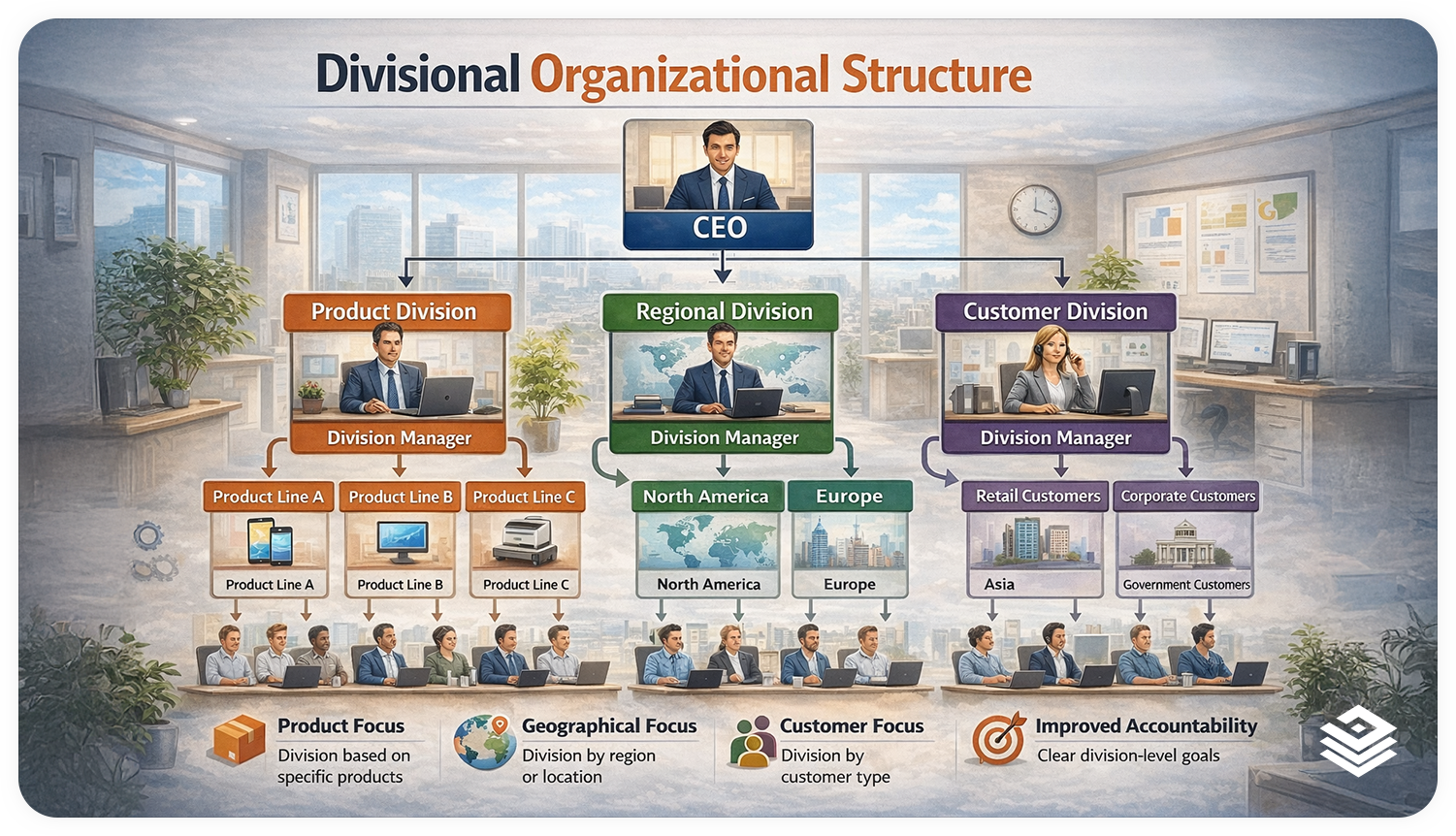
Each division operates like a mini company with its own leadership and core teams. This allows them to move quickly, make decisions that fit their audience, and adapt to changes without waiting on other departments.
The challenge is keeping divisions aligned so they do not drift apart or duplicate work. It also requires more resources since every division needs its own support teams.

3. Matrix Organizational Structure
The matrix structure blends two types of reporting, usually functional and project-based. Employees often work in their home departments while also contributing to cross-functional projects, creating a dynamic, flexible environment.
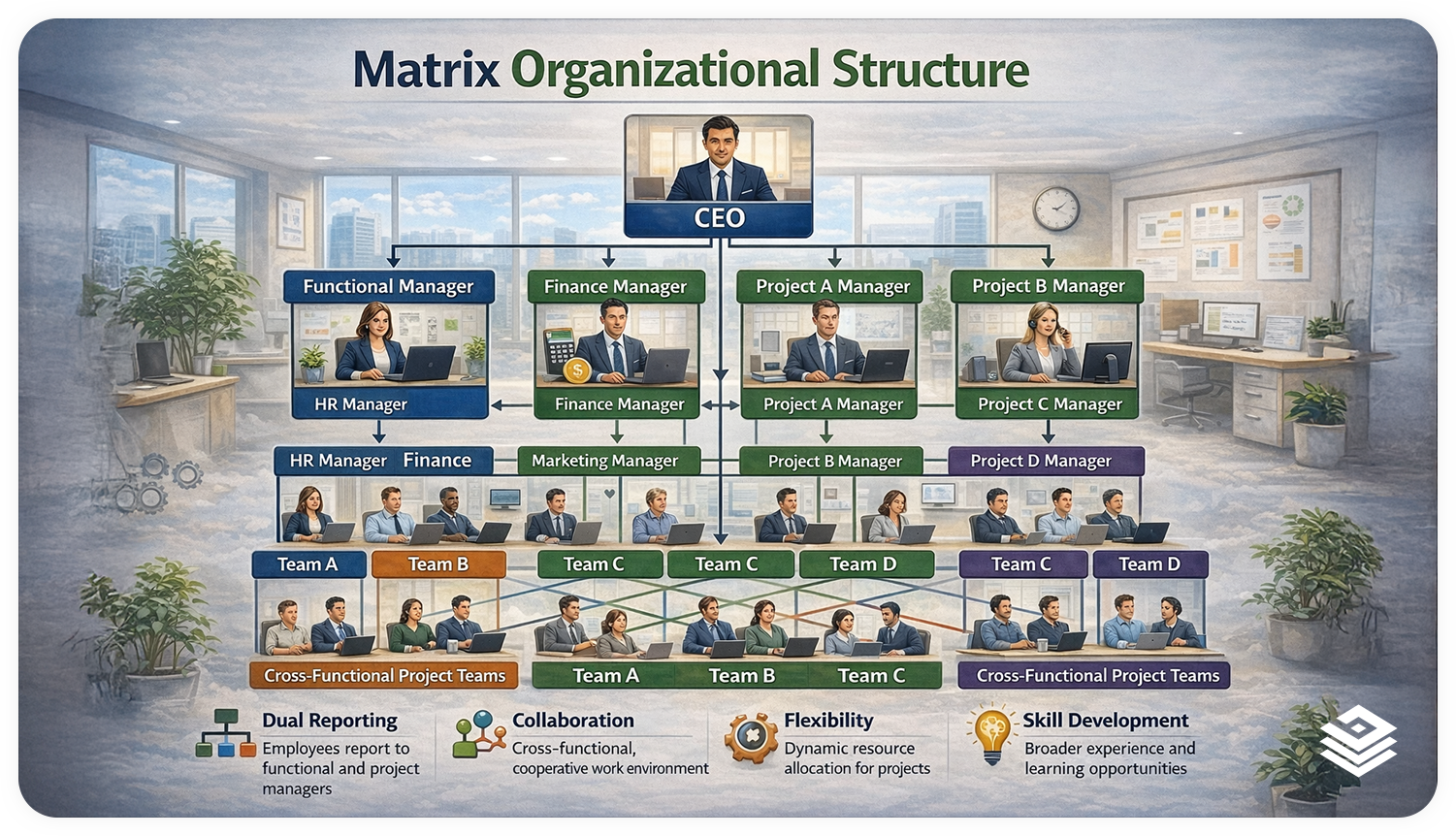
This setup helps teams move faster because expertise is shared across the company instead of staying in one department. It also encourages collaboration since people regularly work with colleagues from different areas.
The complexity comes from having more than one manager, which can create confusion if priorities are not clear. With strong communication, though, the matrix structure becomes a powerful way to balance specialization and agility.
4. Flat Organizational Structure
The flat structure removes most layers of management so teams can work more openly and directly with one another. It creates a workplace where people feel closer to decisions and more involved in shaping how things get done.
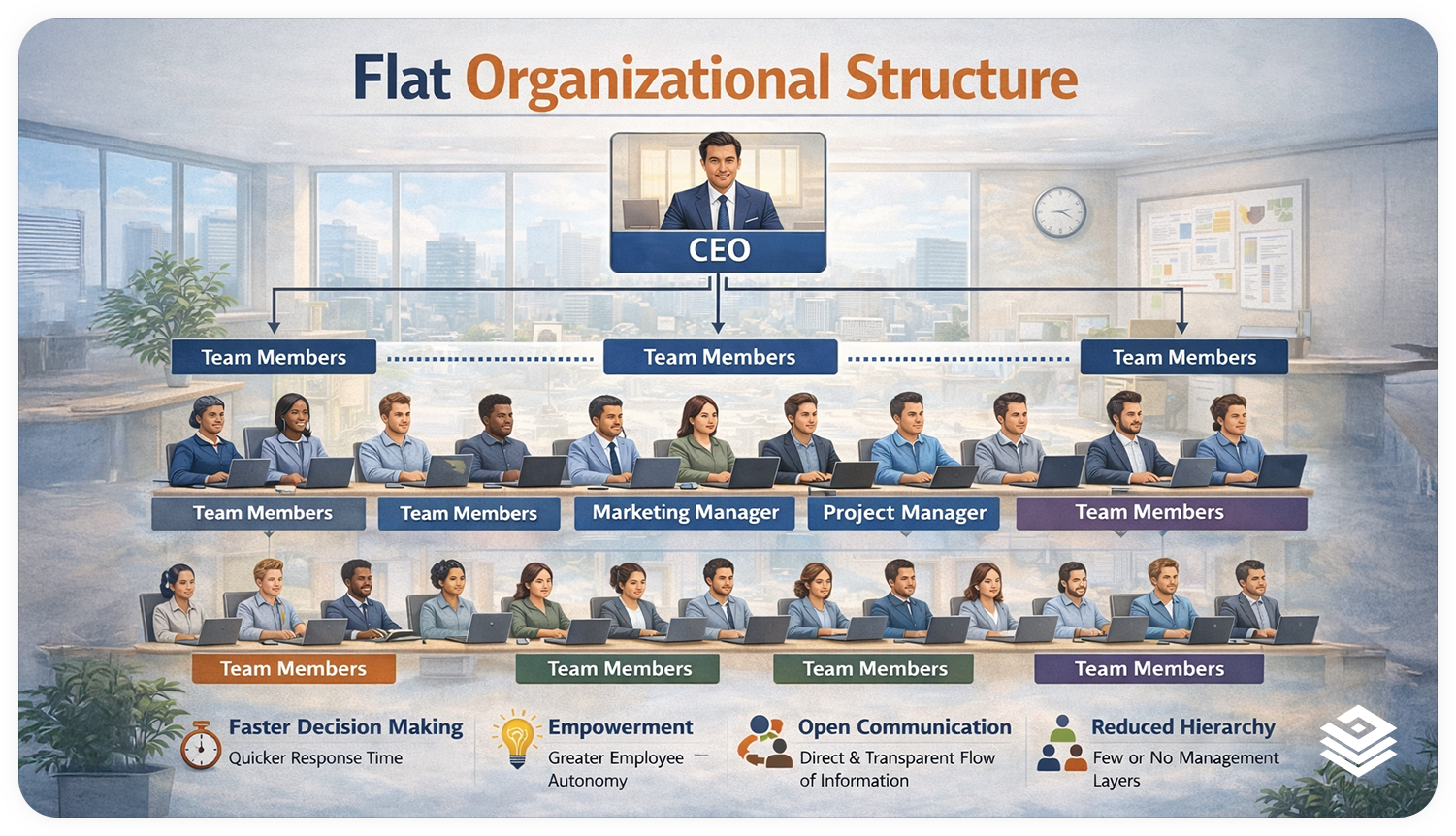 This model encourages creativity and quick problem-solving because employees are not waiting for multiple approvals. Teams communicate easily, share ideas freely, and feel more ownership over their work.
The challenge is maintaining clarity as the company grows. Without defined roles or leaders, teams may struggle with direction or coordination, especially during busy periods.
5. Network Organizational Structure
The network structure spreads work across internal teams and external partners, creating a flexible system that can expand or contract as needed. It is often used by companies that rely on global talent, technology partners, or specialized contractors.
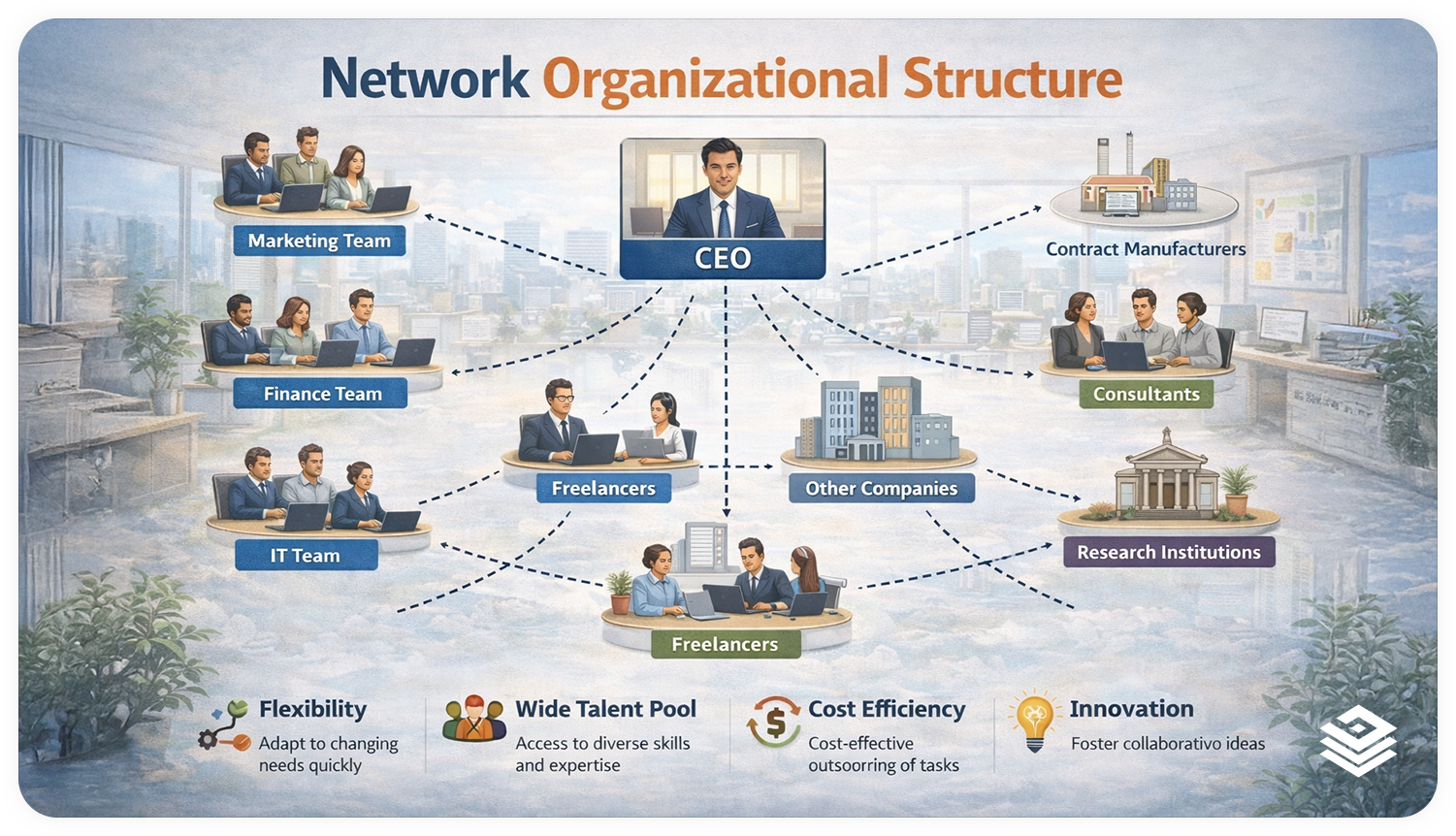
This setup gives organizations the freedom to move quickly because they are not limited by traditional in-house teams. They can bring in the right expertise at the right time and reduce overhead when certain projects are complete.
The challenge lies in coordination. With so many moving parts, communication and trust become essential to avoid gaps or misunderstandings.
6. Team-Based Organizational Structure
The team-based structure organizes the company around small, focused groups that work together toward shared goals. Each team has the freedom to solve problems, make decisions, and adjust its approach as needed.
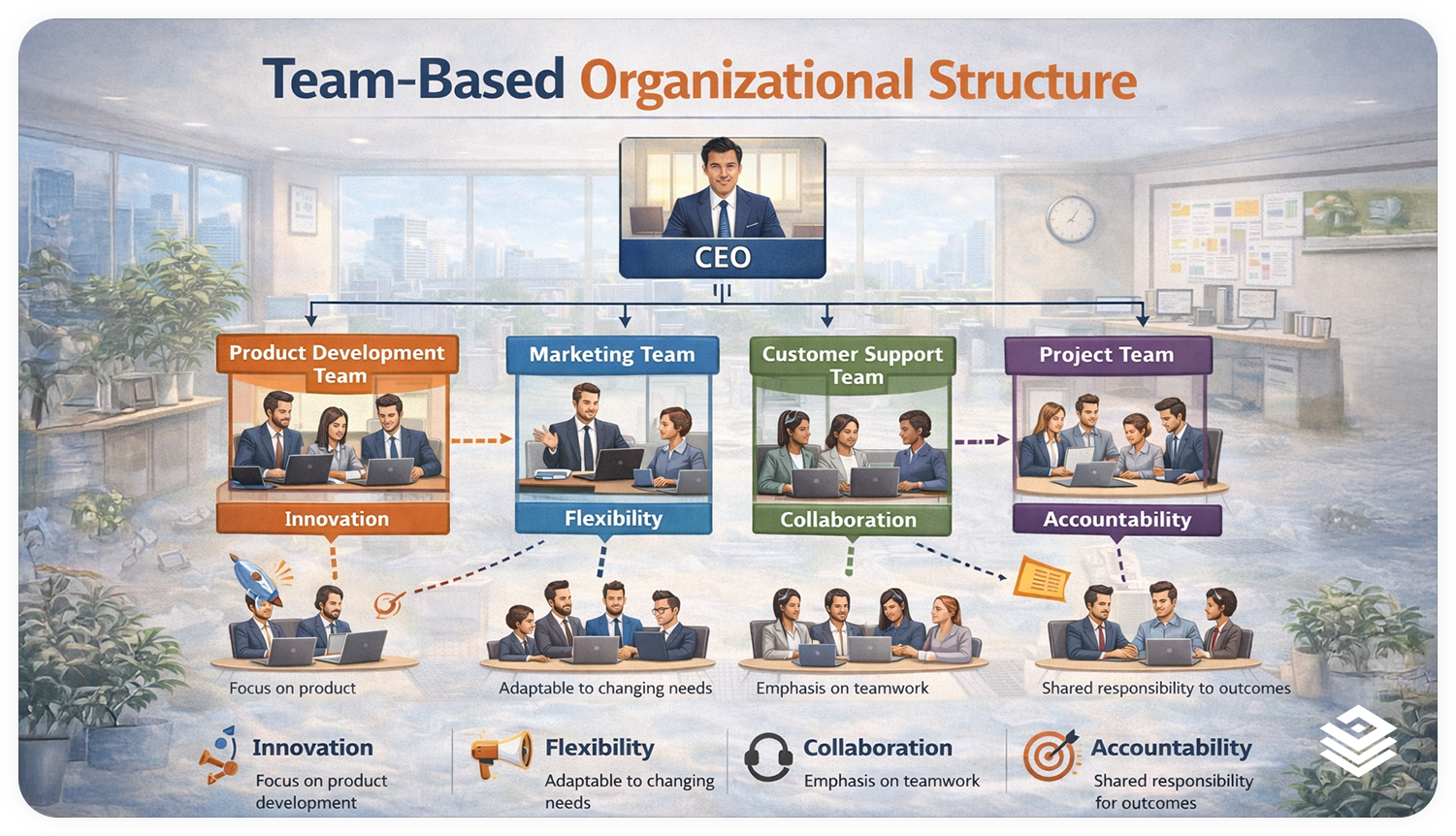
This model creates a highly collaborative environment. People feel connected to the work they are doing because they see progress happen in real time and understand how their contributions fit into the bigger picture.
The challenge comes from maintaining consistency across teams. Without strong alignment, different groups may develop their own methods that do not always match the rest of the organization.
7. Hybrid Organizational Structure
The hybrid structure blends elements from multiple organizational models so companies can enjoy the strengths of each. A business might use functional teams for daily operations while adopting team-based or project-based groups for innovation and faster execution.
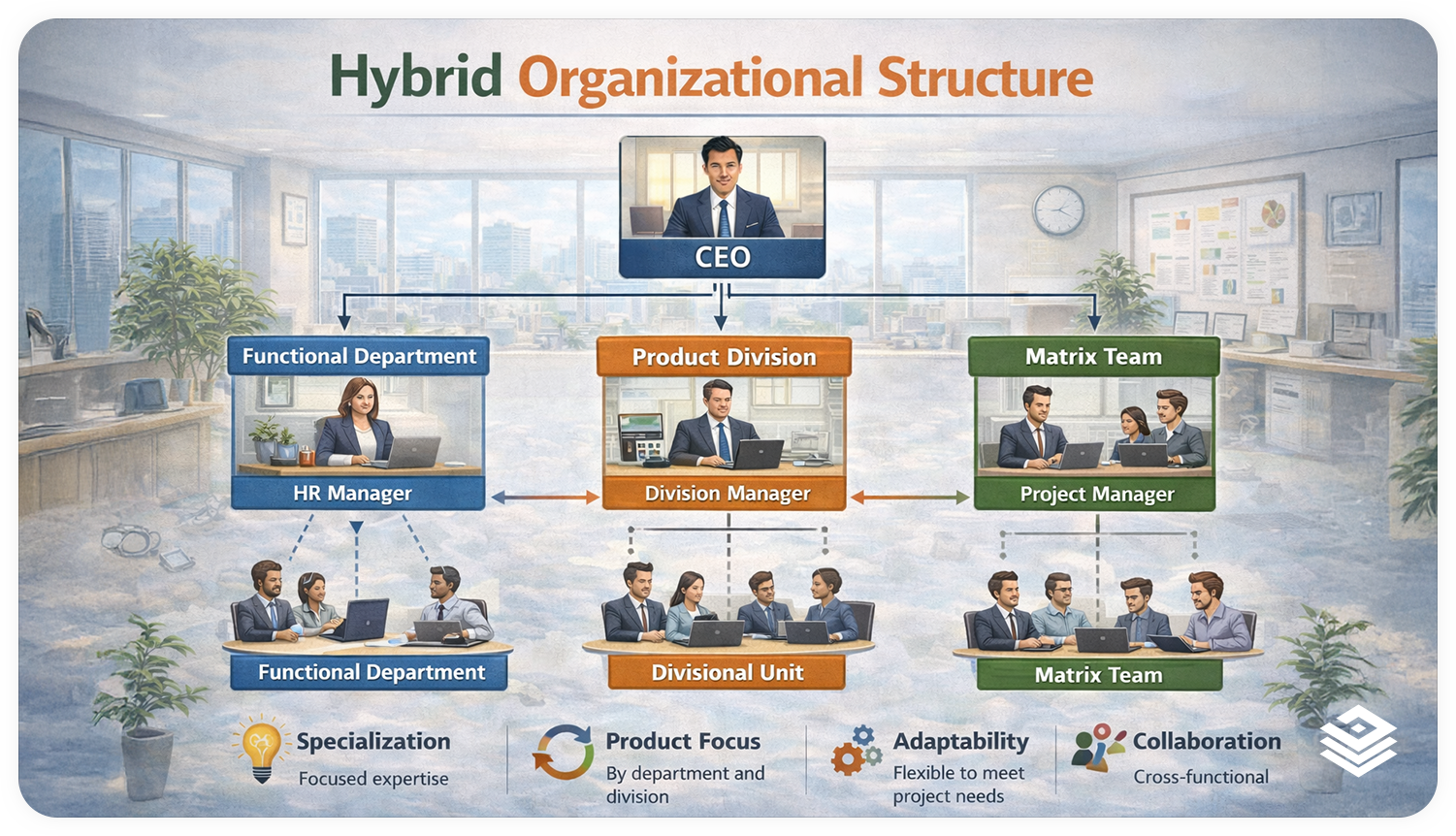
This approach offers a balance of stability and flexibility. Leaders can assign people where they are needed most, adapt quickly to new opportunities, and shift priorities without disrupting the entire organization.
The main challenge is keeping everyone aligned because different parts of the company may follow different systems. Clear communication and strong leadership are essential to make the hybrid model work smoothly.
How to Choose the Right Organizational Structure for Your Business
Choosing a structure is not about following trends. It is about understanding how your company works today and how you want it to operate as it grows. The right structure gives teams clarity, supports better decisions, and keeps your long-term goals within reach.
Below are the key factors to consider when selecting the model that fits your business.
Match Structure to Company Goals
Your structure should support the direction you want the business to move in. Companies focused on efficiency often choose functional setups, while those aiming for speed and market responsiveness lean toward team-based or hybrid models. The goal is to pick a structure that strengthens the outcomes you care about most.
Frequent shifts in strategy are a signal that more flexible models might be a better fit. Stable, predictable goals tend to align better with more traditional structures.
Consider Company Size and Growth Stage
Smaller companies often succeed with flat or team-based structures because they thrive on speed and shared ownership. As the business expands, the need for clearer roles and reporting lines grows, which is where functional, matrix, or hybrid setups become valuable.
If your company is preparing for rapid scaling, choose a structure that supports future growth instead of one that only fits your current size.
Evaluate Workflows and Collaboration Needs
Think about how work actually travels through your organization. Some teams require deep specialization, while others depend heavily on cross-functional input. Structures that encourage collaborative work well when projects demand diverse expertise.
If workflows are predictable and process-heavy, a more defined structure can boost consistency. If work is creative or constantly changing, flexibility becomes more important.
Now, let’s explore how Bit.ai helps teams document, manage, and maintain their structure with clarity.
Bonus Tool: Bit.ai
AI-powered docs, wikis, and a knowledge management platform built for teams that want clarity, alignment, and effortless collaboration.
Bit.ai gives organizations a central workspace to build, update, and share everything related to their structure. When roles, reporting lines, and workflows are documented in one intelligent hub, alignment becomes natural instead of a daily struggle.
Instead of scattering structure documents across tools, Bit.ai keeps everything organized and always up to date. Leaders can collaborate in real time, teams can collaborate seamlessly inside documents, and everyone stays connected to the information that matters.
No matter which structure your company uses, Bit.ai adapts to your way of working and keeps every department on the same page.
Key Features
- Smart Workspaces for Every Team
- Create dedicated workspaces for departments or divisions so that structured documents stay clean, organized, and easy to navigate.
- Real Time Collaboration and Feedback
- Comment, suggest edits, and collaborate inside documents without switching tools or losing context.
- Dynamic Documentation
- Embed diagrams, workflows, media, and external resources to bring your structure to life in a single interactive living document.
- Version Control and Instant Updates
- Update role descriptions, team responsibilities, or organizational charts with one click so everyone always sees the latest version.
- AI Genius Writer for Structure Documentation
- Generate team charters, process guidelines, and other documents instantly, saving hours of writing time.
- Multiple Sharing Methods
- ai gives you flexible ways to share your documents. You can send them as a live link or export them as PDF, Word, or Markdown files. For added security, you can also enable password protection or set link expiration, so your content stays safe and in your control.
Pricing: Bit.ai has a free plan for small users for individual use, and paid plans start from $8 per month.
With your documentation foundation in place, the next step is learning how to build and manage your organizational structure from the ground up.
How to Build and Manage Your Organizational Structure: Step by Step
Building an organizational structure is not just about drawing boxes on a chart. It is about creating clarity, strengthening alignment, and giving your team a framework they can trust as the company grows. These steps will help you shape a structure that supports your goals and evolves with your business.
Step 1: Map Roles and Responsibilities
Start by identifying every role inside your company and what each one is responsible for. Keep it simple at first. Focus on the work that needs to be done and who is best suited to own it. This becomes the foundation for how your structure will take shape.
Clear responsibilities reduce confusion and give people confidence about what they are accountable for.
Step 2: Define Reporting Lines
Once roles are mapped, outline who reports to whom. Reporting lines bring direction to daily work, guide decision-making, and help employees understand where to turn for support or approvals.
A clean reporting structure prevents overlaps and makes your hierarchy easy for everyone to follow.
Step 3: Document Processes and Workflows
Every structure needs supporting processes. Document how tasks move, how teams collaborate, and how decisions are made. This keeps operations consistent even when new people join or responsibilities shift.
Strong documentation turns your structure into something practical rather than theoretical.
Step 4: Share Structure Across Teams
Make your structure visible and accessible to everyone. When teams understand how the organization is designed, they work together more smoothly and can navigate responsibilities without guesswork.
Sharing the structure also builds trust because people know how decisions move through the company.
Step 5: Review and Update Structure Regularly
A structure is not meant to stay the same forever. As your company grows, new needs appear and some old responsibilities change. Reviewing your structure regularly helps you stay aligned with your goals and avoid inefficiencies.
Continuous improvement keeps your structure useful instead of outdated.
With these steps in place, you are ready to bring everything together and close with a clear summary that reminds you why structure matters.
Wrapping Up
A strong organizational structure does more than organize teams. It gives your business stability, clarity, and direction. When people understand their roles, know how decisions move, and have access to updated documentation, work feels lighter, and progress becomes more predictable.
Structure also grows with your company. As new teams form and responsibilities shift, refining your design helps everyone stay aligned. The key is keeping your structure flexible enough to evolve while still offering the clarity your team needs every day.
Tools like Bit.ai make this easier by centralizing documents, improving collaboration, and ensuring that everyone works from the latest version of your structure. With the right setup, your company can scale confidently and communicate with far more ease.
FAQs
What is the best organizational structure for a business?
There is no single best structure for every company. The ideal model depends on your goals, team size, workflows, and how quickly your business needs to move. Smaller teams often succeed with flat or team-based structures, while larger companies rely on functional, matrix, or hybrid setups for clarity and control.
What are the most common types of organizational structures?
The most widely used structures include functional, divisional, matrix, flat, team-based, network, and hybrid models. Each one offers different levels of specialization, flexibility, and collaboration, which is why companies choose them based on their unique working style.
How do organizational structures impact company performance?
Structure affects how fast decisions are made, how efficiently teams collaborate, and how clearly responsibilities are defined. A well-designed structure reduces confusion and bottlenecks, which improves productivity and creates a smoother path for long-term growth.
What tools can help businesses build and manage their organizational structure?
Tools like Bit.ai support teams by centralizing documentation, creating clear workflows, and making structure updates easy to share. They help companies maintain alignment as responsibilities shift and teams expand.
Keep Reading & Learning ?