The world has turned into a global village – thanks to the internet!
Nowadays, almost every device requires a network connection to work efficiently. While this makes communication more effortless, it also makes different systems vulnerable to different cyber threats.
Luckily you can download VPN to protect your device, and much more! In this article, we will learn exactly how a VPN can deal with the latest cyber threats and keep your device safe from different kinds of issues.
Apart from that, we will also discuss different VPN Tunnels and their architectures to make it easy for you to understand how your connection is secured via a VPN.
So, without wasting any more time, let’s get into it and see how a VPN protects your device and what technologies it uses to maintain security.
Working of a VPN: The Basics!
A Virtual Private Network or VPN is an encrypted tunnel between two devices. It works by encrypting data packets sent over public networks like the Internet.
This encryption is done using special protocols called IPSec (Internet Protocol Security), which secures data traffic. Once the data reaches the destination, it gets decrypted again and forwarded to the intended recipient.
The main purpose of a VPN is to provide users with a private network within a public one. In simple words, it allows users to create a virtual network within another network.
A user can use their own IP address instead of the public one provided by the ISP. Thus, they can access resources only available inside the private network.
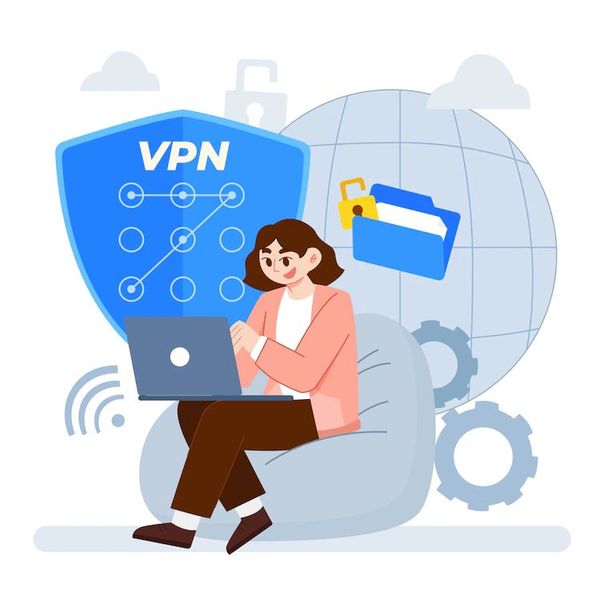
The best part about a VPN is that it provides complete anonymity. As mentioned earlier, a VPN creates a virtual network within the public network.
Therefore, when a user connects to the VPN server, all their information is stored on the VPN server itself, and no one can trace back the real identity of the user.
But why do people need a VPN? Well, there are many reasons. Let’s explore them!
7 Reasons Why You Should Use VPN at Work
1. Helps you Get Around your Company’s Censorship Policies
That means you can use VPN to access a gambling site or a politically incorrect site at work.
But that’s not the main reason you need a VPN.
Some companies block access to social media (Facebook) and YouTube in addition to blocking questionable sites.
If your job involves managing your company’s social media presence, or you need YouTube to access a professional presentation, your VPN can keep you from being held back by an overly restrictive company policy.
Of course, you want to use good judgment when you violate the letter of a company policy.
2. Keeps your Boss from Monitoring your Browser history
Let’s suppose that your company has liberal browsing policies, and you don’t spend your time on questionable sites anyway.
There is no problem with your supervisor’s looking into your browsing history, right?
Think again.
Many companies don’t mind your checking your personal email on your own time, at breaks, or at lunch.
Problems may arise when your email, which, after all, you don’t entirely control, contains words that your company regards as a red flag for discriminatory practices or collaboration with a competitor.
Or you just don’t want your boss to know that some other company is interested in you for a job.
Your VPN keeps your information private from your company even when you use their network.
3. Enables you to Safely Access Company Files Remotely
When you are working on a company computer on a company network, there isn’t a lot of worry about the security of company files.
But when you are accessing company files on your computer at home, your VPN adds a layer of security for your company’s sensitive information.
Bonus: SurfShark’s VPN helps you keep company information safe when you work at home!
4. Helps you Maintains Online Anonymity
Just because your activities aren’t questionable doesn’t mean they won’t be questioned.
Innocent activities can be misinterpreted when your company’s IT manager goes over your browsing history, or when your boss decides to monitor your activity on the Internet.
You can avoid unnecessary discussions just by using your VPN.
5. Disguises Your Identity While Using Public Wifi
You’re not at home and your boss suddenly gives you an important task that he wants you to finish.
What do you do? You start looking for public Wi-Fi.
Yes, that’s the best choice but see, the thing is, there are several security threats associated with public wifi like data breaches and attacking malware.
Using this wifi for personal and business use is a BIG no.
What’s the alternative? VPN! It provides you a safe and secure room for your work and also disguises your identity while using public Wi-Fi.
6. Provides Higher Level of Security for Online Banking
How many times have you made a transaction online using Wi-Fi?
We’re pretty sure you’ve done that quite a lot of times, and with good reason.
We all love the convenience online banking provides us with!
But, it won’t be so convenient if our identity gets stolen because of the unsecured internet connection, right?
A VPN provides an additional layer of safety and security, along with giving you more peace of mind!
7. Helps you in Sending & Receiving Data Securely
There’s one thing that’s common in almost every business or industry – sending and receiving important digital files.
For security reasons, these kinds of important files should be accessed through a secure connection, and a VPN provides you with just that.
That’s not it!
If you collect data from clients or customers you can also make them feel secure by using a VPN.
We mean, who won’t want to rely on a company that takes extra steps to keep your data secure?
Read more: Two-factor Authentication: What is it, its Types and Importance!
What Makes a VPN Secure?
A VPN is considered secure if it meets the following criteria:
Encryption: Encryption ensures that no third party can read the data in transit. Therefore, any kind of hacking attempt will fail.
Authentication: Authentication ensures that the user is who they claim to be. In other words, it verifies whether the person accessing the website belongs to the group of authorized users.
Data integrity: Data integrity ensures that the data received at the end is exactly the same as the data sent by the sender.
Confidentiality: Confidentiality ensures that nobody else can access the data except the intended recipient.
VPN Protocols You Need to Know About!
1. PPTP Protocol
PPTP stands for Point-to-Point Tunneling Protocol. Microsoft initially developed it, but it has been replaced by L2TP/IPSec. The main advantage of PPTP over IPSec is that it does not require authentication.
However, it is vulnerable to man-in-the-middle attacks. In other words, hackers can intercept the communication between two users and steal sensitive information.
2. OpenVPN protocol
OpenVPN is one of the best VPN protocols available today. It offers high-security features along with an easy-to-use interface. Moreover, it supports many platforms, including Windows, macOS, Linux, Android, iOS, etc.
It works on TCP/IP network protocol and encrypts all the data which goes across the wire. Hence, it provides complete protection against eavesdropping.
3. IKEv2 Protocol
IKEv2 stands for Internet Key Exchange version 2. It is an extension of the IKEv1 protocol. It uses RSA public-key cryptography for authentication.
IKEv2 is more secure than IKEv1. However, it requires special configuration settings. Also, it is only compatible with certain operating systems. Moreover, it is less efficient than other protocols.
The Role of VPN in Cyber Security in Today’s Age!
The role of VPN in cyber security is very important. Let us understand this with some examples.
1. Protecting Your Identity
If you have a business account on social media websites like Facebook, Twitter, Instagram, etc., you need to protect your identity. If someone hacks into your account, they may change your profile picture, post inappropriate messages, delete your posts, etc.
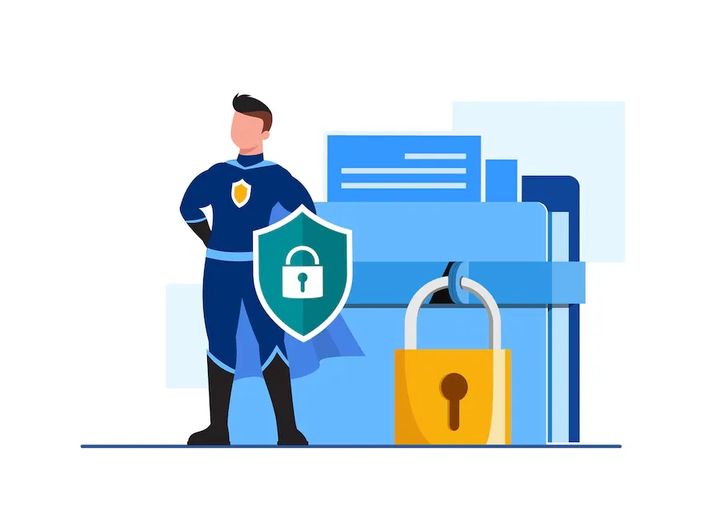
You should create a strong password and enable two-factor authentication to prevent such incidents. You also need to ensure that you do not share your login credentials with anyone.
Furthermore, you should keep track of all the activities performed through your account. You will know what happened after you logged out from the site.
Read more: Essential Cybersecurity Guidelines to Protect Your Business!
2. Securing Online Transactions
You might want to buy something online using your credit card. If you are worried about the safety of your transaction, you should consider using a VPN service.
When you connect to a VPN server, it acts like a proxy server. So, when you browse the web, your traffic passes through the VPN server instead of directly going to the website. Therefore, the connection becomes encrypted. As a result, your personal information remains safe.
3. Preventing DDoS Attacks
DDoS attacks are conducted to disrupt the normal functioning of a website. The attacker sends massive amounts of requests to the targeted website. These requests consume the bandwidth and resources of the target, and information remains safe.
DDoS attacks are pretty common nowadays. They are used to block legitimate requests made by the users. A VPN can help you avoid such hurdles by easily masking your IP address.
Wrapping Up
In conclusion, you need a virtual private network whenever you use the internet, especially in public places.
Public hotspots such as hotels, cafes, etc., are the most vulnerable areas! There is a higher risk of getting hacked or getting your credit card credentials stolen in such places.
We hope this article has helped you understand the role of VPN protocols in cyber security! Got any queries, questions, or suggestions? Don’t forget to let us know!
Further reads:
Top 9 Virtual Data Room Providers
Information Security Plan: What is it & How to Create it?