Every January, millions of people set goals with excitement and confidence. They create vision boards, write long to-do lists, and promise themselves that this time things will be different.
A few weeks later, most of those goals are forgotten.
Not because people are lazy. Not because they do not care enough. But because motivation alone is unreliable. The real difference between people who achieve their goals and those who keep restarting is having a clear strategy like setting specific goals, breaking them into smaller steps, tracking progress consistently, and building habits that keep them moving forward even when motivation disappears.
Successful people rarely depend on inspiration every single day. That is exactly what effective goal-setting is about. It is not just writing down what you want. Goal setting is like creating a practical roadmap that turns ideas and visions into action and action into results.
In this blog, we will explore powerful goal-setting strategies that can help you stay committed, work smarter, and finally turn your vision into reality. Let’s get started!
What Are Goal-Setting Strategies?
Goal-setting strategies are structured methods that help individuals turn goals into achievable outcomes. Instead of relying on motivation alone, these strategies provide a framework for planning, prioritizing, tracking progress, and staying accountable.
Effective goal-setting strategies help you:
- Define clear objectives
- Break large goals into manageable tasks
- Stay focused on priorities
- Measure progress consistently
- Adjust plans when challenges arise
Whether you’re working toward personal, academic, financial, or professional goals, using proven goal-setting strategies can significantly improve your chances of success.
Why is Goal Setting Important?
Our lives have no clear direction if we don’t set goals. It’s like wandering in the dark, and you just simply end up becoming lost.
Like Benjamin Mays once said, “The tragedy of life doesn’t lie in not reaching your goal. The tragedy lies in having no goals to reach.”
Goal-setting significantly plays a vital role in a person’s self-improvement journey and it offers very many benefits. Let’s take a look at some of the greatest benefits of goal setting!
1. Guides Your Decisions
Setting goals gives you a sense of direction in life. It helps you remember what you want to achieve in the big picture.
Setting long-term goals, and regularly setting short-term goals to stay on track is a great way of achieving big things for yourself, as keeping what you want to achieve in mind will guide you to make better decisions as you go through everyday life.
2. Helps Focus on What’s Important
The goals you set will be based on what is most important to you. Setting goals helps you work on things that are important to you rather than wasting time on other things that may not help you achieve what you want to.
3. Provides a Sense of Control Over the Future
In our fast-paced lives, the future is often filled with doubts and uncertainties. Setting goals and making plans to work towards them helps us feel in control and gives us confidence about what is yet to come our way.
Having a plan also means we know what we want to be doing in the future so we don’t just end up doing whatever we find, but work towards what we want to do.
4. Gives Personal Satisfaction and Motivation
As you work towards achieving your goals, you will start to feel a sense of satisfaction about yourself because you will be able to better track the progress you make.
It will help you appreciate yourself and the skills, talents, and capabilities that you possess. Feeling better about yourself will also go a long way in motivating you to work hard on yourself in the future.
In short, if you want to create a life you love, you have to set clear personal goals for yourself.
Powerful Goal-Setting Strategies to Achieve Success
These strategies help you bring clarity, stay consistent, and make steady progress toward your success instead of getting stuck in planning without execution. Let’s explore eight powerful goal-setting strategies that can help you achieve consistent progress and long-term success.
1. Start with Your Vision, Not Your To-Do List
Before you write any goal, take a step back and think about the bigger picture. Ask yourself: what does your life look like when you’re truly succeeding? Not just professionally but across every area that matters to you: your health, relationships, finances, personal growth, and sense of purpose.
Well, your vision is the emotional engine behind every goal you set. Without it, goals can feel like pressure or tasks you have to complete.
Try this: Write a paragraph about your ideal life 3 to 5 years from now. Be specific. What does your morning look like? Where are you? What have you built? Who are you surrounded by?
When your vision is clear, setting goals becomes much easier. Every goal you make should connect back to that vision. If it doesn’t, it may not be important enough to focus on.
2. Use the SMART Framework
Vague goals produce vague results. Like “I want to get physically fit” is a wish. But saying “I will run a 5K in under 30 minutes by September 30th” is a clear goal with direction and purpose.
This is where the SMART framework helps. The SMART framework is the most reliable way to bring precision to your goals:
- Specific – Exactly what do you want to achieve?
- Measurable – How will you know when you’ve achieved it?
- Achievable – Is it realistic given your current resources and constraints?
- Relevant – Does it align with your larger vision?
- Time-bound – What is your deadline?
When you check your goals against these five points, you quickly notice what is missing or unclear. Many goals that feel “clear” at first turn out to be too broad. Fixing them early saves confusion, wasted effort, and frustration later.
Running every goal through these five filters lets you notice what is missing or unclear. You’ll discover that many goals you thought were clear are actually still fuzzy and need re-thinking. So, fixing them early saves confusion, wasted effort, and frustration later.
3. Break Big Goals into Smaller Milestones
Large goals often don’t get started because they feel too far away or difficult to handle in one step. So, the problem is not the goal itself, but the size of the gap between the starting point and the final result.
The solution is to divide the goal into clear, time-based milestones. Split your main goal into 30-day, 60-day, and 90-day targets. Each milestone should represent a specific outcome that moves you closer to the final goal and can realistically be completed within that time period.
This approach turns a big goal into a series of smaller, manageable steps, making it easier to stay focused and maintain progress.
4. Create an Action Plan
A goal without a plan is just a dream. Once your milestones are set, you need to map out the specific actions that will get you from one milestone to the next.
So, break each milestone into weekly tasks. Then break those weekly tasks into daily actions. And side by side, keep reviewing your plans. Adjust if something is not working. The goal is to make the next step of your strategy so clear and specific that there’s no room for ambiguity because ambiguity is where procrastination lives.
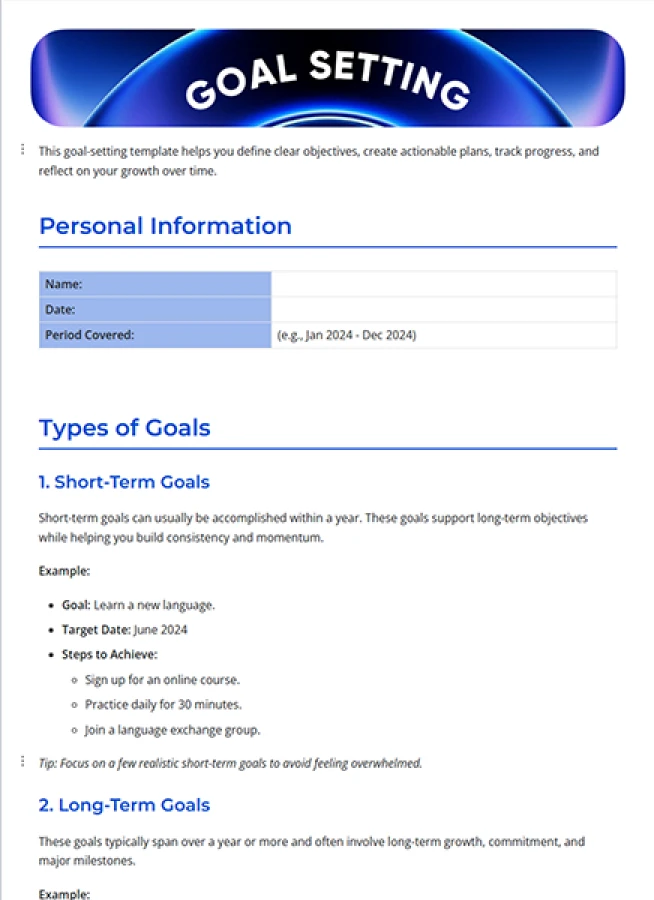
FREE TEMPLATE
The Goal Setting Template That Turns Plans Into Action
Includes clear objectives, actionable steps, timelines, & progress tracking.
✔ Pre-filled goal-setting sections
✔ Define, organize, & track goals in one place
✔ Best for Individuals, Teams, Managers & Businesses
Takes under 1 minute • Trusted by teams at startups & enterprises
5. Stay Consistent with Daily Habits
Motivation changes every day. Some days you feel focused and full of energy. Other days you don’t feel like working toward your goals at all. This is normal, which is why relying on motivation does not work for long-term success. You need to build habits by simply following a routine that you have already set.
So, identify the one to three daily habits that, if done consistently, would make reaching your goal nearly inevitable. For example, if your goal is to grow a business, you could:
- Reach out to five potential clients every day
- Spend 30 minutes improving your offer or service
- Follow up with existing leads consistently
6. Track Your Progress Regularly
As the saying goes, “What gets measured gets managed.”
Tracking your progress regularly serves two important functions: it keeps you honest about whether you’re actually moving forward, and it gives you something to celebrate as milestones are reached.
So, always set aside 15 to 20 minutes every week to look at what you accomplished, what you didn’t, and what adjustments need to be made.
7. Build Accountability into the Process
You are more likely to achieve your goals when someone else knows about them and checks in with you. Well, most people think that this is a character weakness, but it’s human psychology. When your goals are visible to others, you feel a stronger responsibility to complete them.
Accountability creates commitment. Commitment leads to consistent action, even on days when you feel distracted or unmotivated.
But you need to choose the right accountability partner wisely. Consider one of these accountability options:
- A trusted friend or colleague who shares regular check-ins with you
- A mentor or coach who holds you to a higher standard
- A small mastermind group of peers working toward their own ambitious goals
- A public commitment on social media or in a community you’re part of
8. Handle Setbacks Without Losing Momentum
Setbacks are a normal part of working toward any goal. Progress is rarely a straight line, and delays, mistakes, or unexpected challenges will happen along the way.
What matters is how you respond when things don’t go as planned. Instead of stopping, focus on quick recovery:
- Identify what caused the setback instead of ignoring it
- Adjust your plan based on what you learned
- Restart your routine as soon as possible without waiting for “perfect conditions”
- Focus on the next small action instead of the entire goal
Most people lose momentum because they pause for too long after a mistake. The key is to reduce that pause. The faster you return to action, the less impact the setback has on your overall progress.
Now that you understand the core strategies for effective goal setting, let’s explore few examples.

Turn Goal-Setting Into Goal-Getting
Use Bit.ai to transform scattered plans into actionable goals with organized documents, trackers, and team collaboration.
Free to start • Set up in minutes
Goal-Setting Strategy Examples
Here are a few examples of how effective goal-setting strategies work in real life:
Fitness Goal
Goal: Lose 15 pounds in 6 months.
Strategy:
- Exercise 4 times per week
- Track daily calorie intake
- Review progress every Sunday
Career Goal
Goal: Earn a promotion within 12 months.
Strategy:
- Complete a leadership certification
- Take ownership of one major project
- Meet monthly with a mentor
Financial Goal
Goal: Save $10,000 within one year.
Strategy:
- Automate monthly savings
- Reduce discretionary spending
- Track expenses weekly
Business Goal
Goal: Increase website traffic by 30% in 6 months.
Strategy:
- Publish two blog posts weekly
- Improve SEO for existing content
- Track traffic using analytics tools
5 Tools That Can Help You Stay Organized with Goals
We have divided these tools into three simple categories so you can choose what fits your workflow best. Let’s start with the first one: tools that help you track your goals clearly and stay on top of your progress over time.
🎯 Goal Tracking Tools
1. Trello
If you prefer a visual way to manage your goals, it helps to see everything laid out clearly. Trello uses dashboards and cards to organize tasks, which makes it easier to track progress at a glance.
You can drag the tasks to different stages, write comments or add checklists, and get a clear status of each task in terms of what is complete and what still needs attention. This works well for personal goals or smaller projects where simplicity is more important than complex features.
Key Features
- Boards, lists, and cards for visual tracking
- Simple drag-and-drop workflow
- Integrations with tools like Google Drive and Slack
Pricing: Free plan available, paid plans start at $5/user/month.
2. Asana
When you are working with a team, it becomes important to keep tasks and responsibilities clearly organized.
Asana helps you plan work, assign tasks, and track progress in a structured way. It gives you a clear view of who is responsible for what, which makes it easier to manage projects and avoid confusion as work moves forward.
Key Features
- Task assignments and project tracking
- Timeline and milestone views
- Workflow automation
- Integration with multiple tools
Pricing: Free plan available; Paid plans start at $10.99/user/month.
📋 Productivity & Task Management Tools
3. Todoist
When managing goals, tasks, and deadlines, it is easy to lose track of what needs to be done first. Todoist helps you organize everything in one place so you can focus on execution instead of remembering tasks.
It allows you to break larger goals into smaller tasks, set priorities, and schedule deadlines, making it easier to stay consistent and productive throughout the day.
Key Features
- Task creation with priorities and deadlines
- Project and sub-task organization
- Recurring tasks for daily workflows
- Cross-device syncing for easy access
4. Microsoft To Do
For simple and structured task management, Microsoft To Do helps you plan your day in a clear and distraction-free way. It is especially useful for creating daily task lists and staying focused on what matters most.
It keeps your goals organized by allowing you to break them into manageable daily actions, ensuring steady progress without complexity.
Key Features
- Daily task lists and reminders
- “My Day” focus feature for planning priorities
- Easy integration with Microsoft ecosystem
- Simple and clean interface for quick use

Manage Tasks More Efficiently:
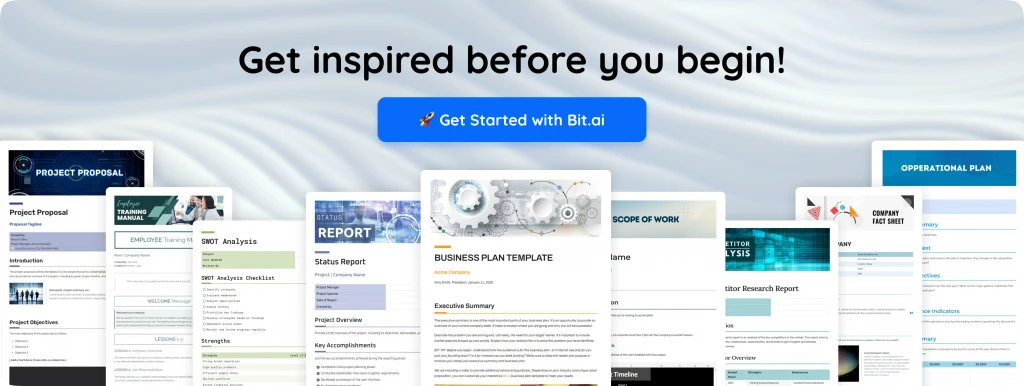
10 Best Task Management Tools to Boost Productivity (2026) →
🤝 Collaboration and Planning Tools
5. Bit.ai
As your goals grow, most of the confusion does not come from the goals themselves, but from how information is managed. You might have notes in one place, plans somewhere else, and updates scattered across different tools. This makes it harder to stay consistent and track progress over time.
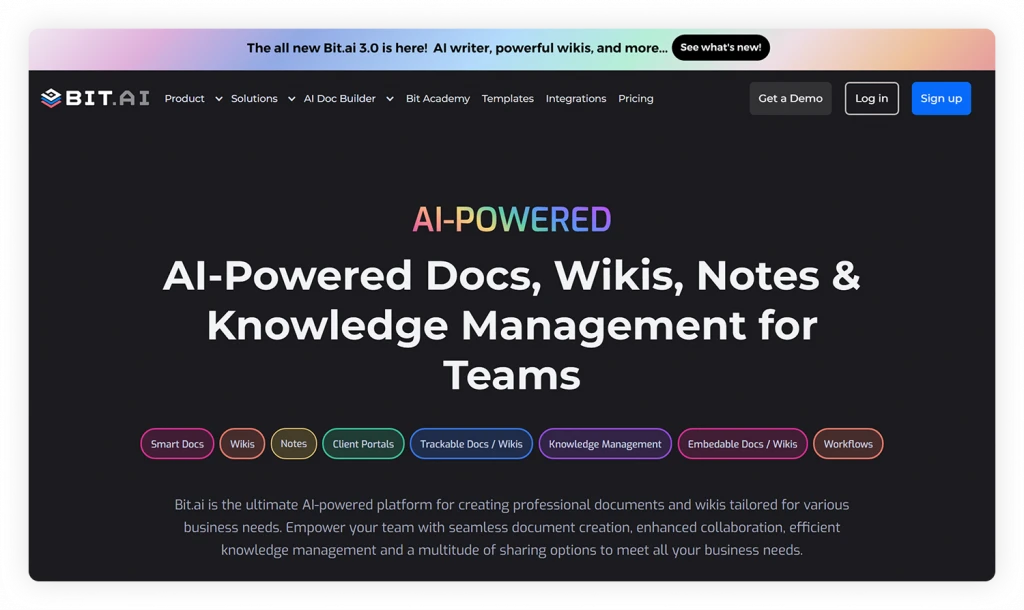
This is where Bit.ai becomes useful.
Bit.ai is an AI-powered docs, wikis, and knowledge management platform built for teams to create, organize, collaborate, and manage knowledge in one unified workspace.
You can use it to document your goals, organize plans, and collaborate with others in real time. Instead of switching between tools, everything stays structured and easy to access. This becomes especially helpful when you are working on multiple goals or collaborating with a team, because everyone can stay aligned using the same set of documents.
Features:
- Team Collaborative Workspaces – You can work with your team on the same document at the same time, which makes it easier to update, review, and move things forward without confusion.
- Smart Docs & Wikis – You can group your goals, notes, and resources into structured workspaces, making it easier to manage everything in one place.
- Rich Media Embeds – Bring links, files, videos, and other content into a single document, so you do not have to switch between tools to find context.
- AI Genius Writer – With AI Writer You can generate drafts, summaries, and content directly inside your documents, which helps you get started quickly.
- AI Doc Builder – You can create structured documents by answering a few prompts, which is useful when planning or documenting goals.
- Multiple Sharing Methods – Share your docs and wikis with a shareable link, trackable link, lead capture form, password protection, and embed them on any website.
Pricing: Free version available; Paid starts at $8/user/month
Common Goal-Setting Mistakes to Avoid
Even the best goals can fail if they are approached incorrectly. Here are some common mistakes that prevent people from achieving their goals:
1. Setting Goals That Are Too Vague
Goals like “get healthier” or “be successful” lack clarity and direction. Define exactly what success looks like.
2. Trying to Achieve Too Many Goals at Once
Focusing on too many objectives can divide your attention and reduce progress across all areas.
3. Not Tracking Progress
Without regular reviews, it’s difficult to know whether you’re moving forward or falling behind.
4. Relying Only on Motivation
Motivation comes and goes. Systems, habits, and routines create lasting results.
5. Failing to Adjust the Plan
Unexpected challenges happen. Successful people adapt their strategy instead of abandoning their goals.
Wrapping It Up
Goal setting works best when it is simple and consistent.
You do not need a complex system to get started. What matters more is having clear goals, breaking them into steps, and checking your progress regularly. When you follow a structured approach, it becomes easier to stay on track even when motivation is low.
It also helps to treat goal setting as an ongoing process instead of a one-time activity. As your priorities change, your goals can change with them. What stays constant is how you plan, track, and adjust your progress.
Over time, this makes it easier to turn ideas into results instead of leaving them unfinished.
FAQs
1. What are effective goal-setting strategies?
Goal-setting strategies that work best are those that focus on clarity, consistent actions, and reviewing changes over time. It should be a set of habits that include setting well-defined goals, dividing them into more manageable parts, and regularly checking whether you are on the right track and if there is a need for improvement.
2. How can you make your goals easier to achieve?
Start by making your goals clear and realistic. Break them into smaller tasks, set deadlines, and track your progress. When goals are easier to manage, you are more likely to stay consistent and follow through.
3. How does tracking progress help in goal setting?
Tracking helps you see what is working and what needs to change. It keeps you accountable and makes it easier to adjust your plan instead of starting over when something does not go as expected.
4. Why do people struggle to achieve their goals?
Some of the most common reasons are not having clear goals, being unprepared, and not putting in effort consistently. It can get really easy to lose focus or even stop progressing over time, especially when a proper structure is missing.
5. What tools can help with goal setting?
Tools like Bit.ai help you organize goals, track progress, and keep everything in one place. Platforms like Trello, and Asana can help you manage tasks, set priorities, and stay consistent.
About Our Editorial Team
Our Editorial Team researches, writes, and reviews every article to help ensure it is accurate, practical, and up to date. To learn more about our editorial standards, content review process, and official social media profiles, visit our Editorial Team page.
Why Trust This Article?
The information in this article is based on reputable and authoritative sources. We review our content periodically to keep it accurate and up to date.