Have you ever noticed how the strongest brands feel instantly familiar, even before you fully engage with them?
You land on their website, scroll through a campaign, or read a single line of copy, and everything just clicks. The tone feels intentional. The message feels consistent. Nothing sounds accidental.
That does not happen by luck. It happens because someone, somewhere, took the time to define brand messaging and treat it as a strategic asset rather than an afterthought.
As a marketing team, you are constantly creating. Campaigns, content, product narratives, internal decks, social posts, and launch messages all move fast. When there isn’t a common framework, brand communication changes to scattered writings, partially recalled rules, and obsolete files that are trusted by nobody.
This is where most teams struggle. Not with creativity, but with consistency.
In this guide, you are going to walk through what brand messaging really is, how to build a clear brand messaging strategy, and how to manage it in one central workspace using Bit.ai. You will see how the right structure turns brand messaging from a fragile document into a living system your entire team can rely on.
Now that the stage is set, let’s break down what brand messaging actually means and why it matters so much for modern marketing teams.
What is Brand Messaging?
Picture this. You open your website, scroll through your social posts, skim a recent campaign email, and something feels off. The words sound different. The tone shifts. The promise is not quite the same. You are technically saying a lot, but you are not saying one clear thing.
That gap you feel right now is brand messaging.
Brand messaging is the story you tell every time someone interacts with your brand. It is not just a tagline or a clever line on your homepage. It is the collective voice behind your campaigns, your content, your product pages, and even your internal communications. Every word either strengthens trust or slowly chips away at it.
 When your brand messaging is clear, people instantly understand who you are, what you stand for, and why you matter. When it is scattered, even the strongest marketing strategy starts to lose its impact.
Essentially, brand messaging is the planned use of words through which you communicate the value of your brand. It is a way of explaining how you tell your purpose, your product, and your promise to the world.
Just think of it as the script which your whole marketing team use. In the absence of it, every one of them improvises. Each message you send feels connected, confident, and distinctly yours when you have it. Here, you are not simply creating content. You are influencing people’s views.
Role of Brand Messaging in Brand Awareness
Brand awareness does not come from being loud. It comes from being recognizable.
When your messaging stays consistent across channels, your audience begins to remember you. They recognize your tone before they see your logo. They understand your value before you finish the sentence.
That is how brands move from being seen to being remembered.
Strong brand messaging makes your marketing efforts compound over time. Each campaign builds on the last. Each touchpoint reinforces the same core idea. Slowly, deliberately, your brand takes a permanent seat in your audience’s mind.
How Clear Messaging Supports Marketing Performance
Here is the part most teams realize too late. Clear brand messaging does not just sound good. It makes execution easier.
When your messaging is defined, your team spends less time debating words and more time creating impact. Campaigns move faster. Content stays aligned. New hires get up to speed without endless explanations.
Your marketing stops feeling reactive and starts feeling intentional.
And once that foundation is in place, building a structured brand messaging strategy becomes the natural next step.

Want to learn how to create strong business branding? Keep reading to discover the main components of effective brand building.
4 Core Elements of a Strong Brand Messaging Strategy
Now imagine standing in a room where every marketing decision begins. Before the headlines, before the visuals, before the campaigns go live. This is where your brand messaging is quietly built.
A strong brand messaging strategy is not a single statement. It is a system. One that gives your team clarity, direction, and confidence every time they create something new.
When these elements are clearly defined, your messaging stops feeling reactive and starts feeling intentional.
1. Brand Purpose, Vision, and Values
This is your anchor.
One that provides your team with understanding, guidance, and assurance of the new creations every time.
Once you have these features distinctly outlined, your communication will not appear as a quick reaction to the situation but rather as a deliberate action.
When these are clear, your messaging gains depth. You are no longer just promoting features. You are communicating beliefs. Every campaign suddenly has a reason to exist beyond clicks and conversions.
2. Target Audience and Brand Positioning
Here is where most messaging starts to sharpen.
You are not speaking to everyone. You are speaking to someone specific, with specific needs, pain points, and expectations. Defining your target audience helps you choose words that resonate instead of words that just sound good.
Brand positioning then answers the follow up question. Why should they choose you over anyone else? When this is locked in, your messaging stops competing on noise and starts competing on meaning.
3. Brand Voice, Tone, and Personality
This is the point where your brand turns into a human.
Your voice is the way you always sound. Your tone is the way your voice changes in different situations. Your personality is the thing by which people can recognize you even if they don’t see your logo.

Once these have been written down plainly, your brand ceases to have different characters for different platforms. Be it a product page, a launch email, or a social caption, the whole thing seems to be from the same person.
4. Messaging Pillars and Value Propositions
Think of messaging pillars as the themes your brand returns to again and again. These are the key ideas you want your audience to remember long after they forget individual campaigns.
Your value propositions then translate those ideas into clear benefits. Not what you do, but why it matters.
Together, they give your team a playbook. One that makes it easier to create consistent messages without starting from scratch every time.
Once these elements are defined, the next challenge appears naturally. How do you structure all of this so your team can actually use it every day?
That is where a brand messaging framework comes into play. Let’s step into that next.
Creating a Brand Messaging Framework that Teams Can Follow
You have defined your purpose. Your audience is clear. Your voice finally sounds like you. But then Monday morning hits, a new campaign starts, and someone asks, “Where do I find the approved messaging?”
This is the moment where strategy either holds or quietly falls apart.
A brand messaging framework is what turns your ideas into something your team can actually use. It takes everything you have defined and organizes it into a system that works under real marketing pressure.
What a Brand Messaging Framework Includes
Think of your framework as a map.
Normally, it merges your brand story, positioning statement, tone guidelines, messaging pillars, and value propositions into a single coherent framework. Not bunches of notes lying around. Not partially completed slides. One definite source that provides answers to the questions before they can hinder your team.
When this framework exists, your team stops guessing. They start building.
Structuring Brand Messaging for Easy Access and Use
A framework only works if people can find it.
If your brand messaging lives in multiple documents, outdated folders, or tools that no one opens anymore, it might as well not exist. The goal is to structure your messaging so anyone on your team can jump in, understand it quickly, and apply it immediately.
This is where clarity beats complexity. Clean sections. Clear language. Real examples of how messaging should be used.
The easier it is to navigate, the more consistently it gets used.
Connecting Brand Messaging With Your Brand Marketing Strategy
Your messaging framework should never sit in isolation.
Every campaign, launch, and piece of content should trace back to it. When your brand messaging connects directly to your brand marketing strategy, execution becomes smoother. Decisions feel faster. Alignment happens naturally.
Your team no longer asks if something fits the brand. They can see it.
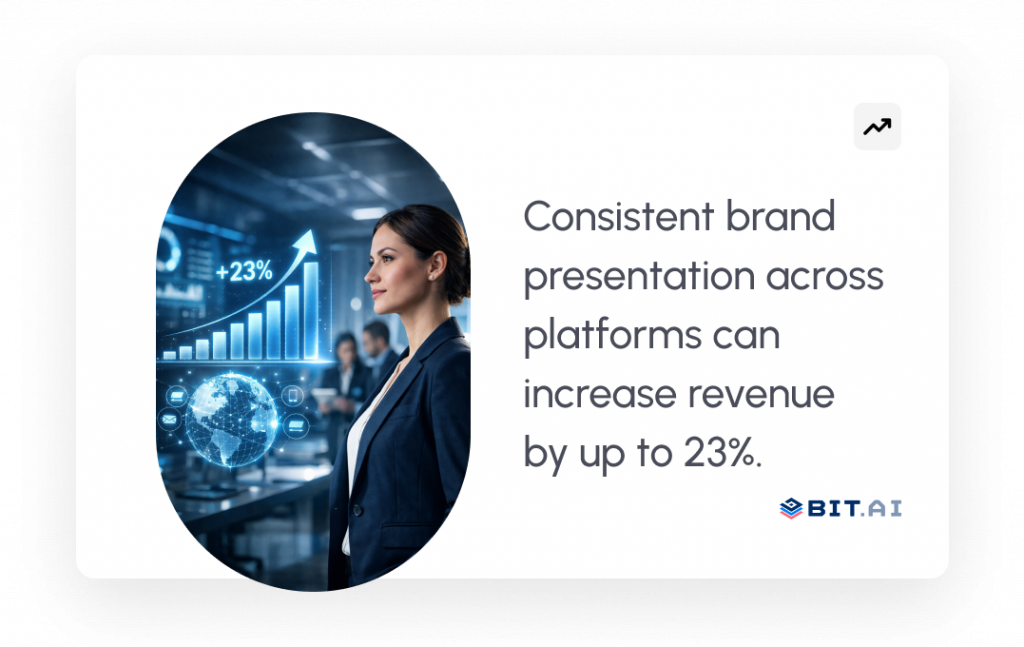 At this point, the need becomes obvious. You do not just need a framework. You need a place where it can live, evolve, and stay consistent as your team grows.
That is exactly where a central workspace comes in. Let’s look at how marketing teams do this with Bit.ai next.
How Marketing Teams Use Bit.ai to Manage Brand Messaging Centrally
This is where brand messaging becomes real for you.
Think about how your team works today. Some brand rules are in a document. Some are in slides. Some are in old files. Some live only in people’s heads. When things move fast, people guess. That is how brand messaging slowly breaks.
Bit.ai helps you avoid that.
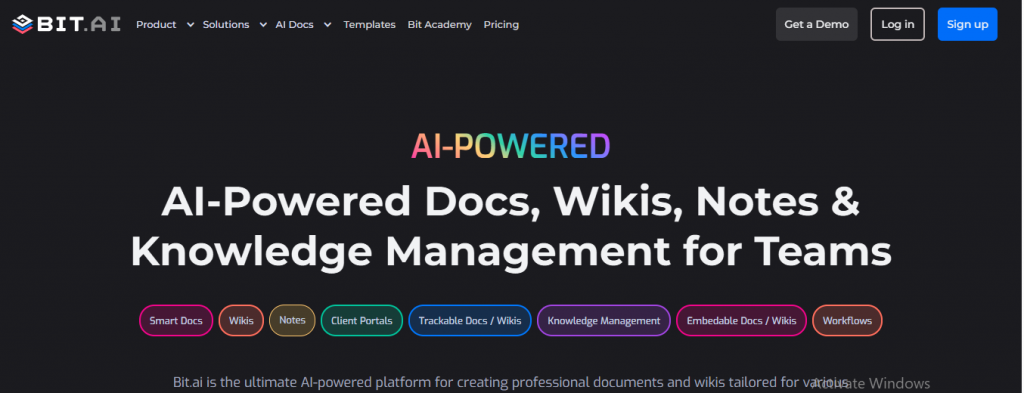 AI-powered docs, wikis, and knowledge management platform built for marketing teams that want one clear place for brand messaging. Bit.ai gives you a shared workspace where your brand information lives together and stays easy to find.
Instead of chasing files, you work from one place.
1. Creating One Clear Place for Brand Messaging
With Bit.ai, you create one main space for your brand messaging.
You can store your brand story, messaging framework, tone rules, positioning notes, and value points inside structured documents. Everything is written clearly and organized in sections, so your team can read and understand it quickly.
When someone has a question about brand messaging, they do not guess. They open the document and get the answer.
2. Working Together on Brand Messaging in Real-Time
Brand messaging is not written by one person. It improves when people review it together.
In Bit.ai, you and your team can work on the same document at the same time. You can leave comments, suggest edits, and discuss changes directly where the text lives.
This keeps feedback clear and visible. Everyone sees what changed and why it changed.
3. Keeping One Correct Version of Brand Messaging
One big problem teams face is using old messaging by mistake.
Bit.ai helps you avoid that by keeping one updated version of your brand messaging. When you make a change, the document updates for everyone. Your team always works from the same version.
This helps your brand sound the same across websites, campaigns, emails, and internal work.
4. Sharing Brand Messaging the Right Way
Brand messaging only works when the right people can access it easily.
Bit.ai lets you share your brand’s messaging documents in different ways based on the person who is receiving them. You can collaborate with colleagues, give leadership read-only access for reviews, or share secure links with agencies, partners, and external collaborators.
Trackable links and guest access controls help you manage who can view or edit your messaging while keeping your brand information organized and secure.
Everyone works from the same source instead of passing files back and forth, helping your brand messaging stay consistent wherever it is used.
5. Using AI Genius Writer to Improve Clarity
Bit.ai includes AI Genius Writer, which helps you improve how your messaging is written.
You can use it to rewrite sentences, make language simpler, or adjust tone while keeping the meaning the same. This helps your messaging stay clear and easy to understand, especially when different people contribute.
It does not replace your strategy. It helps you express it better.
Scaling Brand Awareness With Consistent Messaging Using Bit.ai
This is where consistency starts to work for you.
When your brand messaging is clear and easy to access, your team does not need to rethink it every time. They apply the same ideas again and again. Over time, people begin to recognize your brand faster.
Bit.ai supports this by making your messaging easy to share, update, and reuse.
1. Sharing Brand Messaging With Teams and Partners
As your work grows, more people use your brand messaging.
Writers, designers, agencies, and partners all need the same guidance. With Bit.ai, you can share live documents instead of sending files back and forth. Everyone sees the same information in one place.
This helps your brand stay consistent even when many people are involved.
2. Updating Brand Messaging Without Confusion
Brand messaging changes as your product and market change.
In Bit.ai, you can update messaging directly in the main document. Your team instantly sees the new version. There is no need to resend files or explain changes again and again.
This keeps everyone aligned as your work evolves.
3. Helping Distributed Teams Stay Aligned
Many marketing teams work from different locations.
Bit.ai gives your team one shared space where brand messaging lives. New team members can read and understand the brand without long explanations. Existing team members stay aligned even when they work in different time zones.
This helps your brand grow without losing its voice.
Let’s now combine everything and close the loop.
It is faster to do everything when brand messaging is crisp, and there is a single point of reference for it. Your team is in sync, campaigns are purposeful, and every communication is a step towards the same brand story.
That is the real power of consistency.
With Bit.ai, brand messaging becomes more than a guideline. It becomes a living system your entire marketing team can trust. It is the best knowledge management platform built for teams that need clarity and alignment, Bit.ai gives you one place to create, refine, and share your brand voice.
Your brand already has a story, use Bit.ai to properly manage and communicate it to the masses.
Now you have a smarter way to protect it and scale it with confidence.
FAQs
What is brand messaging and why is it important?
Brand messaging is how you convey your identity, value proposition and significance to an audience. It influences every interaction in terms of how an audience perceives you. If you communicate in a clear and consistent manner, you’ll build trust more quickly, increase brand recall, and your marketing efforts will be complementary instead of competing for attention.
What are the key elements of a strong brand messaging strategy?
A strong strategy includes a clear brand purpose, defined audience and positioning, a consistent voice and tone, and well articulated messaging pillars with value propositions. Together, these elements give your team direction and remove guesswork from everyday marketing decisions.
How can teams create consistent brand messaging?
Consistency comes from structure and accessibility. When your messaging is documented clearly, centralized, and easy to reference, your team can apply it across campaigns, channels, and content without reinventing the wheel each time.
How can Bit.ai improve collaboration for branding teams?
With Bit.ai, your brand messaging lives in one shared workspace. Teams collaborate in real time, work from a single source of truth, and stay aligned as messaging evolves. This keeps everyone speaking the same language, even as your brand scales.