Have you ever wondered why some AI content reads so clean and clear, while other content sounds like a big mess? The secret lies in how you write your prompts. In the current era of AI, prompt engineering is no longer a buzzword; it’s a necessity for anyone creating technical documentation, blog posts, or other forms of content.
Can you imagine this? You give a general instruction to an AI tool, and your outcome is content that needs hours of fixing? Ugh, right? This is because you didn’t utilize prompts effectively! But if you master the skills of prompt engineering, you can produce high-quality, context-rich, and accurate content in seconds using AI.
Want to get your documentation and writing game up to level? Let’s first get an idea of what prompt engineering is and why you should use it. ?
What is Prompt Engineering?
And so, what is prompt engineering, then? In short, it’s the science and art of crafting well-solicited prompts that cause AI models like ChatGPT to generate the most perfect, accurate, and high-quality answers. Instead of just typing in some arbitrary directions, you craft good prompts with purpose, context, and clarity.
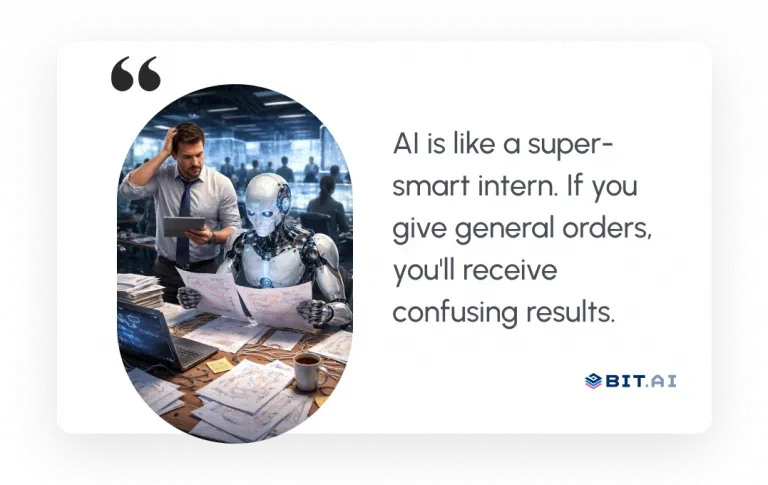
Picture it this way: AI is like a super-smart intern. If you give general orders, you’ll receive confusing results. But if you offer specific, detailed orders, you’ll receive precisely what you need, sometimes even better! That’s the sorcery of prompt engineering methods.
If technical writing and content creation come into play, this ability is a lifesaver. You will be able to create how-to guides, FAQs, and user manuals in mere minutes, without compromising on quality. Besides that, you will reduce the need for revisions as your AI will understand your intent to begin with.

DID YOU KNOW?
As per the latest research, businesses that utilize optimized prompts see 40% faster content creation and improved engagement rates compared to those without.
So, whether you are working on blog articles, product guides, or knowledge bases, it is valuable to learn prompt engineering tips so you can maximize your AI tools.
By now, you understand what it is. Let’s examine why prompt engineering is important and how it can revolutionize your writing! ?
Why Prompt Engineering Is Revolutionary
You may be wondering to yourself, “Is Prompt Engineering really worth it?” Short answer – YES!
When you get good at this, you will be much more productive and creative in your technical writing + content creation. Here’s why:
1. Instant Content
Deadline looming? With quality prompts, you can produce drafts for blogs, guides, or FAQs in minutes instead of hours. No more staring at a blank page! Prompt engineering allows you to guide the AI so precisely that it gives you content that’s about 80% ready to publish, liberty for you to save time on strategy and review.
2. Improved Accuracy & Relevance
Ever received a response that made no sense? It is probably because the prompt was not clear. With prompt engineering methods, you eliminate guessing by being specific with tone, style, format, and context. This gets the AI generating accurate technical content, customized to your own specifications, without endless rewrites.
3. Consistency Across Documentation
Maintaining it consistently is hard, especially within more than one document or team. But once your prompts are well-styled, you’re establishing the tone, vocabulary, and voice from the beginning. That way, all your content reads as coherent: be it a user manual, API reference guide, or advert copy.

If this was useful, read this…
4. Better Collaboration & Team Productivity
Modern Tools and carefully designed prompts make collaboration seamless. Your team works with standard, high-quality content in advance, reducing back-and-forth edits. That’s more time to be creative and less time cleaning up inconsistent results.
5. More Creativity
Surprisingly enough, good prompts don’t only produce content, they spark imaginative, whimsical, or unexpectedly creative results. As you experiment with different prompt engineering techniques, you discover new ways to narrate, describe things technically, and organize content. Think of having a limitless suggestions buddy who will never ever fatigue.
If this was useful, read this…
How to Use Artificial Intelligence (AI) in Content Marketing To Analyze Data!
Best Prompt Engineering Tips & Techniques You Can Start Using Today
Ready to take your skills to the next level? Here are the best prompt engineering tips and tricks you can use to make great prompts for any AI tool!
1. Be Specific and Clear
Imagine opening your AI tool, typing a single sentence, and instantly getting exactly what you need. That only happens when your instructions are clear. The AI cannot read between the lines, so the more detail you provide, the better it performs.
Instead of just asking for “an article,” include the intent with it. Mention the topic, length, tone, and format. The moment you start doing this, the responses stop feeling random and start feeling tailored.
2. Provide Context for Accuracy
You can think of context as the background story which the AI needs to know before it is able to provide you with a perfect solution. In its absence, the replies come out as too broad and just slightly incorrect, as if they were lacking the very essence of the question.
The output becomes sharper when you explain why you need something, who you need it for, or what came before. Rather than speculating about your intent, the AI remains focused on your objective.
3. Use Structured Prompts
A clear structure gives your prompt direction. When instructions are organized, the AI knows exactly how to respond.
Breaking your request into bullet points or numbered steps not only makes it easier to understand but also effectively guides the AI through the different parts of the request. This often results in content that feels more complete, balanced, and easier to use.
4. Specify the Output Format
Before the AI starts writing, decide how you want the final result to look. A blog post, a checklist, a guide, or a technical explanation all require different structures.
When you specify the format upfront, you won’t have to make as many changes later. The AI will do what you want and give you content that you can use right away.

PRO TIP
Turn a blank page into powerful ideas in seconds with Bit.ai’s Brainstorm Idea Generator.
5. Identify the Audience
- Think about who will read what you write.
- Is it for a beginner, a worker, or a boss?
- This one thing makes a big difference.
- When you know who the reader is, the words, tone, and examples become easier to choose.
- The content feels clearer and more helpful to them.
6. Test and Refine
Great prompts are built through iteration. The first response shows you what works. The next version makes it better.
Each refinement teaches you something new about how the AI responds. Over time, you stop guessing and start prompting with confidence.
Now that you have the tips down – let’s now move to some real world examples of prompt engineering.?
Real-World Examples of Prompt Engineering for Better Docs
Want to see what amazing prompts look like
Let’s get into some real-world scenarios where prompt engineering techniques have a substantial effect on technical documentation and content generation:
1. Writing a Step-by-Step Installation Manual
Bad Prompt: “Write an installation manual.”
Better Prompt: “Create a step-by-step Windows 11 installation guide for installing XYZ software, including prerequisites, simple instructions, and troubleshooting tips.”
Why it works: The second prompt is specific and professional, which makes the AI add all the necessary information for technical writing.
2. Writing an API Documentation Section
Bad Prompt: “Write API docs.”
Better Prompt: “Develop API documentation for GET endpoint /users. Include method description, parameters needed, example JSON response, and information about error handling.”
Why it works: This prompt establishes a clear expectation about format, content, and examples, which makes it well-suited for technical documentation.

3. Developing Blog Ideas for a SaaS Product
Bad Prompt: “Give me some ideas for blog posts.”
Better Prompt: “Write 10 blog post ideas for a SaaS tool for remote work and productivity. Include SEO-optimized titles.”
Why it works: It includes context and an objective (SEO-optimized), which results in better content generation ideas.
If this was useful, read this…
4. Writing a Product FAQ Section
Poor Prompt: “Write FAQs.”
Better Prompt: “Write 8 FAQs for a project management software. Include typical user questions, short answers, and a friendly tone.”
Why it works: It sets tone, length, and audience crucial elements in prompt engineering guidance.
Having gone through those examples, let’s finish with the final takeaway points! ?
Now that you are aware of the advantages, let’s move to the best tool for prompt engineering, Bit.ai, your best document partner! ?
Bit.ai: Turn Prompt Knowledge Into Real, Usable Documents
Once you understand how to write better prompts, the next challenge is where and how you actually use them. Prompts alone are only half the story. What matters is how easily you can turn those AI outputs into structured, reusable, and collaborative documents.
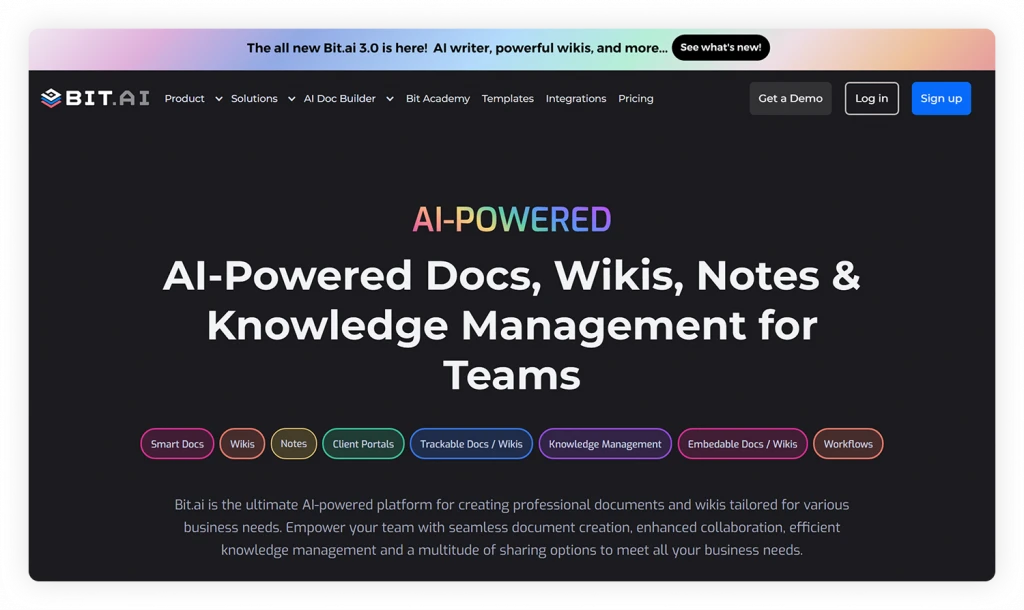
Bit.ai is an AI-powered docs, wikis, and knowledge management platform built for teams that want to combine AI generation with real documentation workflows. Inside Bit.ai, your prompt engineering skills do not stay theoretical. You actively use them to create policies, blogs, SOPs, meeting notes, product docs, and knowledge bases in one connected workspace.
Use Your Own Prompts Inside Bit.ai
Bit.ai allows you to use AI directly inside documents. This means you can apply your custom prompts to:
- Generate first drafts
- Rewrite sections
- Expand ideas
- Simplify explanations
- Create structured outlines
Instead of copying AI outputs from different tools and pasting them into documents, you work with AI inside the same document where your final content lives. This keeps your workflow clean, organized, and focused.
Your prompts turn into content. Your content turns into documentation. And everything stays in one place.
Let Doc Builder Do the Heavy Lifting
Bit.ai’s Doc Builder takes prompt-driven creation one step further.
Instead of writing long prompts every time, you can choose from 300+ ready-made document prompts designed for real business use cases.
Doc Builder supports practical document types like SOPs, policies, project plans, meeting notes, reports, training guides, and product documentation. Rather than writing each document from scratch, you just provide a few key details, and Bit.ai shapes them into a well-structured, ready-to-edit draft.
You simply select a document type, answer a few guided questions, and Doc Builder generates a complete structured document for you. It feels less like prompting and more like filling a smart form that understands exactly what content should be created.
This is especially useful when you want speed, consistency, and structure without manually designing every prompt.
Built for Knowledge, Not Just Writing
Bit.ai is not only about creating content. It is about managing it long-term.
You can organize documents into workspaces, folders, and wikis. Everything remains searchable, version-controlled, and easy to update. Your prompt outputs won’t just fade away in chat histories. They get incorporated into your team’s knowledge system.
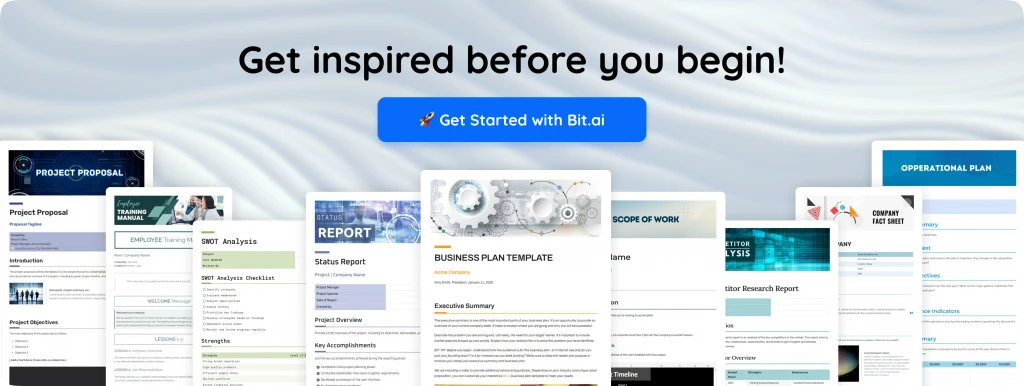
Let’s explore some of the key features that make Bit.ai stand out:
Real-time collaboration
Work together on documents, prompts, and drafts simultaneously while keeping everyone aligned.
Changes appear instantly, so feedback, edits, and improvements happen without delays or version confusion.
AI assistant for writing and editing
Use Bit.ai’s genius writer to generate, refine, and improve content using AI directly inside your documents.
Rich media embedding
Add images, videos, files, links, and embeds to make documentation more interactive and complete. This keeps all supporting material connected to your content instead of scattered across platforms.
Smart search functionality
Without much digging, quickly locate notes, prompts, or other content throughout your workspace. When everything can be searched in a matter of seconds, even huge knowledge bases become manageable.
Centralized knowledge workspace
Store and manage all prompt-driven content, documentation, and iterations in one place. Your team always works from a single source of truth, which reduces duplication and confusion.
Pricing: Free plan available; Pro plan is $8/month(billed annually).
Wrapping it Up
You’ve come this far. This shows you are keen to be a prompt engineering expert! By now, you have a clear understanding of what prompt engineering is, why it is essential, the tools required, examples in real life, and strong prompt engineering tips and tricks to make your AI output stand out.
Remember that the magic comes from clarity, context, and structure. As you write each prompt, think of yourself as teaching an eager assistant to get it right, but only if you tell them specifically what you need.
The golden rule to keep in mind is:
“The quality of your AI output is only as good as the quality of your prompt.”
So, start experimenting today! Utilize the advice, try Bit.ai, and see how your technical writing and content creation process becomes quicker, smoother, and more original than it ever has been!
Stop number two: Now, let’s work through some of the questions you may still have around prompt engineering.
FAQs
- How to get better at prompt engineering?
To get better, just practice often and learn how to write good prompts. Start with prompts that are clear and include the way you want it to sound, how it should be written, and who it’s for. Give the AI context and add a few examples. Try new prompts and change them based on the answers. The more organized the prompts are, the better the answers will be.
- What are the 5 ways to make a writing prompt interesting?
These are five strong techniques of prompt engineering to craft your prompts well-balanced and engaging:
- Define the subject and structure
- Provide context and intent
- Include a target audience for a richer tone
- Use formatted directions (bullet points or ordered lists)
- Include examples to avoid ambiguity
These small changes make your prompts yield effective prompts that generate accurate, creative outputs consistently.
- How does prompt engineering enhance technical writing?
Prompt engineering helps to improve technical documentation by making it more clear, consistent, and accurate. When you enter precise prompts, AI tools give you very detailed answers that help you in writing and different types of documentation such as formatted guidelines, API documents, or troubleshooting FAQs.
- Why is specificity in prompts necessary in documentation?
Being specific is key ’cause vague prompts give you bad results. If you use prompt engineering, you will be able to make the output meet the requirements without endless edits. To put it simply, a specific prompt equals quality output.
If this was useful, read this…